
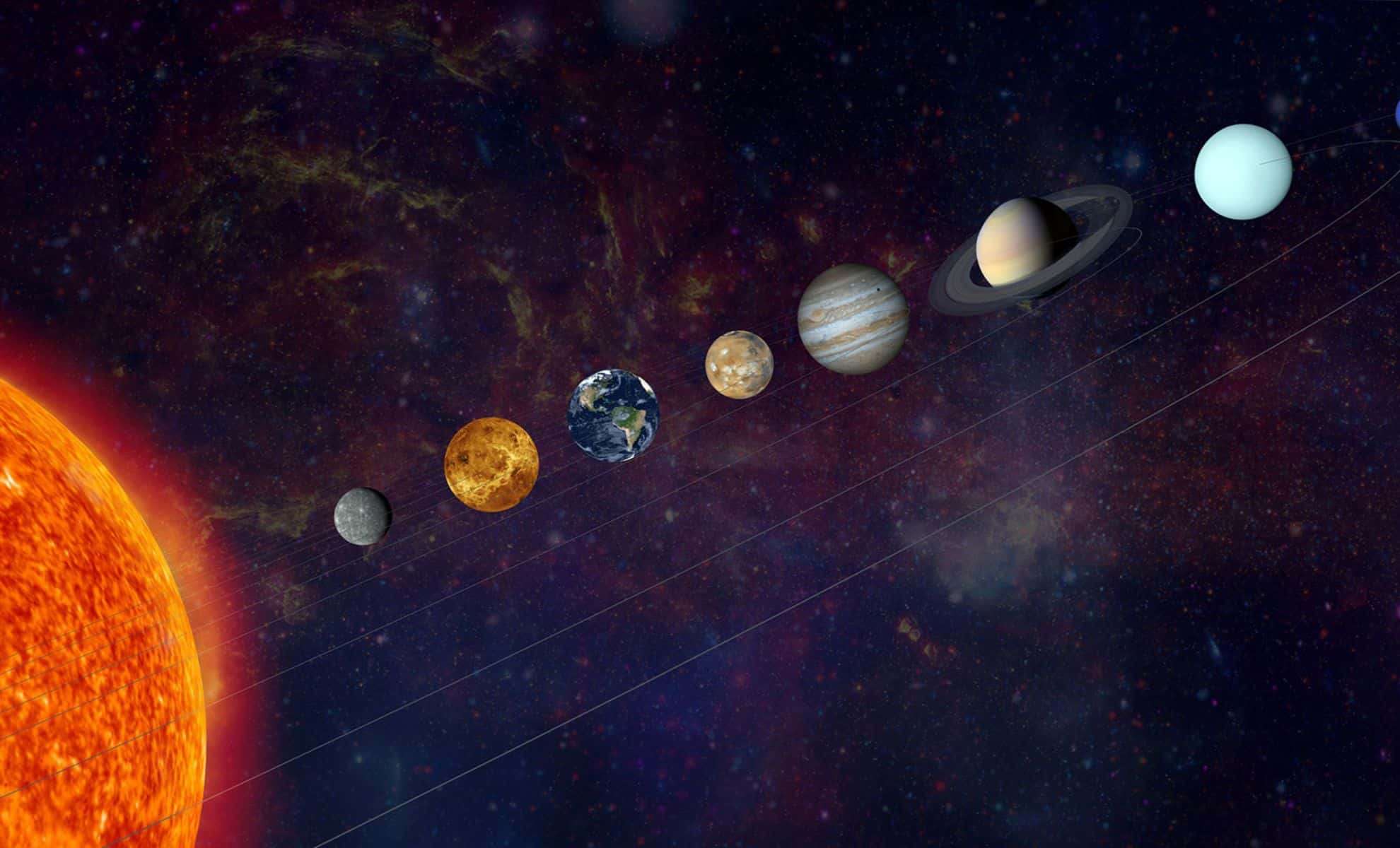
On June 3rd, 2024, skywatchers will be treated to an extraordinary spectacle as six planets—Mercury, Mars, Jupiter, Saturn, Uranus, and Neptune—appear aligned in a dazzling planetary parade.
This rare celestial event presents a remarkable opportunity for astronomy fans to see several of the solar system’s major planets arranged in a visually impressive line. Although these worlds won’t be physically aligned along their orbits, their configuration from Earth’s perspective creates a beautiful and distinctive panorama.
What Creates a Planetary Alignment?
A planetary alignment happens when multiple planets orbiting the Sun appear clustered on the same side of the Sun from Earth’s viewpoint. This positioning makes them look like they fall along a straight path across the sky.

Kate Pattle, a faculty member at University College London’s Physics & Astronomy Department, explains that Jupiter, Mercury, Uranus, Mars, Neptune, and Saturn will stretch visibly across the heavens. Such an arrangement is termed a planetary parade and differs from a true syzygy, which involves planets lining up precisely in space.
It’s essential to understand that these planets remain separated by vast distances in space. Their apparent proximity is an optical effect caused by their roughly coplanar orbits in the Plane of the Ecliptic. When they cluster on Earth’s side of the Sun, we perceive them as forming a neat line.
Viewing Tips for the June 2024 Alignment
The best opportunity to see this planet parade will be in the hours before dawn on Monday, June 3rd, 2024. Observers should aim for roughly one hour before sunrise, in locations with dark skies and a clear view toward the horizon. Urban light interference can obscure fainter objects, so rural or elevated sites offer the best vantage points.
Jupiter stands out as the brightest among the six and will be the most easily spotted with the naked eye. In contrast, Mercury and Uranus will be closer to the horizon, making them more difficult to discern. To catch sight of all six, particularly the dimmer Uranus and Neptune, using binoculars or a small telescope will greatly enhance the experience. Mobile stargazing apps such as Sky Map, Star Chart, or Sky Tonight can assist in pinpointing the planets' locations.
According to Kate Pattle, the planetary lineup will remain viewable for several days around June 3rd, allowing enthusiasts to pick a convenient time depending on their local weather conditions. Clear skies are critical for this kind of observational event, so checking weather forecasts beforehand is recommended.
How Often Do Such Alignments Occur?
Alignments involving two to four planets happen fairly frequently each year. However, when five or more planets come near alignment, the event becomes much less common, making this upcoming alignment particularly special.
Pattle notes future chances to witness similar planetary gatherings on August 28th, 2024, January 18th, 2025, and February 28th, 2025. The February 2025 event is especially remarkable as it will feature all seven classical naked-eye planets (excluding Pluto, which is now classified as a dwarf planet).
These planetary parades are valuable occasions for astronomers and the public alike to appreciate planetary dynamics and deepen interest in our cosmic neighborhood. They often inspire educational outreach and public observation programs that celebrate the wonders of the night sky.
- Categories:
- Astronomy ,
- News ,
- Space









0 comments
Sign in to Comment