
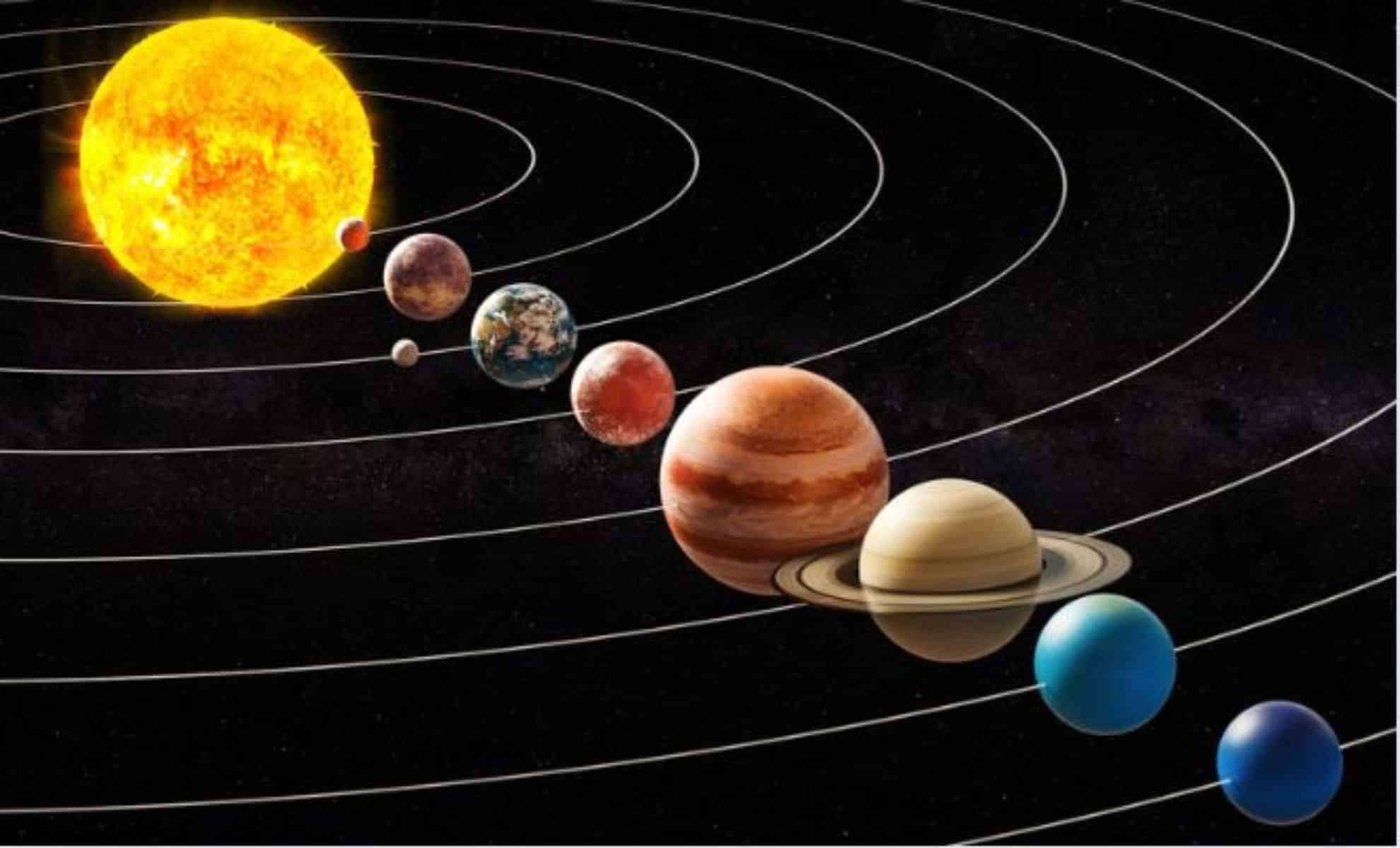
Space enthusiasts in Indiana and around the globe are eagerly anticipating a rare planetary lineup on June 3, 2024, featuring six planets in the early morning sky.
Still, NASA has advised that viewers temper their expectations regarding which planets can actually be seen without aid. Here’s an overview of what this event entails and other notable skywatching moments to catch this month.
The June 3 Planetary Lineup
At dawn on June 3, six planets — Mercury, Jupiter, Uranus, Mars, Neptune, and Saturn — will appear to follow a close path in the eastern horizon, a spectacle often dubbed a “planet parade.” This rare event has sparked excitement among both dedicated astronomers and casual observers.

Nevertheless, NASA has highlighted some key visibility limitations. Of these six, only Mars and Saturn will be visible to the naked eye. The others will be either obscured by the horizon’s glow or simply too dim to be detected without telescopic support. Consequently, while the alignment itself is impressive, unaided viewers should anticipate a more modest visual experience.
Visibility Insights
NASA’s latest guidance explains why several planets won't be easily seen. Mercury and Jupiter will linger near the horizon during morning twilight, making them tough to spot due to the sun’s brilliance. Meanwhile, Uranus and Neptune are simply too faint to be detected without the use of telescopes.
What’s Up, June skywatchers?
In early June, Mars and Saturn have some early morning meetings with the Moon. Later, Jupiter makes an appearance, and a full moon shines down on us on June 21.
Get more skywatching tips here: https://t.co/BDogzQLD8c pic.twitter.com/AVrHqxdCC8
— NASA (@NASA) May 31, 2024
Even with binoculars, Uranus and Neptune will appear as faint, pinpoint lights. Thus, for unaided observers, Mars and Saturn will be the primary highlights. These planets stand out due to their vivid colors: Mars with its characteristic reddish glow and Saturn with its warm, yellow tone.
Join Brian Murphy, Butler University’s physics and astronomy professor, in Indiana by focusing on the northeastern sky. He recommends binoculars for those hoping to catch a glimpse of Jupiter and Mercury, while Mars and Saturn should be more easily spotted higher in the sky, away from horizon light pollution.
Optimal Viewing Windows and Conditions
The ideal viewing period spans roughly 15 to 30 minutes before sunrise on June 3. As dawn breaks, brightening daylight quickly washes out faint planetary lights. For locals in Central Indiana, forecasts suggest partly cloudy conditions with temperatures near 62°F overnight before clearing to mostly sunny and around 85°F on the day.
Though afternoon showers or storms are possible after 2 p.m., the early morning sky should remain clear. To maximize viewing quality, seek out dark locations distant from city illumination and use telescopes or strong binoculars.
Upcoming Planetary Lineups
If you miss the June 3 alignment, there’s a second chance later this month. On June 29, Saturn, the Moon, Mars, and Jupiter will arrange across the morning sky, offering a more accessible planetary display.
This grouping is expected to be more visually distinct and easier to recognize. While alignments involving multiple planets are uncommon, they provide a remarkable view into our solar system’s neighborhood when they occur.
Understanding Planetary Alignments
Planetary alignments happen because the planets orbit the sun on slightly inclined planes. From Earth’s perspective, there are moments when several planets seem to line up temporarily, though in reality, their positions vary in three-dimensional space.
Tracking these occurrences requires detailed calculation of orbital dynamics. While alignments involving two to four planets appear fairly regularly, those featuring five or more are special events that astronomers eagerly anticipate.
Additional Astronomical Highlights in June
Alongside the June 3 alignment, several other celestial occasions will make this month a rewarding time for star enthusiasts.
- June 3: The crescent Moon will appear just below Mars in early morning skies, forming an attractive pairing visible low on the eastern horizon, ideal for binocular or telescope viewing.
- June 6: A new moon phase begins, marking the start of a fresh lunar cycle. This dark-sky period is perfect for observing fainter stars and deep-sky objects without moonlight interference.
- June 21: The full Strawberry Moon will illuminate the night, providing excellent conditions for lunar observation and night photography.
- June 24: Jupiter will rise before dawn low in the east, aligning with Mars and Saturn to produce a striking linear formation stretching southwards—a treat for early morning observers.
- June 27: The Moon and Saturn will rise together around midnight and remain close through dawn, easily seen together in binoculars in the southern sky.
With these events and the notable planetary alignments, June offers many opportunities for both seasoned and novice skywatchers to marvel at the cosmos.
- Categories:
- Astronomy ,
- News ,
- Space




0 comments
Sign in to Comment