
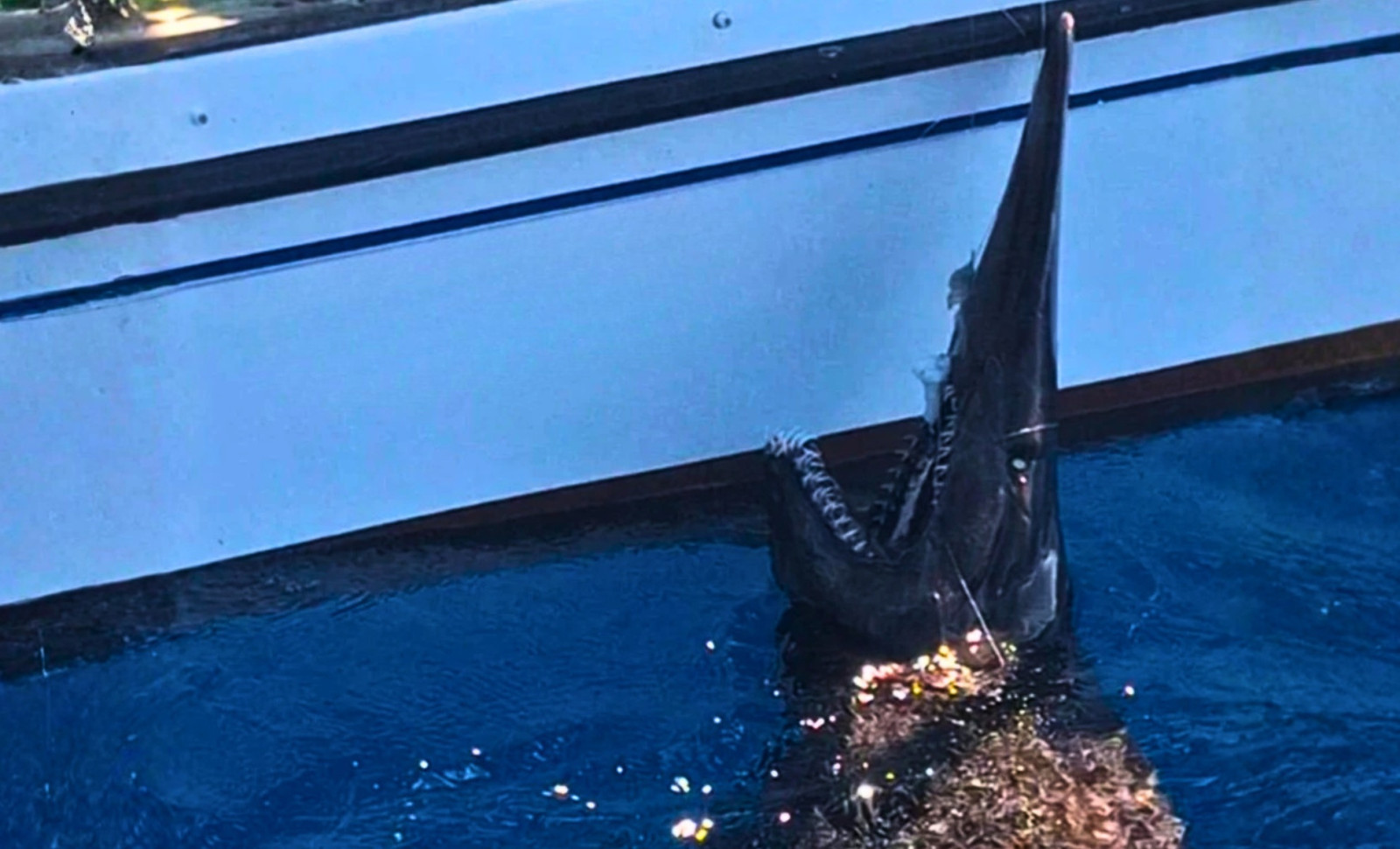
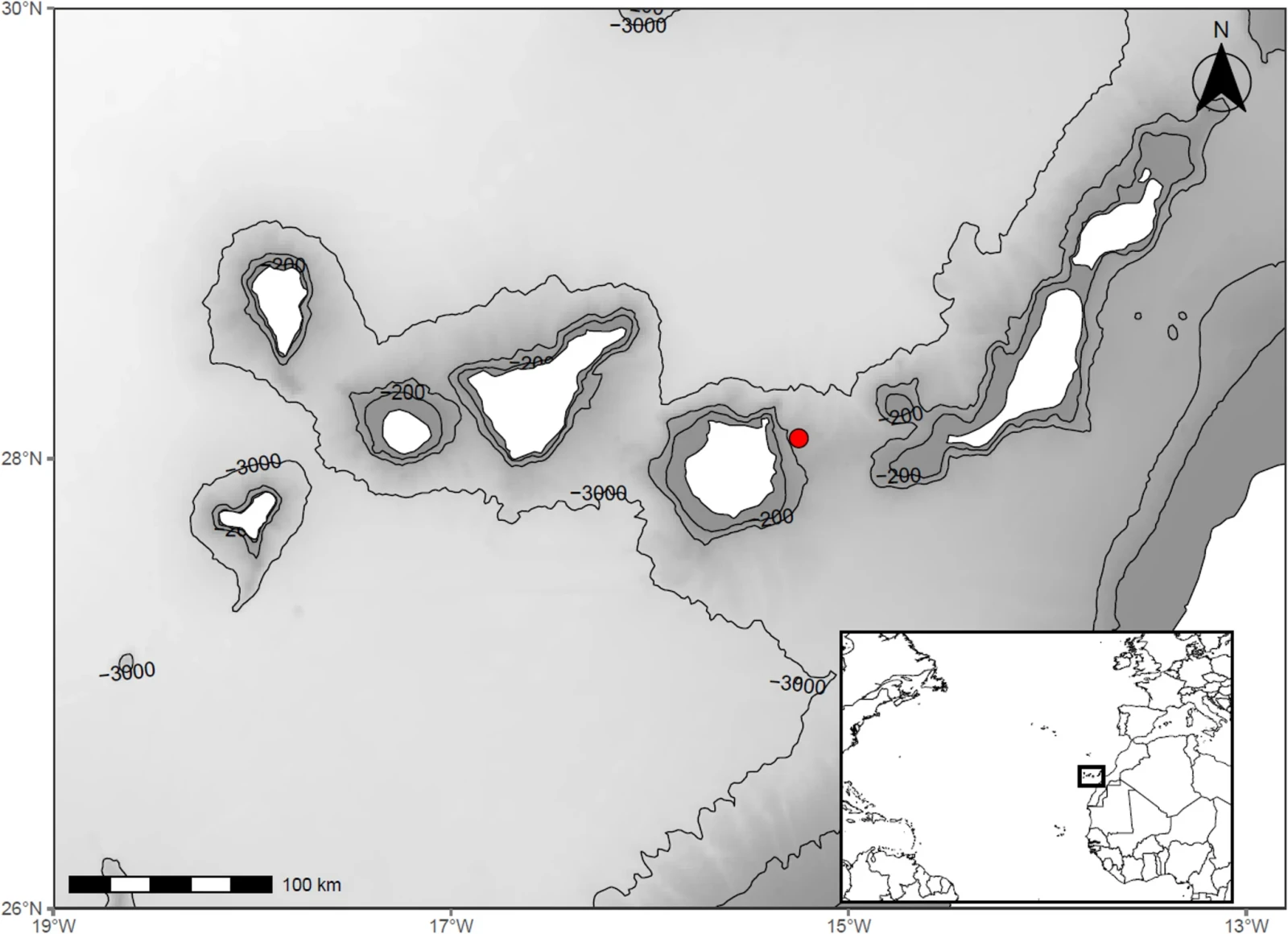
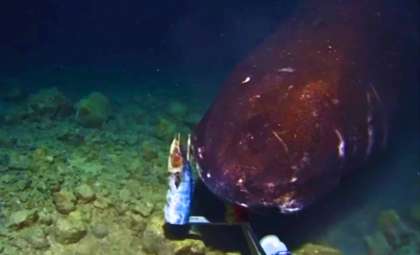
In January 2026, fishers unexpectedly reeled in a 2.5-meter-long goblin shark from a depth of 900 meters off the coast of Gran Canaria. This marks the first verified observation of this elusive species in the Canary Islands and only the second confirmed sighting within the broader Macaronesian region. Scientists at the University of La Laguna detailed this encounter in Thalassas: The International Journal of Marine Sciences, expanding the documented distribution of one of the ocean’s rarest sharks into the Central-Eastern Atlantic.
The shark’s discovery was serendipitous rather than a targeted research effort. Amateur anglers accidentally caught the creature 9.5 kilometers off San Cristóbal’s shore, brought it onboard briefly, and then released it unharmed. The photographs and footage they recorded became critical evidence underpinning the scientific report.
Less than 250 goblin sharks have been recorded globally, highlighting their rare encounters with humans. This scarcity underscores why a chance catch near a Spanish island merited publication in an international marine journal.

An Unmistakable Deep-Sea Predator
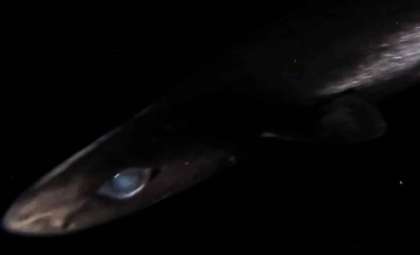
The goblin shark (Mitsukurina owstoni) features a distinctive appearance unlike any other shark species. Its elongated, flattened, paddle-like snout extends well beyond its tiny eyes, which lack the protective nictitating membrane commonly found in other sharks. The shark’s jaws protrude dramatically and are lined with slender, needle-sharp teeth, ideal for gripping rather than slicing prey. Its body feels unusually soft and flaccid, with pale pinkish-white skin resulting from visible blood vessels beneath the surface at depth.
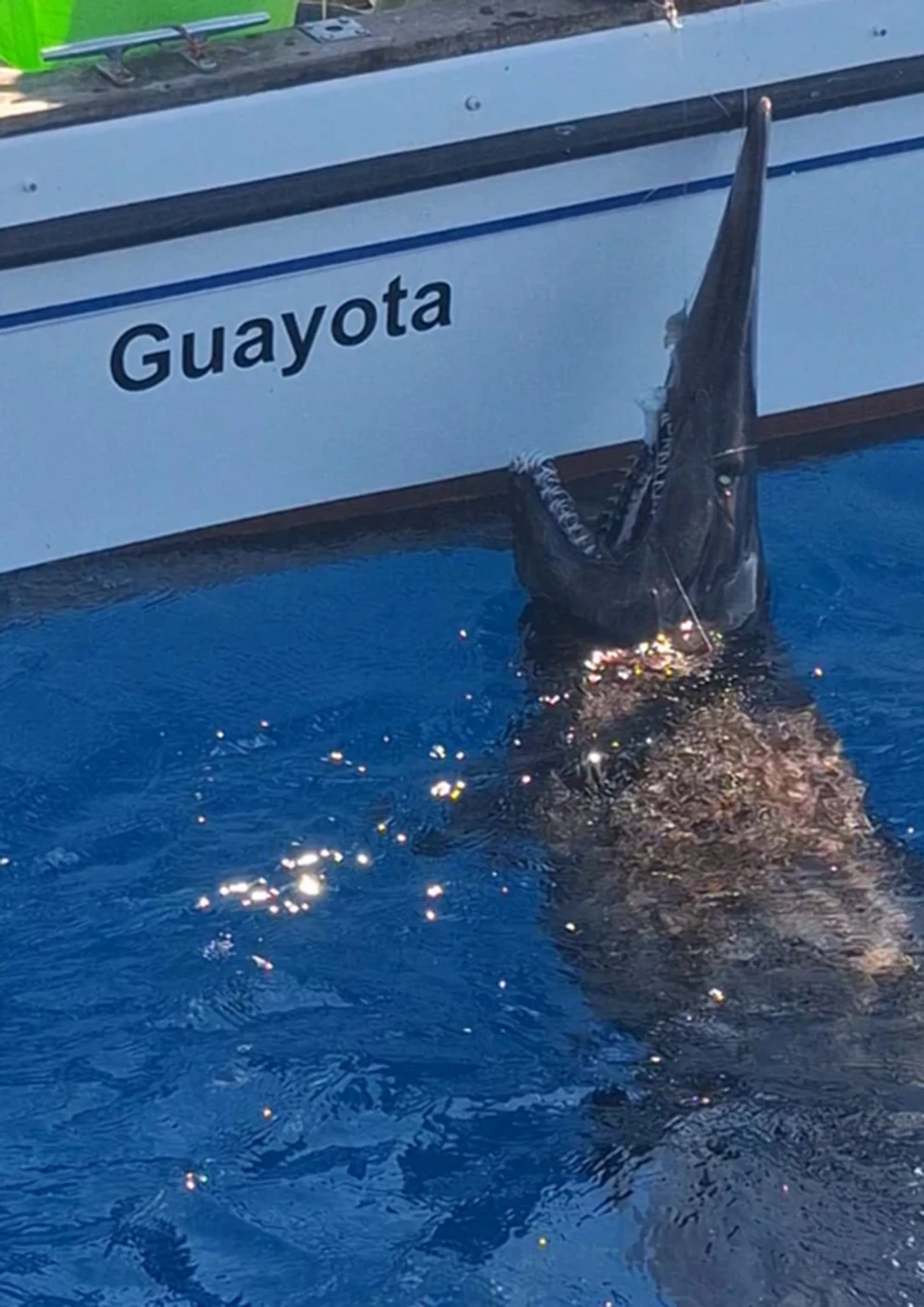
The specimen from Gran Canaria lacked claspers, structures used to identify male sharks, leading researchers to tentatively classify it as female. Measuring 2.5 meters, it fits within the size range typical of subadult goblin sharks.
Although these sharks inhabit depths between 250 and 1,500 meters worldwide, confirmed records are few and far between. In the northeastern Atlantic, previous sightings have been restricted to waters near Galicia, Madeira, Portugal, and Morocco. This new observation extends the documented range southward and fills an important gap on the species distribution map.
Why the Canaries Are a Stronghold for Deep-Sea Sharks
Scientists from the University of La Laguna interpret this discovery within the broader context of the Canary Islands as a refuge for deep-sea shark species. Since the 1980s, bottom trawling has been banned in the region’s waters, and there is no commercial fishing targeting sharks or rays at these depths. These protections appear to have allowed vulnerable deep-water populations to survive in an ocean otherwise heavily exploited by industrial fishing.
The archipelago’s marine environment supports this theory. At least 20 shark species inhabiting depths below 200 meters have been recorded around the Canary Islands, representing a significant ecological hotspot. The region’s steep underwater topography creates a layered habitat favored by slow-moving, deep-dwelling species.
Although accidental catches in passive fishing gear remain a threat, pressure on deep-sea shark populations appears considerably lower here than in much of the Atlantic.
Insights Into Goblin Shark Distribution From the New Sighting
This discovery contributes to an emerging pattern concerning goblin shark populations across the Atlantic. Nearly all goblin sharks observed in the eastern Atlantic have been juveniles or subadults, while adult specimens predominantly occur in the western Atlantic. The 2.5-meter-long shark from Gran Canaria fits the subadult profile typically recorded in eastern waters.
The underlying cause of this geographic separation remains unclear. Hypotheses include differences in water temperature, prey availability, or reproductive strategies guiding adults toward western areas. However, a lack of comprehensive data prevents definitive conclusions. Despite being described in the 19th century, the goblin shark remains enigmatic, as infrequent sightings hinder long-term study.
Rather than simplifying understanding, each new goblin shark observation tends to add complexity. Adults gather mostly in one ocean region, juveniles in another, and the connection between these groups remains a mystery. Whether the eastern Atlantic serves as a nursery, seasonal feeding ground, or exploratory range for juveniles is still unresolved.
Unlocking the Deep Sea’s Secrets One Encounter at a Time
The University of La Laguna team emphasized that their finding broadens the known marine range of goblin sharks in the Central-Eastern Atlantic. Importantly, they stressed the lack of systematic deep-sea surveys around the Canary Islands. Existing species lists at these depths largely derive from chance encounters rather than intentional investigation.
This context is vital: the goblin shark’s presence near the Canaries is not new. Other individuals have undoubtedly existed in these waters long before this 2026 capture. What changed was the fortunate timing of fishing activities and the decision to document the catch thoroughly.
The scientists advocate for ongoing monitoring of the archipelago’s deep-sea habitats, not just because one rare shark was encountered, but because the conditions permitting such discoveries suggest a wealth of unknown marine life remains to be explored.
- Categories:
- News






0 comments
Sign in to Comment