
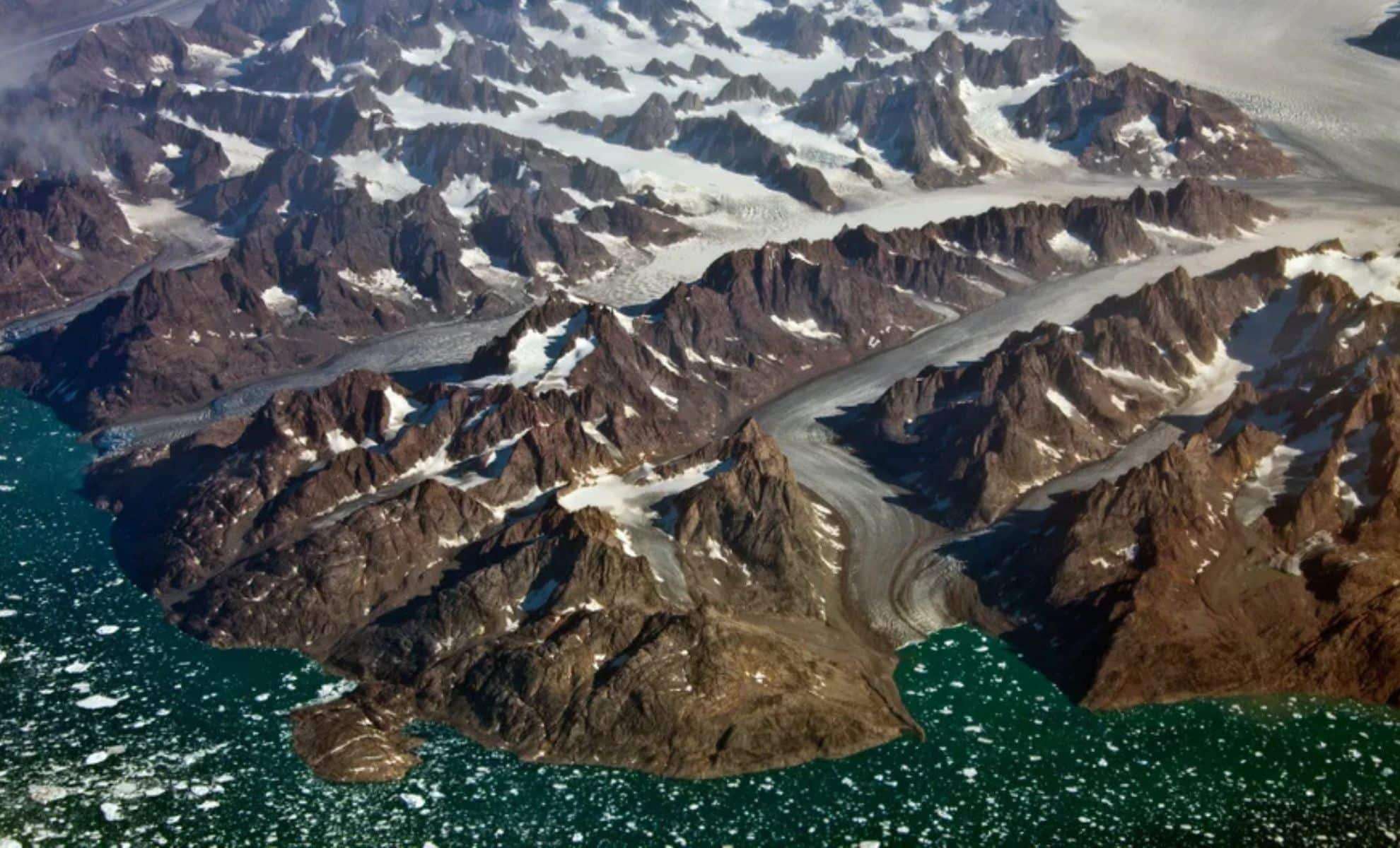
Over the last 20 years, Greenland’s shoreline has extended by more than 1,600 kilometers (1,000 miles). This expansion isn’t due to geological shifts or sediment accumulation but stems from the swift retreat of ancient glaciers. This dramatic alteration of one of Earth’s key ice-covered regions is driven by accelerating climate change, revealing land hidden beneath ice for thousands of years.
A new analysis published in Nature Climate Change harnesses satellite imagery to detail glacier retreat from 2000 to 2020. The research highlights alarming changes occurring in the Arctic, with significant implications for global sea level rise, ecosystems, and international relations.
Arctic Coastlines Shift as Ice Mass Disappears
International teams of glaciologists and geographers investigated marine-terminating glaciers—those flowing directly into seas. Their work revealed that nearly 2,466 kilometers of new coast materialized along the Northern Hemisphere’s ice margins between 2000 and 2020, with Greenland accounting for roughly 66 percent (1,620 km) of that growth.

The most dramatic retreat was documented at the Zachariae Isstrøm glacier in northeast Greenland, where over 81 kilometers of fresh coastline have emerged. This distance surpasses the retreat observed in any other glacier included in the research.
These shifts are neither gradual nor minor; glaciers that once extended to the ocean have pulled back tens of kilometers inland, exposing landscapes previously cloaked by ice for millennia.
New Islands Surface as Ice Withdraws
Alongside coastline growth, the study also confirmed the appearance of 35 new islands larger than 0.5 square kilometers, with 29 located in Greenland and the rest found in Svalbard and the Russian Arctic.
Of these, thirteen islands—twelve within Greenland—had never been documented before, indicating they were hidden under ice for centuries or longer. Interestingly, five islands previously mapped in the 1960s were re-submerged by advancing glaciers, but they have now reappeared as ice melts away.
These newly exposed islands are far more than just intriguing geographic features; they are tangible proof of the significant ice mass Greenland’s ice sheet has shed—and continues to lose at an increasing rate.
Uncovering Land Brings New Environmental and Political Challenges
While expanding coastlines and emerging islands might suggest geographical gain, they actually signal the loss of one of our planet’s largest ice stores. Greenland’s ice sheet contains enough water to raise global sea levels by more than 7 meters (23 feet) if fully melted. Even partial melting causes serious consequences, including coastal flooding, altered ocean currents, and climate disruption.
Moreover, diminishing ice introduces growing geopolitical complexities. As the Arctic becomes more accessible, nations such as the United States, Russia, Canada, and Denmark are increasingly vying for control over newly available lands and natural resources. The opening of potential mining sites, oil reserves, and shipping lanes in Greenland’s changing geography raises critical questions about territorial claims and environmental responsibility.
Greenland, which drew international scrutiny in 2019 following a controversial proposal by the Trump administration to purchase the island, has emerged as a key strategic asset with the ongoing shifts in the Arctic.
Rapid Changes in the Arctic Rewrite Maps and Futures
Greenland’s swift coastal transformation is part of a broader, rapid metamorphosis throughout the Arctic, where melting permafrost, vanishing sea ice, and glacier recession are reshaping the environment faster than anticipated.
Formerly persistent ice is now bare rock and sediment. Maps created just twenty years ago are quickly becoming obsolete. Scientists view these shifts as critical indicators of Earth’s response to warming, while communities and governments see them as a pressing warning.
The expanding shoreline of Greenland is not cause for celebration; rather, it serves as a clear warning signal. It reveals the speed and depth of climate change’s impact on the planet’s physical form, underscoring the urgent need to address global warming before irreversible damage occurs.
- Categories:
- News






0 comments
Sign in to Comment