
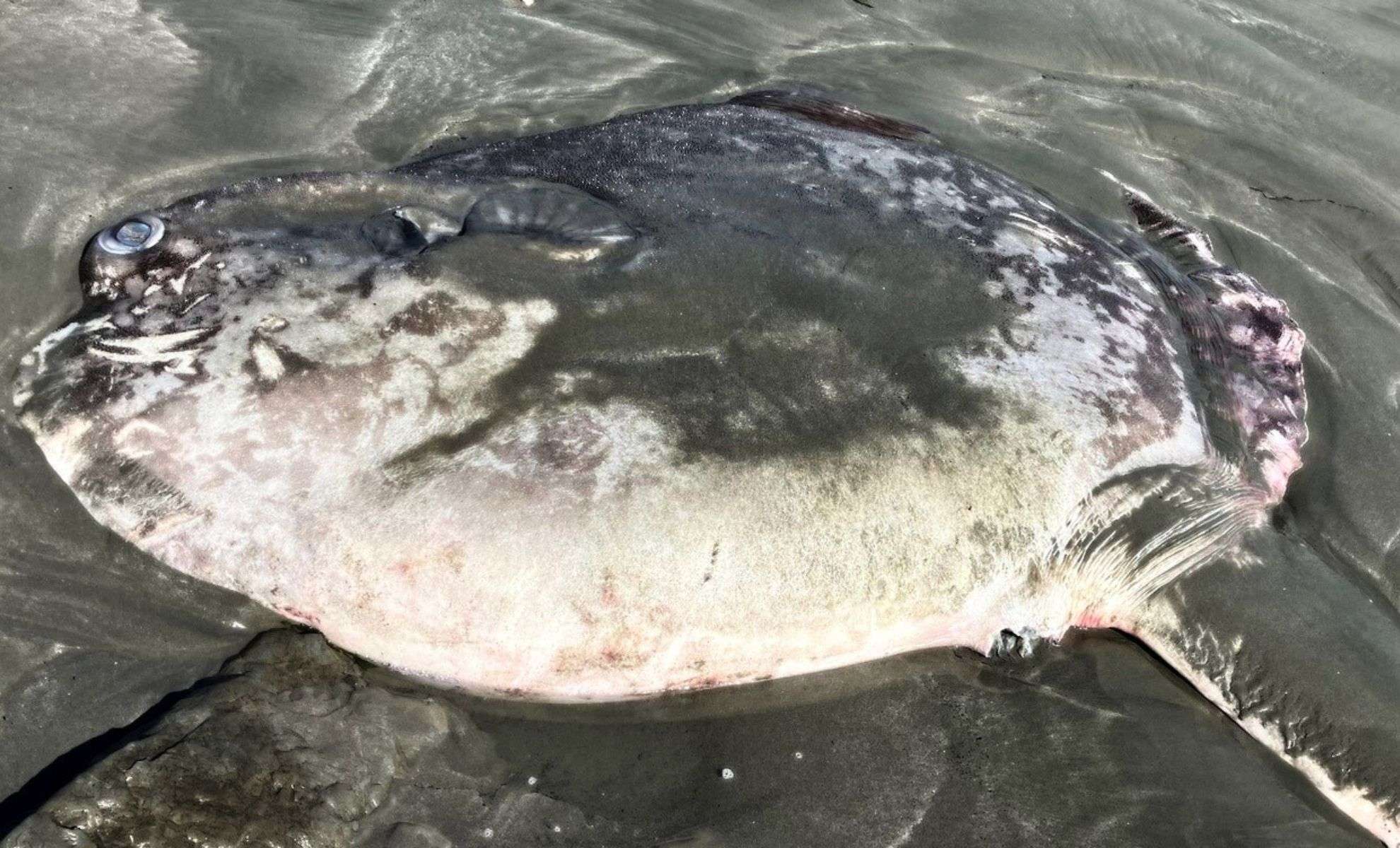
A massive and seldom-encountered hoodwinker sunfish recently surfaced on a northern California shoreline, sparking intrigue among marine researchers and visitors alike. This species, Mola tecta, which was officially identified only eight years ago, is rarely seen in the Northern Hemisphere.
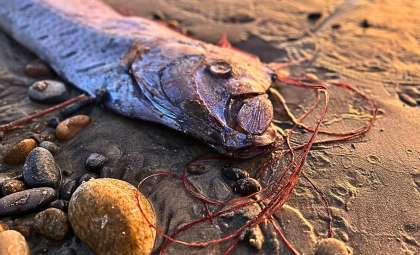
The 6-foot-long specimen, featuring a sleek, circular body and pale grey hues, was spotted earlier in September at Doran Regional Park near Bodega Bay, located roughly 70 miles (112.65 km) north of San Francisco. Its unexpected presence challenges prior knowledge regarding its range and suggests shifting oceanic environments.
An Unanticipated Discovery During Routine Beach Cleanup
The fish was uncovered on September 7 by Stefan Kiesbye, a local author and Sonoma State University professor, who frequently participates in weekend shoreline cleanups. Initially mistaking the creature for a deceased sea lion, Kiesbye found it about 50 feet from the water's edge.

“It was so enormous and so weird and gorgeous,” Kiesbye told The Press Democrat. “It’s like suddenly you’re on another planet.”
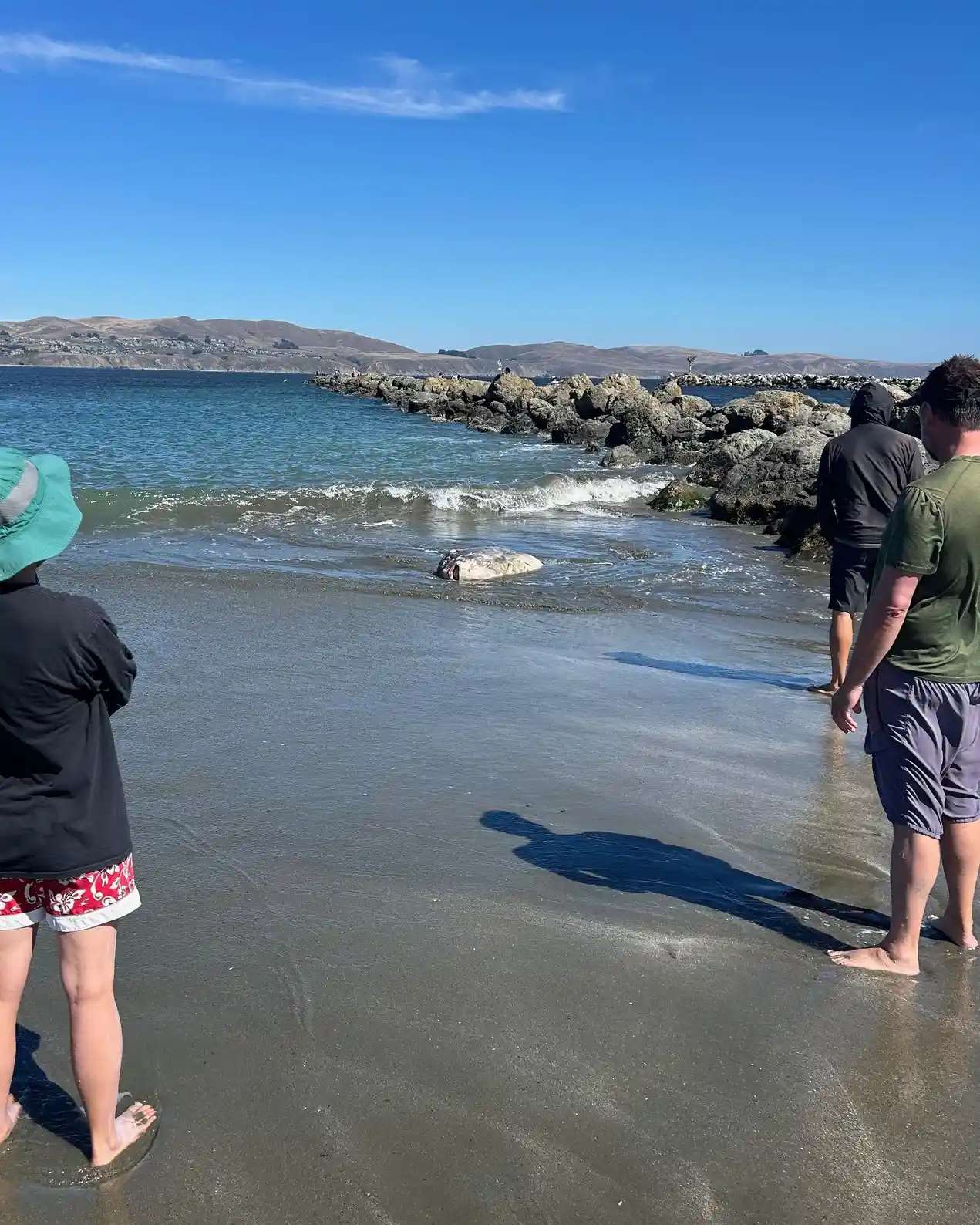
Upon further examination, it became evident that the animal was a unique fish rather than a mammal. With the assistance of internet research, Kiesbye identified it as a hoodwinker sunfish, a species rarely encountered even by experienced marine experts.
The Enigmatic Mola Tecta, Known Only Since 2017
The hoodwinker sunfish (Mola tecta) is a member of the Molidae family, which includes the heaviest bony fishes globally. Adults can weigh up to 4,400 pounds (2 metric tons) and reach lengths of 9 feet (2.74 meters), though the individual found was somewhat smaller.
This species was officially described in 2017 by a research group led by Dr. Marianne Nyegaard at Murdoch University in Perth, Australia. After extensive analysis of genetic and physical traits, Nyegaard determined that animals formerly mistaken for juvenile Mola mola comprised a separate species.
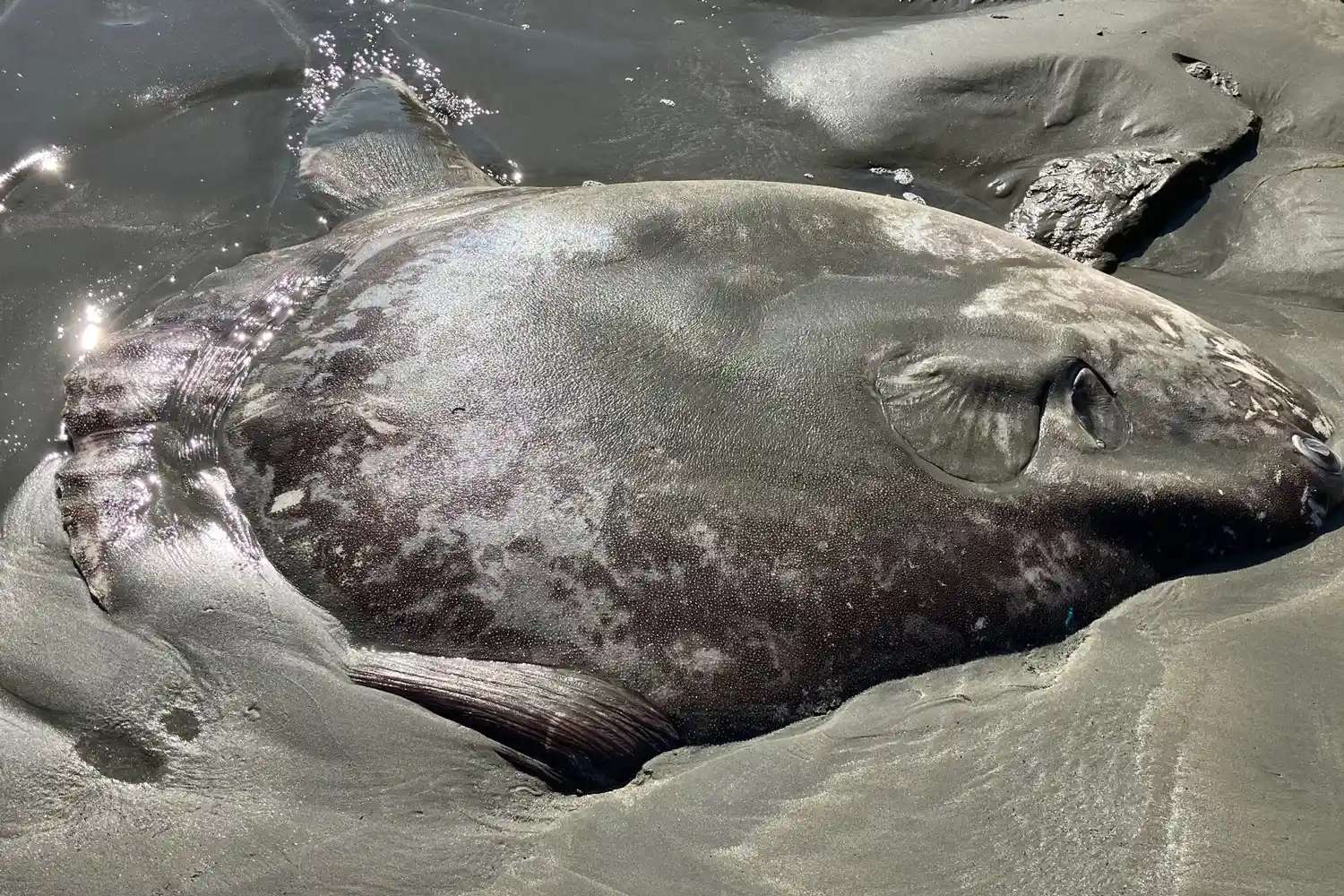
Unlike its relative, Mola tecta has a smoother silhouette with no pronounced snout or chin bump typical of adult Mola mola. Its clavus is shorter, and head shape is more understated. Previously, this species had only been found off New Zealand, Australia, South Africa, and occasionally near Peru, but never so far north.
“This is a huge surprise,” Dr. Nyegaard told SFGATE. “We didn’t think they crossed the equator, or if they did, only very rarely.”
From Mistaken Shark Sightings to Sunfish Revelation
Local rangers initially responded to reports of shark activity near Doran Regional Park’s jetty. However, the creatures in the water turned out to be small groups of Mola tecta, mistaken for sharks by observers.
By the weekend, one sunfish had washed ashore. Melanie Gutierrez, a ranger with Sonoma County Regional Parks, encountered onlookers unsuccessfully attempting to return the fish to the ocean. Unfortunately, the animal succumbed shortly after stranding.
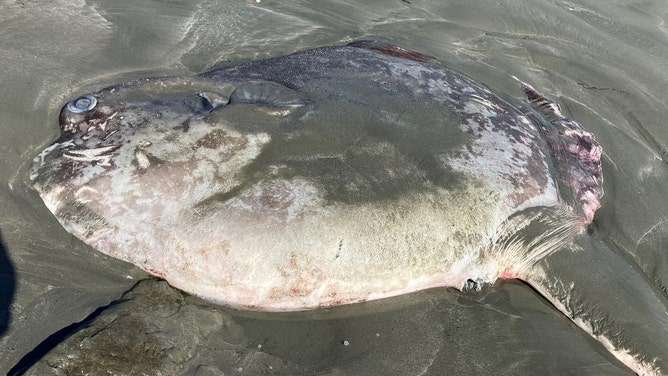
Ariana Reguzzoni, speaking for the regional parks, noted that photos indicated a possible fin injury on the sunfish, though the role this played in its beaching is unclear. Scientists at the Bodega Marine Laboratory of UC Davis have since obtained tissue samples for further analysis.
Ecological Significance of This Rare Occurrence
Though sunfish strandings are documented worldwide, much remains unknown about why they happen. These open-ocean dwellers occasionally get stranded due to factors such as navigation mistakes, thermal stress, or health problems.
Dr. Nyegaard, a leading authority on sunfish, suggests that the increasing frequency of northern sightings might be linked to shifts in ocean currents influenced by climate change. She hypothesizes that Mola tecta might be migrating beneath the equatorial warm zone, using cooler waters to travel northward.
“We still don’t know much about what triggers strandings,” she said. “But sightings like this are valuable—they give us rare opportunities to collect data and test hypotheses about their behavior and distribution.”
According to Sonoma County Parks, the sunfish's remains will remain undisturbed to allow natural decay, a practice that helps return nutrients to the coastal ecosystem and is standard procedure for marine wildlife deaths in protected environments.
- Categories:
- News











0 comments
Sign in to Comment