
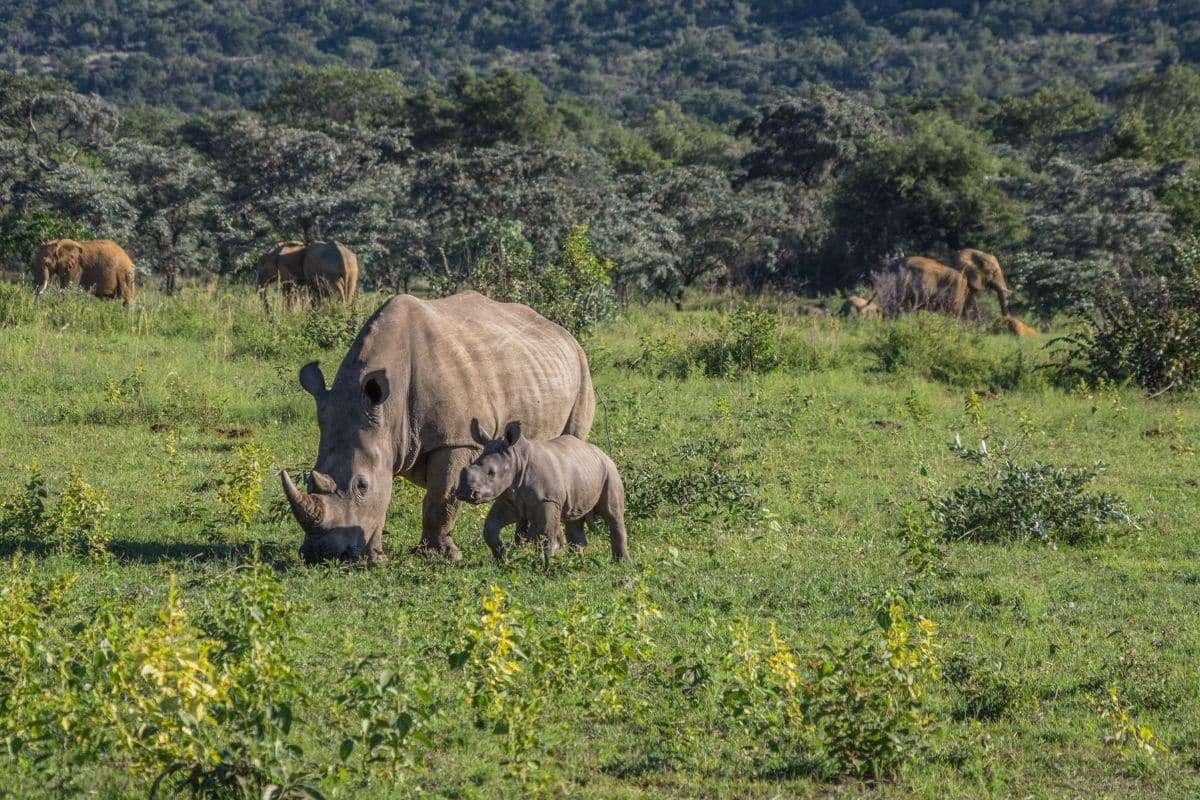
A group of scientists has officially updated the classification of the Javan rhinoceros, recognized as one of the rarest and most secretive large mammals on Earth. Previously placed in the same genus as the Indian rhinoceros, it has now been assigned a unique scientific name: Eurhinoceros sondaicus.
This revision, detailed in a recent report published in ZooKeys, highlights significant evolutionary and ecological differences between the two rhino species. Beyond a nomenclature update, this reclassification is expected to influence future conservation strategies aimed at protecting the critically endangered Javan rhino.
Distinctive Traits of Javan Versus Indian Rhinoceroses
Led by zoologist Francesco Nardelli and paleontologist Kurt Heißig, the research provides compelling evidence showing that Javan and Indian rhinos have followed separate evolutionary paths for millions of years, adapting to vastly different environments. These insights challenge previous taxonomic assumptions and justify the creation of a separate genus for the Javan rhino.
In contrast to the Indian rhinoceros (Rhinoceros unicornis), which thrives in grassy plains of India and Nepal, the Javan rhinoceros is a forest browser, feeding mainly on leaves and twigs in dense tropical jungles. Their anatomical features reflect this divergence:

- The Javan rhinoceros possesses a narrow skull, a broader, lower rear head region, and shorter teeth suited for browsing foliage.
- The Indian rhinoceros shows a more robust skull, longer teeth, and a heavier physique, adapted for grazing.
- Although both exhibit tough, armor-like skin, the Javan rhino has a distinctive polygonal skin pattern.
- Notably, female Javan rhinos do not develop horns—a characteristic unique among rhino species.
Implications for Conservation Efforts
With the population estimated at fewer than 80 individuals living exclusively in Indonesia’s Ujung Kulon National Park, the Javan rhino ranks among the planet’s most endangered animals. Recognizing it as Eurhinoceros sondaicus allows conservationists to better tailor protection plans to its precise biological and ecological needs.
The researchers stress that understanding a species’ evolutionary background is crucial when designing conservation programs. Since the Javan rhino depends on different food sources and habitats than its Indian counterpart, efforts to boost its numbers must be customized accordingly.
“Each species exhibits distinct survival adaptations, highlighting the necessity for accurate taxonomic knowledge to guide effective conservation,” the team notes.
Critical Conservation Challenges Ahead
Despite positive protection measures at Ujung Kulon National Park, the Javan rhinoceros remains extraordinarily vulnerable due to its confinement to a single habitat. This isolation renders the species susceptible to extinction from catastrophes such as disease, natural disasters, or human interference.
By officially designating the species as Eurhinoceros sondaicus, scientists hope to raise worldwide awareness of its fragile state and boost conservation actions.
Future initiatives could include discovering suitable new habitats for relocation, strengthening anti-poaching enforcement, and performing genetic analyses to monitor diversity and promote long-term viability.
- Categories:
- News
















0 comments
Sign in to Comment