
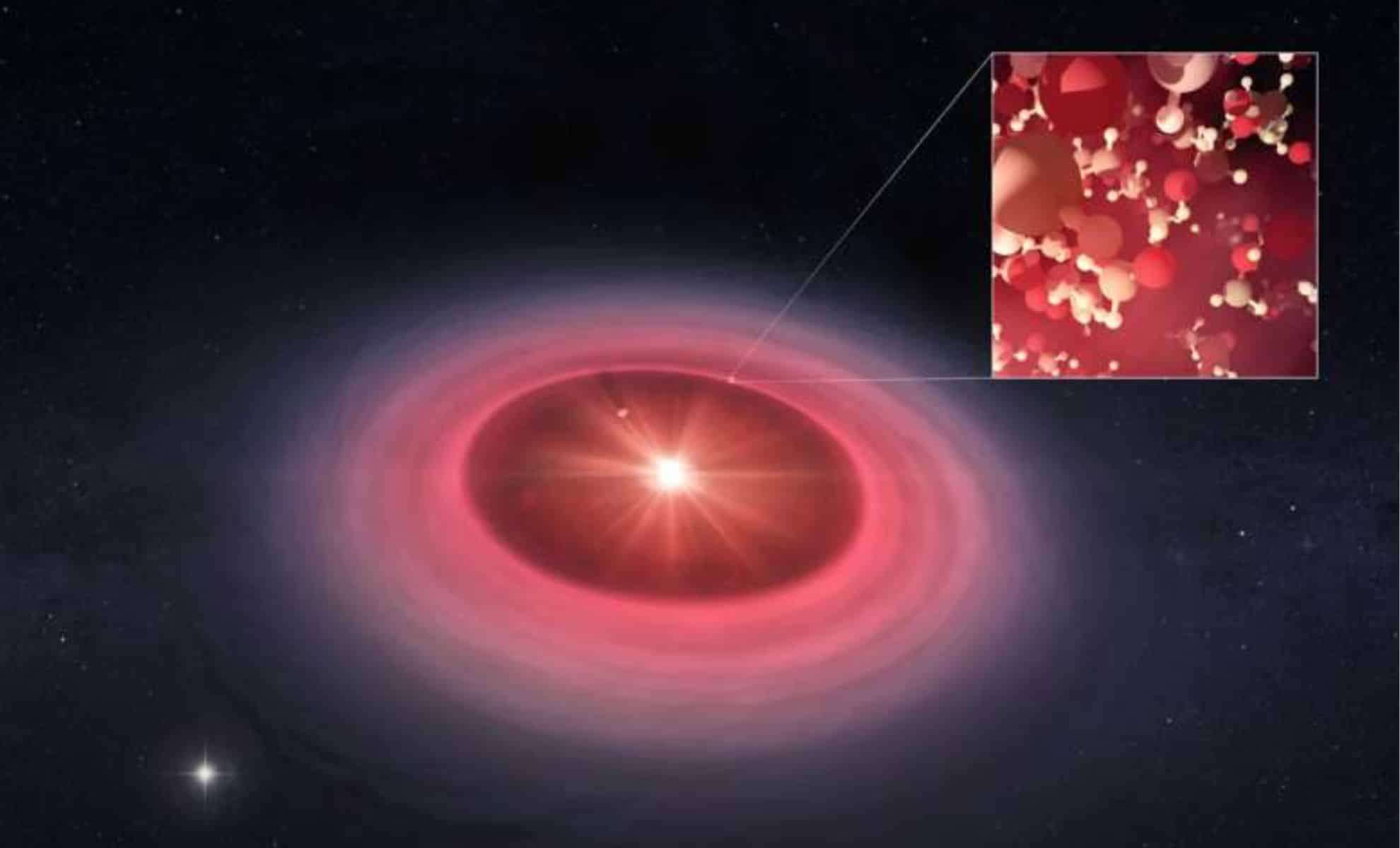
Astronomers have detected an uncommon variant of methanol, a fundamental organic compound, within the gas and dust disk encircling a newborn star. This breakthrough, achieved using the Atacama Large Millimeter-submillimeter Array (ALMA) in Chile, demonstrates that complex organic molecules can persist in the initial phases of planetary formation.
Tracing Organic Molecules Through Methanol Isotope Analysis
The scientists detailed their discovery in The Astrophysical Journal Letters, marking the first observation of methanol isotopes within a protoplanetary disk. Unlike the typical methanol molecules previously recorded, these heavier isotopes, containing extra neutrons, provide deeper insights into the chemical evolution of planetary building blocks.
Alice Booth from Harvard & Smithsonian’s Center for Astrophysics, who led the research, highlighted that the findings offer “valuable perspective on the origins of life’s essential ingredients on Earth.”

The methanol variants were identified orbiting HD 100453, a star approximately 330 light-years away with 1.6 times the Sun’s mass. Being just over a million years old, this system represents an active site of planet formation. ALMA's instruments detected warm methanol gas near the inner edge of a dusty ring around the star, located about 1.5 billion miles away—nearly sixteen times Earth’s distance from the Sun.
Stellar Heat Enables New Observations
The key to spotting these isotopes lies in HD 100453’s higher mass producing increased heat, which causes methanol molecules to transition from ice to gas further from the star. In comparison, stars like our Sun have colder disks where methanol remains frozen, hidden from ALMA’s instruments.
This warmer zone allowed ALMA to observe not only common methanol but also rare isotopes that are 10 to 100 times less prevalent. These molecules likely originated in organic-rich ices warmed by stellar radiation, evaporating into detectable gas.
Links Between Comet Chemistry and Earth’s Early Organic Molecules
A fascinating part of this research is its connection to the chemical makeup of our solar system. The methanol-to-organic compound ratio observed in the HD 100453 disk closely matches that found in solar system comets. This suggests that protoplanetary environments elsewhere could contain similar organic precursors to those delivered to Earth by comet impacts.
Milou Temmink from Leiden Observatory noted that these results reinforce the theory that “comets might have been key carriers of vital organic material to Earth billions of years ago.” These icy travelers may have supplied the complex molecules essential for the onset of life, acting as chemical couriers from stellar nurseries like HD 100453.
Key Building Block For Life Discovered In A Planet-forming Diskhttps://t.co/JMPYIHEEW7 #astrobiology #astrochemistry #organic chemistry #biosignature pic.twitter.com/4gM6ykW7Ch
— Astrobiology (@astrobiology) June 5, 2025
Complex Organics in Developing Planetary Systems
The abundance of methanol in the disk surrounding HD 100453 suggests that areas where planets are born might preserve intricate organic compounds, possibly including simple sugars and amino acids such as glycolaldehyde and glycine. While these specific molecules are yet to be identified in this system, the methanol isotope evidence points to their potential presence, awaiting detection by future instruments.
Lisa Wölfer from MIT, a co-author on the paper, expressed enthusiasm: “Confirming methanol as part of this stellar composition is a momentous achievement.” She added that at over a million years old, HD 100453’s organic richness could provide valuable clues about the chemical setups available in early planetary environments.
- Categories:
- News










0 comments
Sign in to Comment