
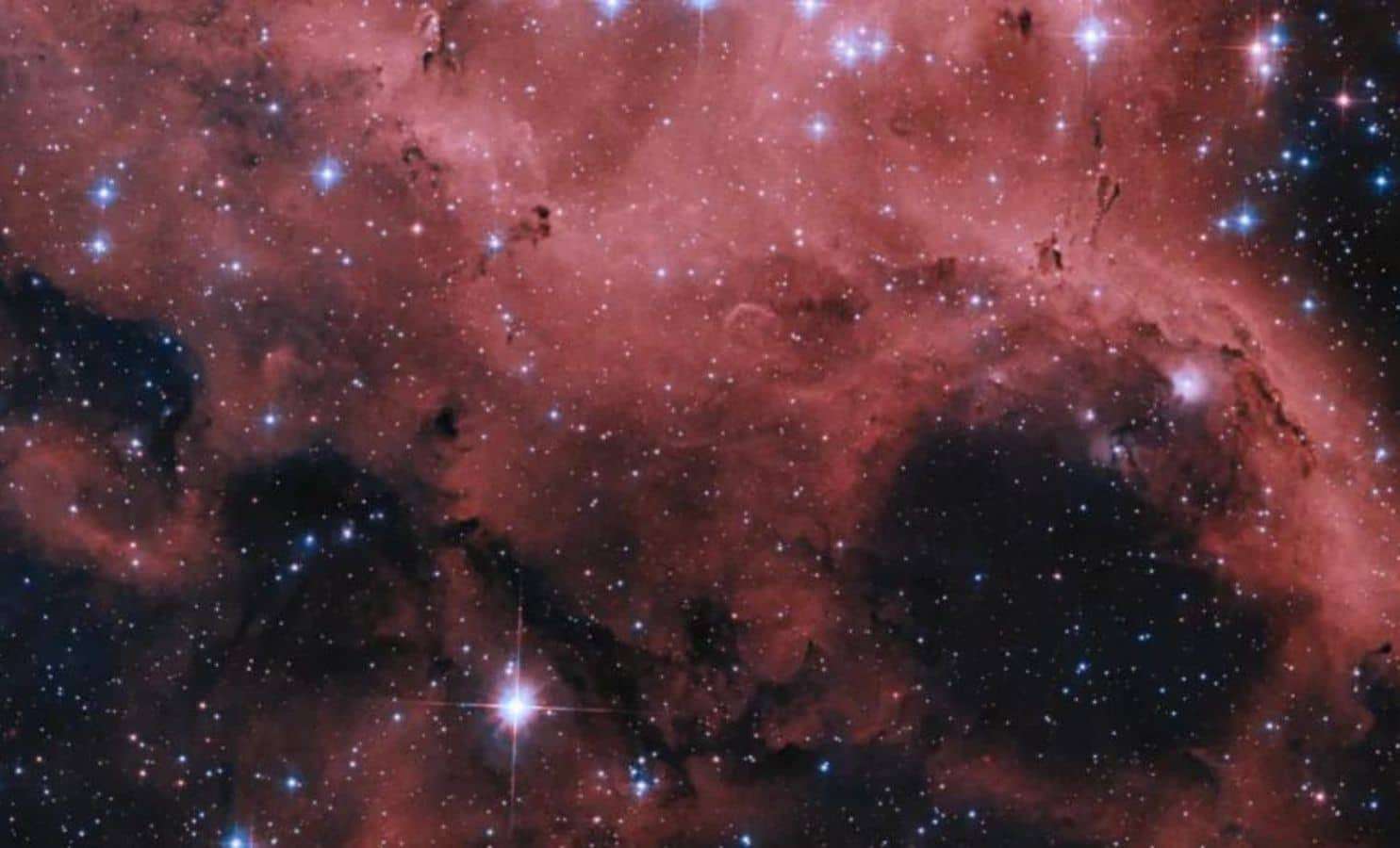
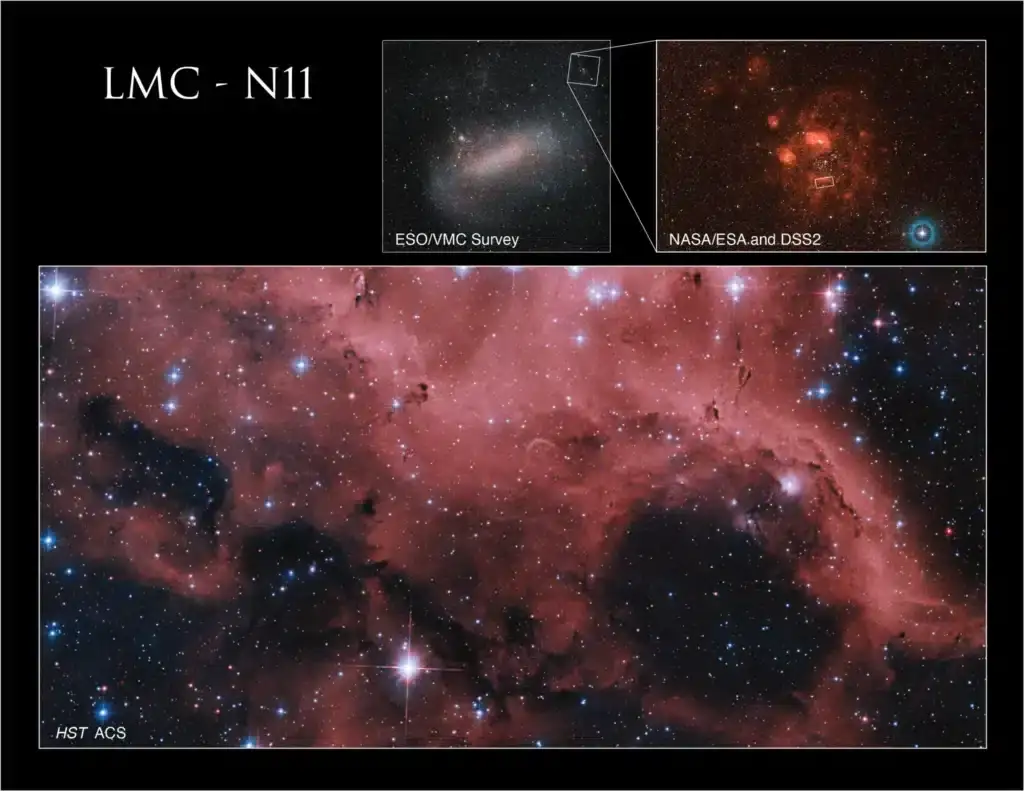
The Hubble Space Telescope has once again provided an extraordinary glimpse into the universe, this time spotlighting the Large Magellanic Cloud (LMC), one of the Milky Way’s closest galactic neighbors.
This latest image highlights the N11 nebula, a vibrant star-forming zone filled with clouds of energized gas and cosmic dust. Situated about 160,000 light-years from our solar system, the LMC is a dwarf galaxy boasting a star creation rate that outpaces that of our Milky Way.
Spanning nearly 1,000 light-years in diameter, the nebula displays intricate layers of luminous and shadowed clouds, resembling strands of delicate, glowing fibers.

A Crucial Star-Forming Region in the Large Magellanic Cloud
The N11 nebula ranks as one of the most prolific star-birthing areas in the Large Magellanic Cloud, second only to the famous Tarantula Nebula. Though the LMC is relatively small, its concentrated star-forming regions make it a vital target for astronomical research.
Hubble’s imagery uncovers enormous gas cavities sculpted by intense stellar winds from young, massive stars. These winds, together with the energetic blasts of supernova explosions, have hollowed out vast pockets in the nebula’s gas and dust.
“The Hubble images revealed expansive cavities formed by the intense forces of star birth and death,” noted NASA, emphasizing how these processes shape the surrounding environment. As the stars grow and die, they leave behind these voids, adding complexity to the already intricate structures within the nebula.
Exploring the Chemical Makeup of Stellar Nurseries
Star-forming regions such as N11 captivate scientists because their chemical properties resemble those in massive star factories from just a few billion years post-Big Bang. This similarity turns N11 and comparable nebulae into natural testbeds enabling study of early cosmic star formation. NASA highlights, “N11 offers astronomers a unique glimpse into the conditions present in the early universe.”
The distinctive pinkish glow in the Hubble image originates from the ionization of hydrogen gas triggered by ultraviolet radiation emitted by young stars within the cloud. These infant stars, still in the early chapters of their lifecycles, energize the hydrogen by stripping electrons, causing the nebula to shine brilliantly. This enchanting appearance not only captivates observers but also serves as a rich source for scientific inquiry.
Why N11 Is Key to Understanding Stellar Life Cycles
The Large Magellanic Cloud is pivotal in unraveling the mysteries of stellar evolution. Particularly, the N11 nebula has revealed how stars’ beginnings in dense molecular clouds and their explosive supernova finales reshape their neighborhoods. These dynamic cycles not only form nebulae but also enrich the galactic environment chemically.
Researchers focus intently on how star formation and destruction within areas like N11 influence the galaxy’s architecture and composition. NASA explains, “By studying N11 and similar nebulae, scientists are able to better understand the broader mechanisms that drive stellar evolution and galaxy formation.”
The vast bubbles captured in Hubble’s photos testify to these stellar processes. Young stars’ fierce winds blow away surrounding material, creating immense pockets, while supernovae produce shockwaves that carve even larger voids, producing the iconic bubble shapes that now come into view through Hubble’s instruments.
Insights into the Early Cosmic Era
Regions like N11 in the Large Magellanic Cloud offer vital insights for astronomers aiming to decode conditions prevalent in the universe’s infancy. “These nebulae mirror the chemical makeup of the first star-forming regions that existed just a few billion years after the Big Bang,” NASA explained.
By examining these cosmic nurseries, scientists enhance their understanding of the environments that guided the emergence of the first stars and galaxies.
Continuing exploration of such stellar incubators delivers essential clues about the universe’s origins. As researchers delve deeper into the Hubble data, they reveal ever more about the fundamental phenomena stirring star birth, death, and their sweeping influence on galactic evolution.
- Categories:
- Astronomy ,
- News ,
- Space ,
- Nasa




0 comments
Sign in to Comment