
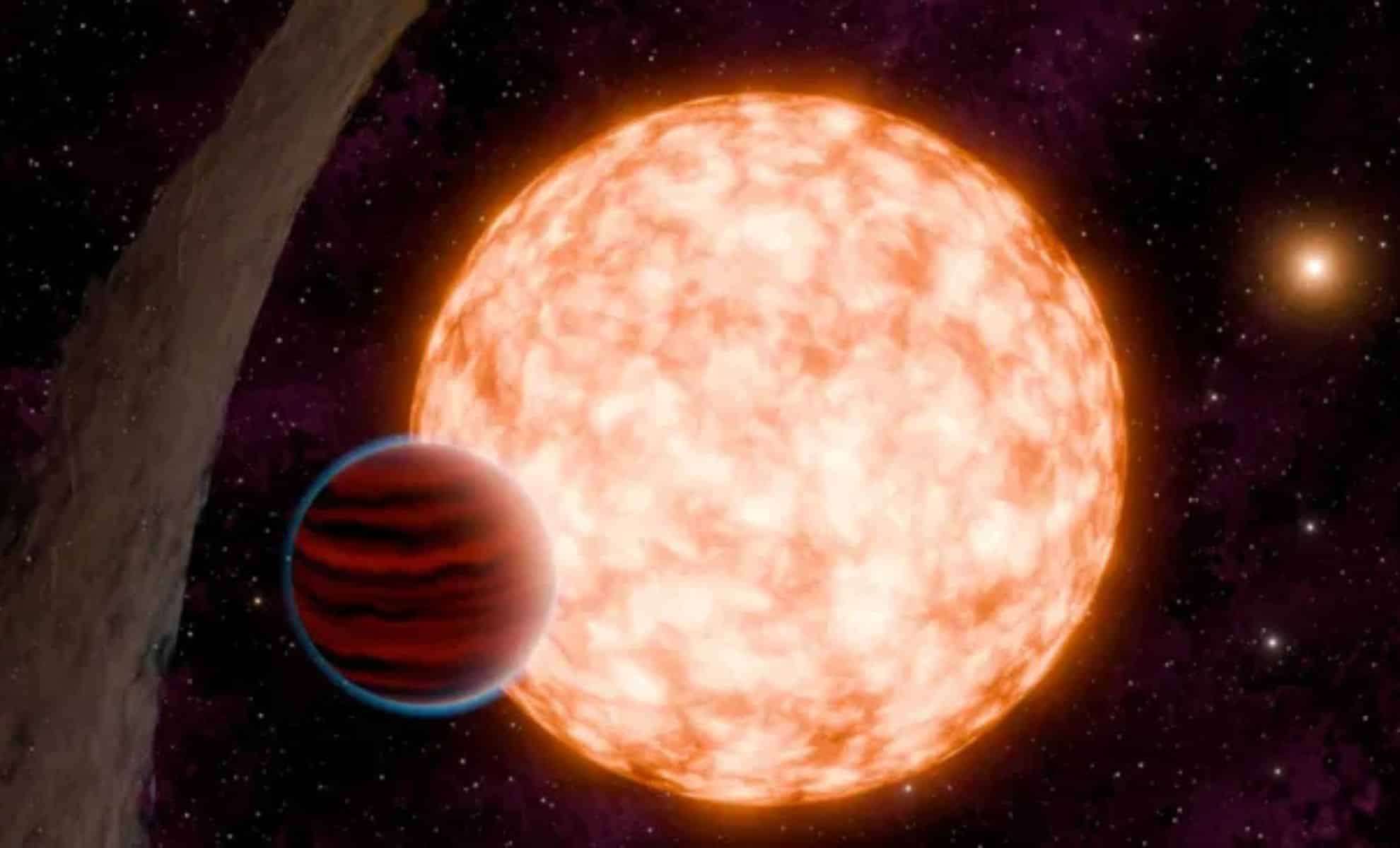
Researchers have uncovered IRAS 04125+2902 b, the most youthful transiting exoplanet observed to date. This newly formed gas giant encircles a star estimated to be merely three million years old, a blink of an eye in the cosmic timeline compared to an average stellar lifespan. Detected through NASA’s Transiting Exoplanet Survey Satellite (TESS), this planet provides scientists with a rare chance to probe the earliest stages of planetary evolution.
This finding pushes the boundaries of current planetary formation theories and offers fresh insight into the birth and maturation of planetary systems. Notably, the host star's protoplanetary disk—a swirling ring of gas and dust from which planets emerge—exhibits a significant misalignment, prompting new questions about the dynamics within nascent stellar environments.
Capturing a Planet at the Start of Its Journey
IRAS 04125+2902 b stands out not only for its tender age but also due to its size and orbit. The exoplanet measures about 10.7 times Earth’s radius, making it similar in size to Jupiter, yet it possesses only 30% of Jupiter's mass, indicating a much lower density. This suggests the planet is still contracting and cooling, unlike more mature gas giants.

This exoplanet orbits a star with roughly 70% of our sun’s mass every 8.83 Earth days, remaining very close to its host. The study, featured in Nature, highlights how its rapid orbit and lightweight nature shed light on the mechanisms shaping young planetary systems amid their turbulent environments.
“Our analysis indicates that IRAS 04125+2902 b is the youngest transiting exoplanet discovered by a margin of about three times,” the research team noted. Previously, the youngest discovered transiting planets ranged from 10 to 40 million years old, leading to uncertainty about how soon planets could form around stars. This detection firmly proves that planet formation can happen remarkably early.
An Unusual Tilted Disk and Its Implications
The star hosting IRAS 04125+2902 b is surrounded by a protoplanetary disk of leftover material from its formation. Typically, these disks align closely with a planet’s orbit, but here, the outer disk is tilted by approximately 30 degrees. This uncommon tilting facilitated the observation of the planet transiting the star, as it created a shadow visible against the stellar glow.
The cause of this disk misalignment remains uncertain. While nearby companion stars often distort such disks, the companion in this system seems to share the same orbital plane as the planet. Researchers state that these warped disks “offer rare windows into planet formation dynamics that are otherwise hidden by dense gas and dust.” This distinctive setup offers a vital opportunity to investigate the forces influencing young planetary systems.
Significance of the Discovery
The identification of IRAS 04125+2902 b is a crucial breakthrough in exoplanetary science. As a gas giant still developing, it provides astronomers with a unique glimpse of formation processes generally concealed in older planets. Observing its atmosphere during transits is particularly promising, as starlight filtering through can reveal chemical makeup and temperature.
Studying such a young planet’s atmosphere could transform how we understand planetary birth and evolution. As emphasized by Space.com, examining young exoplanets like IRAS 04125+2902 b offers a “scientific bonanza” of information unattainable from older planets or simulations alone.
Furthermore, this discovery sheds light on broader planetary system formation. With its low density and proximity to the star, the planet appears to be in the midst of significant gravitational contraction and heat release, processes key to understanding gas giant growth, including those within our solar system.
Future Prospects for IRAS 04125+2902 b
Located about 521 light-years away, this system is ideal for follow-up studies using cutting-edge technology such as the James Webb Space Telescope (JWST). Astronomers plan to investigate the planet’s atmosphere in detail, aiming to detect components like hydrogen, helium, and other trace molecules that could illuminate its composition and developmental processes.
Additionally, the star’s tilted protoplanetary disk could answer fundamental questions about how planetary systems originate and change over time. This uncommon characteristic challenges prevailing models of disk alignment and suggests that unknown forces might be at play during the earliest phases of planet formation.
- Categories:
- News









0 comments
Sign in to Comment