
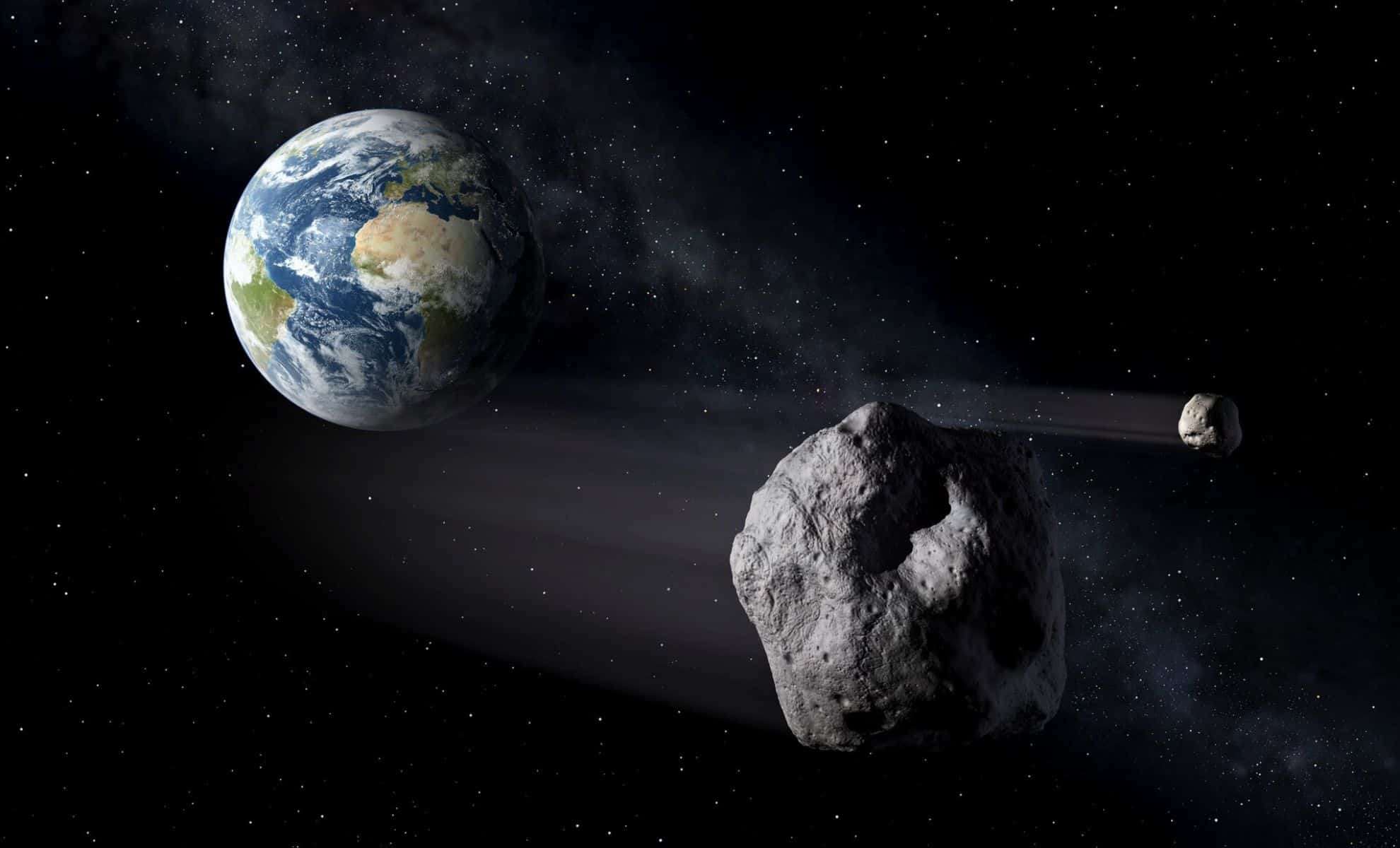
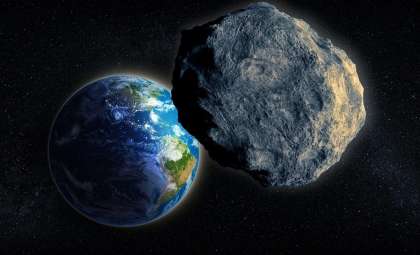
This week marks the close approach of two notable asteroids passing nearby Earth within just 42 hours, coinciding with this year’s observance of Asteroid Day. These flybys highlight the ongoing need to enhance the detection and surveillance of near-Earth objects (NEOs).
Two Asteroids Approaching Earth in Quick Succession
The European Space Agency (ESA) has announced that the asteroids 2024 MK and (415029) 2011 UL21 will both pass near Earth in a unique double encounter, providing researchers an excellent chance for observation and analysis.
Two interesting asteroids will safely pass Earth this week, a rare double flyby that is perfectly timed to coincide with this year’s @AsteroidDay!https://t.co/AOznSVdxNX
Add Cosmo Herald as a Preferred Source— ESA Operations (@esaoperations) June 24, 2024

Overview of Asteroid 2024 MK
Discovered recently on June 16, 2024, asteroid 2024 MK ranges in size from 120 to 260 meters. It is expected to pass Earth on June 29 at a distance of approximately 290,000 kilometers, which is about three-quarters the distance from Earth to the Moon. Although it will come relatively close, there is no danger of collision. An impact from an asteroid this size could still produce significant regional damage and disrupt populated areas extensively.
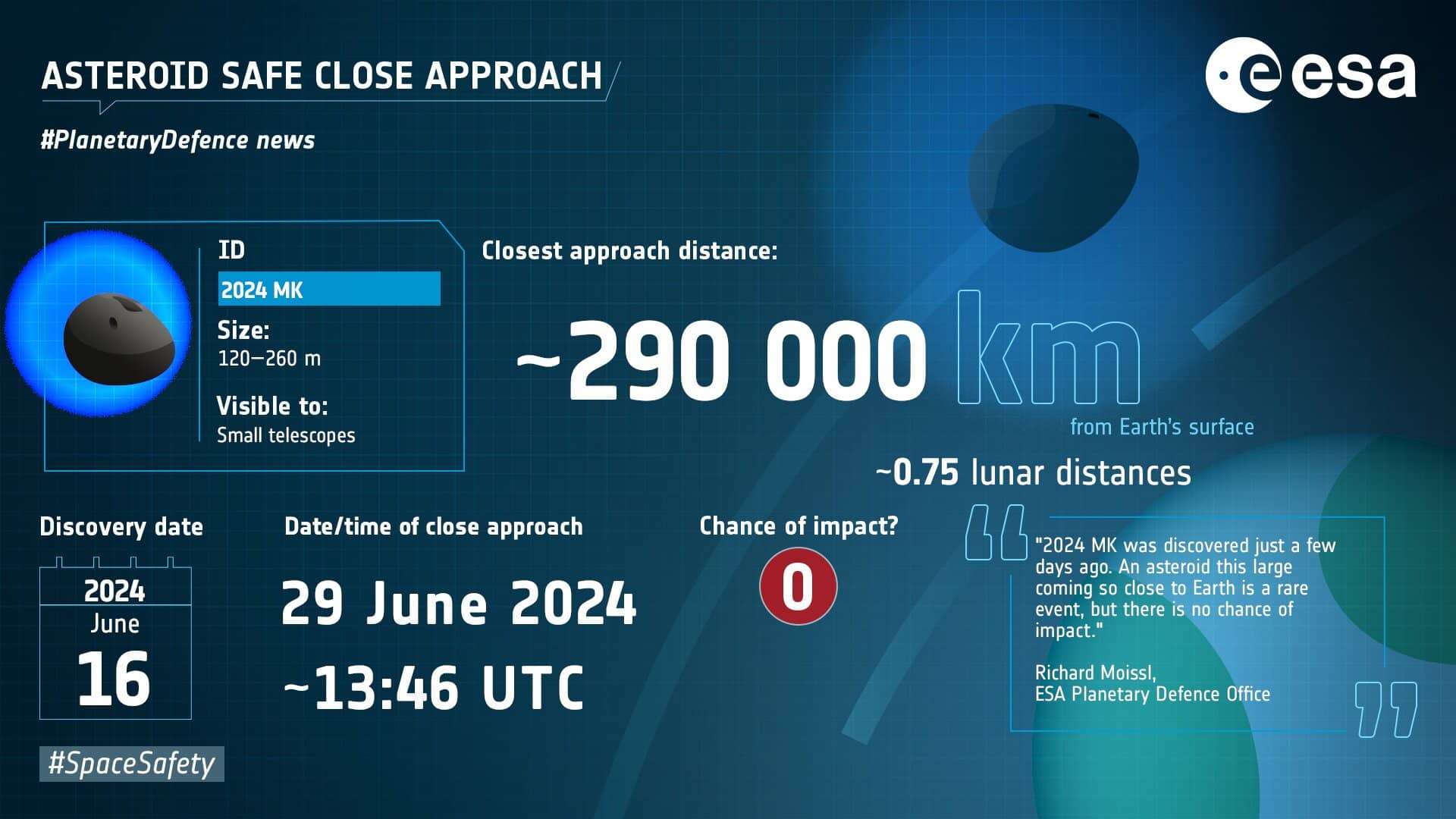
The quick identification and tracking of 2024 MK demonstrate both progress in asteroid monitoring and the areas where detection methods require advancement. Detecting such a sizable asteroid just two weeks ahead of its close passage underscores the urgency for improved early-warning systems.
Because of its dimensions and nearness, 2024 MK will be visible under clear, dark skies through small telescopes or binoculars in suitable locations. This presents a valuable chance for both professional and amateur astronomers to closely observe its physical and orbital properties.
The Larger Asteroid (415029) 2011 UL21
The bigger companion, (415029) 2011 UL21, measures roughly 2310 meters in diameter, making it one of the largest known near-Earth asteroids. It will safely pass Earth on June 27 at a distance exceeding 17 lunar distances. Despite its enormity, it poses no impact threat.
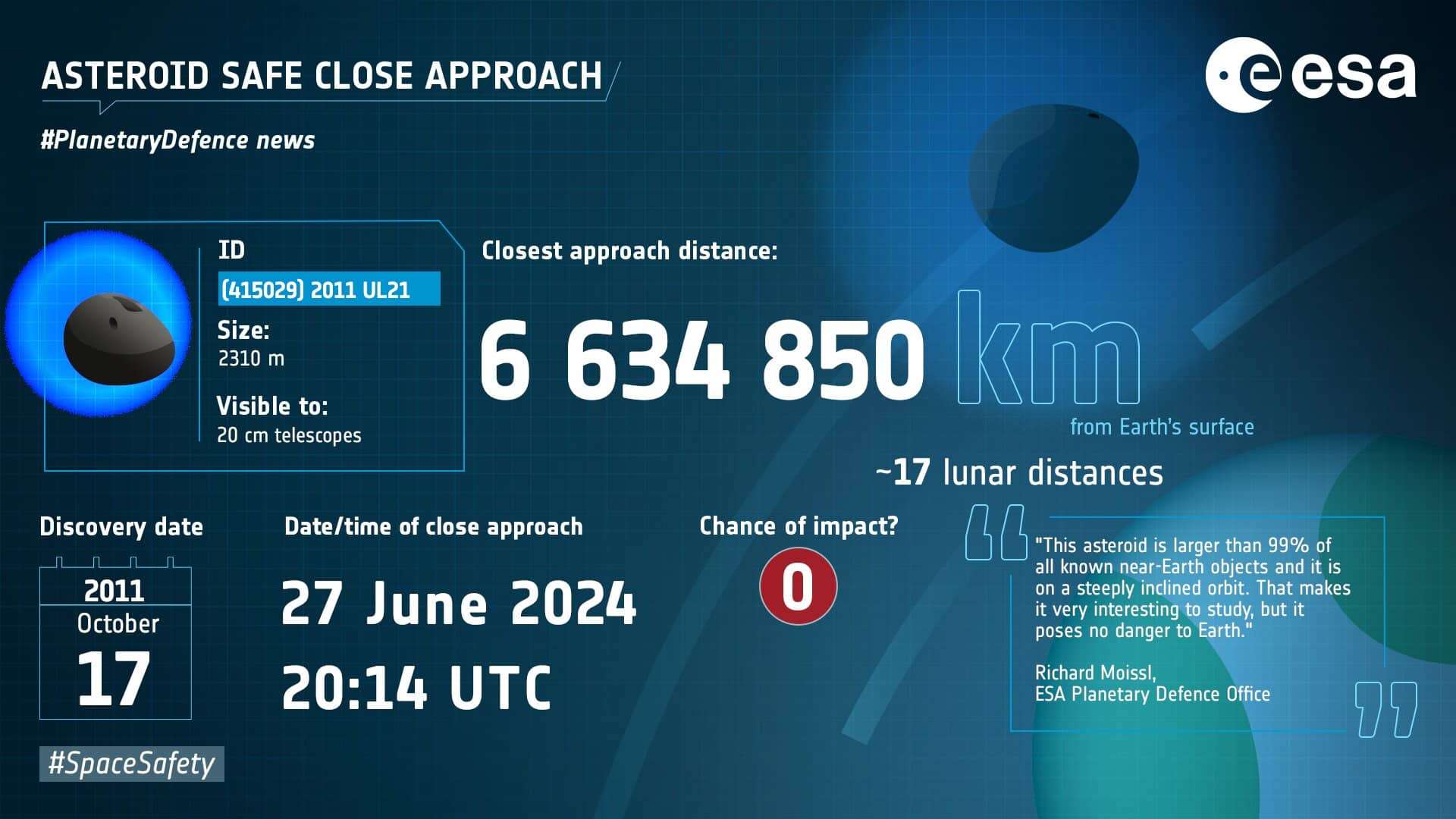
Should such an asteroid collide with Earth, the aftermath would be catastrophic on a global scale, potentially triggering climate upheavals and widespread extinctions similar to those that ended the reign of the dinosaurs.
Its orbit around the Sun is notably steep in inclination compared to most large bodies in the Solar System, likely influenced by gravitational forces from Jupiter. These interactions can alter asteroid paths, occasionally directing them towards Earth's vicinity.
Studying these orbital shifts is critical for understanding asteroid dynamics and improving prediction models that help mitigate impact risks.
Honoring Asteroid Day
Asteroid Day is observed annually on June 30 to commemorate the Tunguska event of 1908, the largest recorded asteroid explosion which leveled about 80 million trees across 2,150 square kilometers in Siberia. This event serves as a poignant reminder of the destructive power asteroids wield, and the narrow escape humanity has had as the blast occurred in a remote, unpopulated region.
Co-founded by astrophysicist and musician Dr. Brian May with others, and supported by the United Nations, Asteroid Day promotes global awareness of asteroid impact risks. It features educational initiatives, public talks, and special telescope viewing sessions to engage communities in planetary defense topics.
Progress in Detection and Earth Protection
Leading efforts in planetary defense, the European Space Agency coordinates expertise and data sharing to tackle asteroid threats. With an estimated five million NEOs larger than 20 meters—large enough to cause serious damage upon impact—ESA prioritizes continuous identification and analysis.
The upcoming Hera mission will be the inaugural space test of asteroid deflection strategies. Following NASA’s 2022 DART collision with asteroid Dimorphos, Hera will perform detailed reconnaissance to understand the impact effects and refine planetary defense technologies.
On the ground, ESA is developing an array of wide-field Flyeye telescopes modeled after insect vision to scan the skies nightly for hidden hazardous objects. Complementing this, the future NEOMIR satellite will detect asteroids coming from sun-obscured directions using infrared sensors.
ESA’s Planetary Defense Office maintains vigilant observation networks. In May 2024, their fireball camera in Cáceres, Spain captured a meteor suspected to be debris from a small comet, and in June 2024, the Catalina Sky Survey found a tiny asteroid that passed closely by Earth, underscoring the need for persistent monitoring.
Technological improvements and international collaborations are vital to protect Earth from asteroid hazards, enhancing our ability to detect threats early and mount effective defenses for future safety.
- Categories:
- Astronomy ,
- News ,
- Space







0 comments
Sign in to Comment