
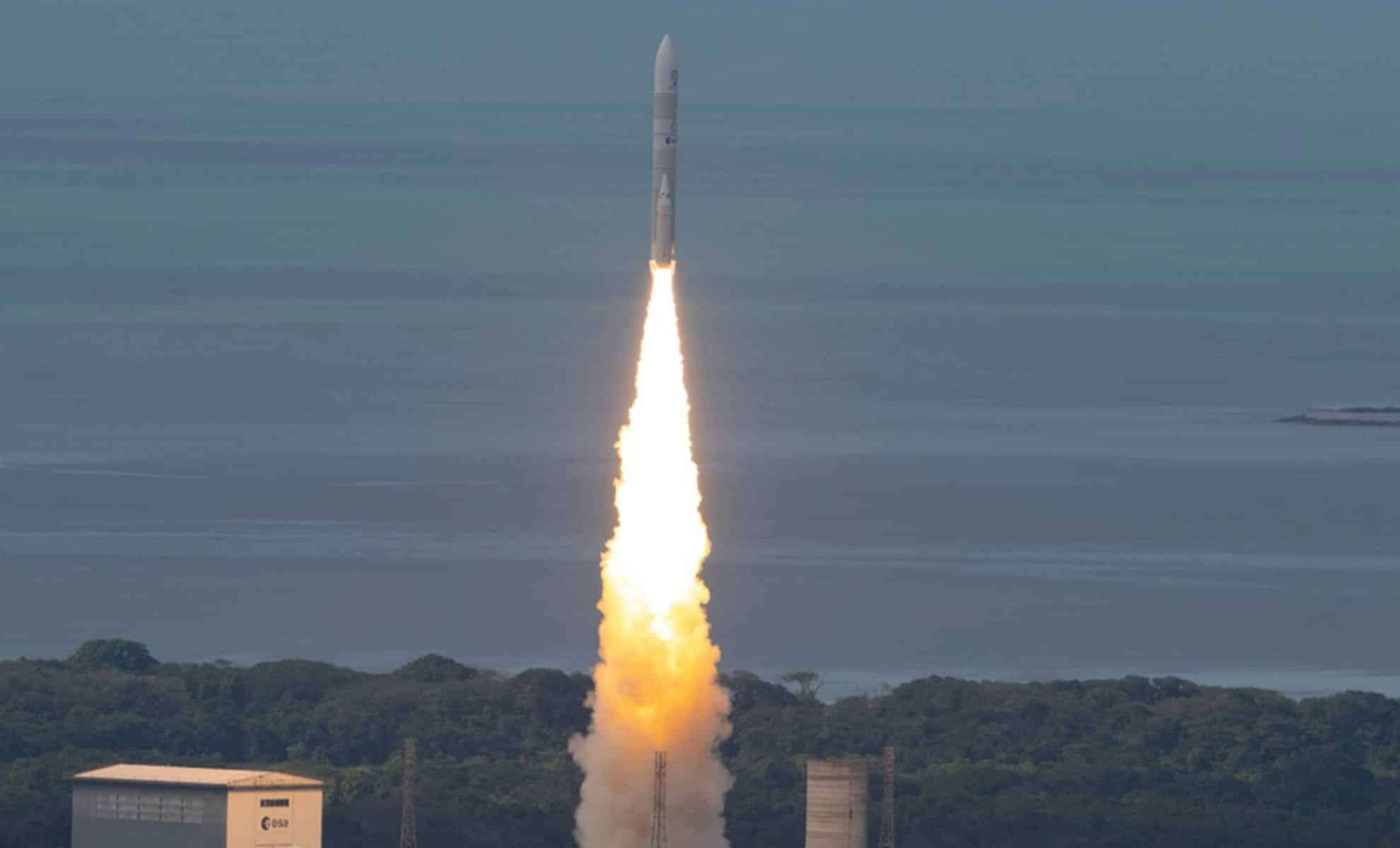
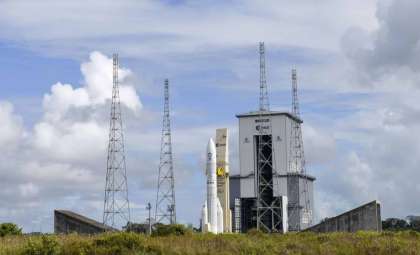
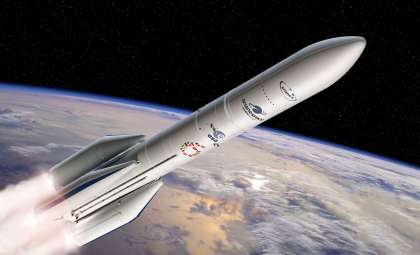
The European Space Agency (ESA) has marked a major advancement in its space program with the first successful flight of its new heavy-lift rocket, Ariane 6, signaling Europe's strengthened presence in space launch capabilities.
This achievement restores Europe's capacity in heavy payload delivery that had been dormant since the Ariane 5 rocket was retired in July 2023.
Flawless Liftoff and Precise Satellite Placement
The launch proceeded smoothly as scheduled, with the rocket taking off at 17:06. Shortly after, the upper stage deployed an array of satellites into a 600-kilometer orbit, confirming the rocket’s effectiveness in delivering varied payloads into exact trajectories.

Among the payloads were satellites and scientific experiments contributed by a diverse group of stakeholders including space agencies, commercial firms, academic institutions, and emerging aerospace professionals. Validating Ariane 6’s capacity to place payloads accurately is crucial for its future commercial and research applications.
ESA commemorated the milestone stating: “At 17:06, a little over an hour after liftoff, the first set of satellites on board Ariane 6 were released from the upper stage and placed into an orbit 600km above Earth.” This success affirms Ariane 6’s promise as a reliable launcher for Europe’s expanding space efforts.
Complication in Auxiliary Propulsion Unit Testing
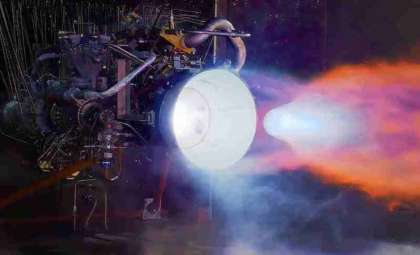
Despite the overall positive outcome, the mission faced difficulties during the activation of the rocket’s Auxiliary Propulsion Unit (APU). This vital system is intended to restart the upper stage’s Vinci engine to enable orbit changes and multiple payload deployments. While the initial ignition was successful, the second attempt failed, preventing the release of two re-entry capsules meant to burn up upon atmospheric return.
Martin Sion, CEO of ArianeGroup, the company behind Ariane 6's construction and operation, commented, “We don’t know why it stopped,” pointing to ongoing investigations. He added, “Since the Vinci engine did not reignite, the demo could not be completed. The upper stage was placed in a safe orbit, as confirmed by ESA, and the capsules remained onboard.”
Mission Outcome and Achievements
ESA representatives nonetheless hailed the mission as a success, highlighting that all main goals were accomplished and that Ariane 6’s performance aligns with expectations set by its predecessor, Ariane 5. “Everything else went according to plan,” noted Sion, emphasizing that the test provided valuable insights into the vehicle’s microgravity behavior, which is untestable on the ground.
The flawless satellite deployments reinforce confidence in Ariane 6's capabilities and set the foundation for upcoming launches, including a planned follow-up launch later this year and six additional flights slated for 2025.
Upcoming Prospects and Operational Flexibility
Designed for adaptability, Ariane 6 can transport more than 20 tons to low Earth orbit using four boosters or about 10.3 tons with two. ESA intends to address the APU malfunction, though not all missions will require the unit’s function. This flexible approach ensures launches can continue even if the APU is not fully operational, a critical consideration for mission scheduling and fulfillment.
Sion emphasized, “Future missions may proceed without the APU being fixed because not every mission involves a microgravity phase.” This capability allows ESA to maintain its launch cadence while working on technical refinements.
A New Chapter for Europe’s Heavy-Lift Launchers
Ariane 6’s initial flight signifies Europe’s return to the heavy-lift launcher arena after a period of hiatus following the Ariane 5 retirement. Although initially funded in 2016 with a target launch in 2020, delays postponed its debut. Now operational, Ariane 6 meets the rising demand for precise satellite deployment and offers promising prospects for future enhancements.
The rocket’s successful demonstration bolsters ESA and the European aerospace sector, confirming Ariane 6’s readiness for upcoming missions. While challenges remain with the APU, the rocket’s overall performance and payload deployment reassure its role as a cornerstone in Europe’s space endeavors, supporting scientific, commercial, and exploratory objectives.
- Categories:
- Astronomy ,
- News ,
- Space ,
- Aircraft






0 comments
Sign in to Comment