
Unearthed in 2021 at Saqqara, an ancient necropolis in Egypt, a limestone sculpture is revolutionizing perspectives on Old Kingdom Egyptian art. Hidden beneath the sands near Gisr el-Mudir—one of Egypt’s earliest stone constructions—the statue depicts a nobleman alongside his wife and daughter in a design unseen before from this time period.
This extraordinary discovery was recently detailed in a peer-reviewed article featured in The Journal of Egyptian Archaeology. Co-authored by renowned Egyptologist Dr. Zahi Hawass and Dr. Sarah Abdoh from Benha University, the paper describes the sculpture as uniquely crafted. While the nobleman’s name is not inscribed on the statue itself, a nearby false door—a traditional funerary architectural element—carries the name “Messi,” thought to be the identity of the figure depicted.
“This piece fundamentally alters our understanding of artistic possibilities during the Old Kingdom era,” Hawass noted in correspondence. “It challenges conventions on multiple levels.”

A Stone Portrait of Family and Time
Measuring just over one metre, the statue portrays a man in a classic left-foot-forward stance symbolizing life force in ancient Egyptian art. He is dressed in a pleated short kilt and sports a traditional lappet wig—rendered with a surprising focus on anatomical accuracy. Positioned at his right leg is his wife, kneeling and crafted noticeably smaller in scale. However, the daughter figure is what truly fascinates scholars.
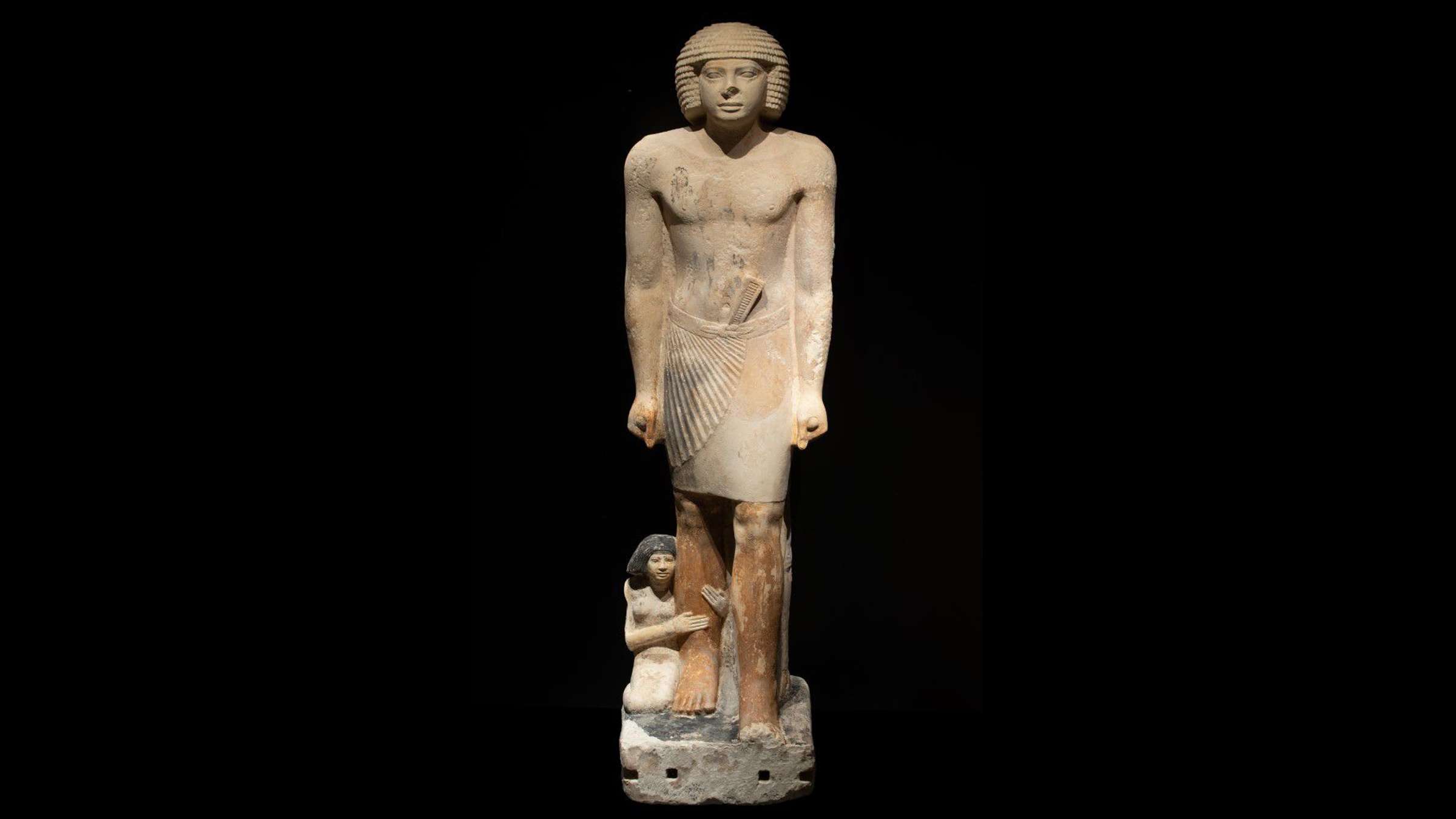
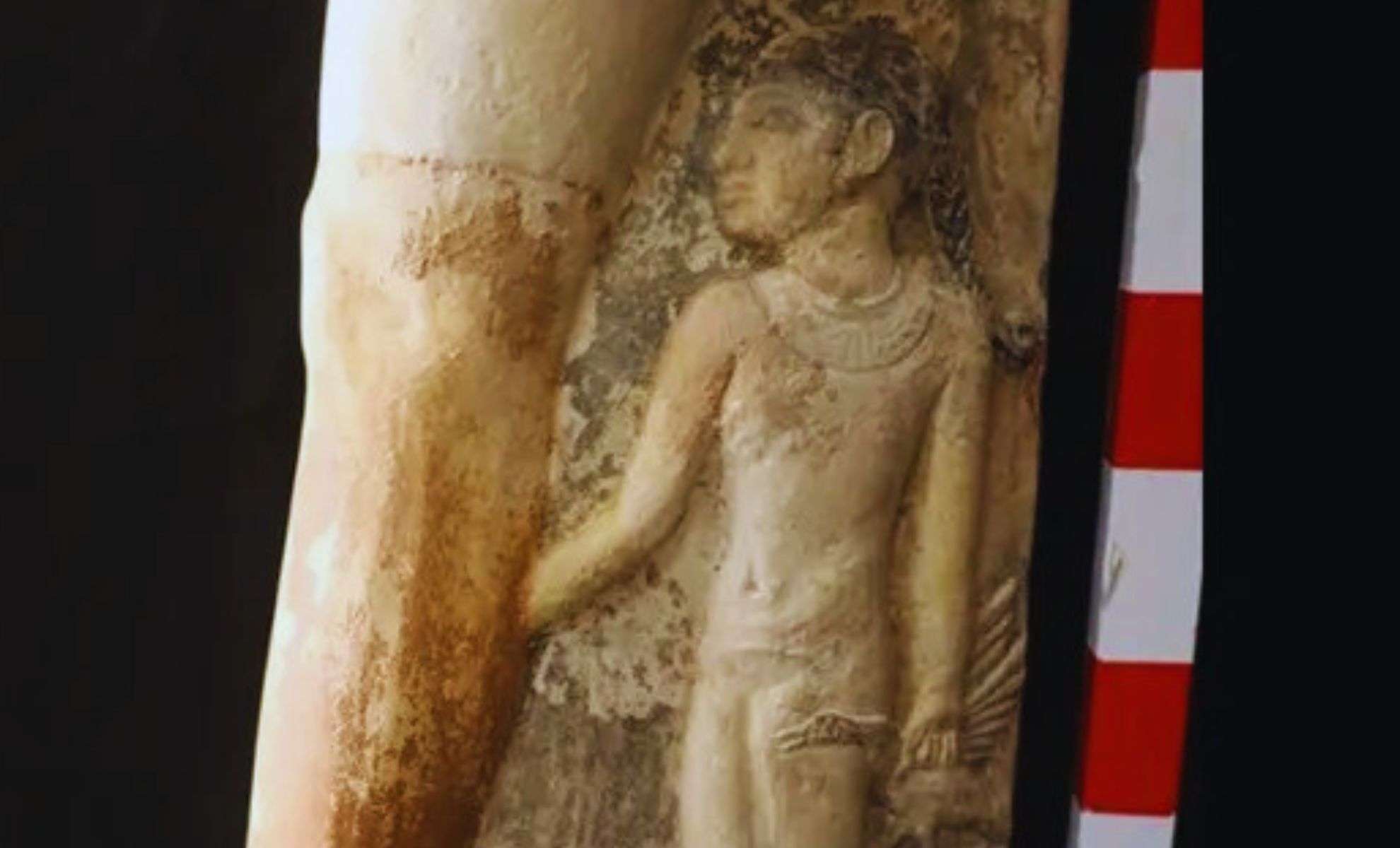
Uniquely, the daughter is sculpted in high relief rather than in full three-dimensional form, emerging partially from the limestone backdrop. She is positioned behind her father’s left leg, with one hand grasping it and the other holding a honking goose—a symbol likely connected with offerings for the afterlife. This combination of sculptural methods within a single artwork—integrating freestanding carving with relief—is unprecedented for the Old Kingdom period (c. 2686–2181 BCE), according to the research team.
Traditionally, Egyptian statues use size to denote social status. That the daughter is both smaller and depicted in relief introduces a sophisticated artistic nuance uncommon in the strict canons of the Fifth Dynasty. The artisans behind the statue exhibited remarkable skill and a willingness to innovate.
Insights from Artistic Style
Although the statue lacks inscriptions, its style closely resembles the famous statue of Irukaptah housed at the Brooklyn Museum. Both sculptures are limestone, similar in stature, and display Fifth Dynasty stylistic traits. Experts hypothesize that these pieces may have emerged from the same workshop or artistic circle operating in Saqqara during this epoch.
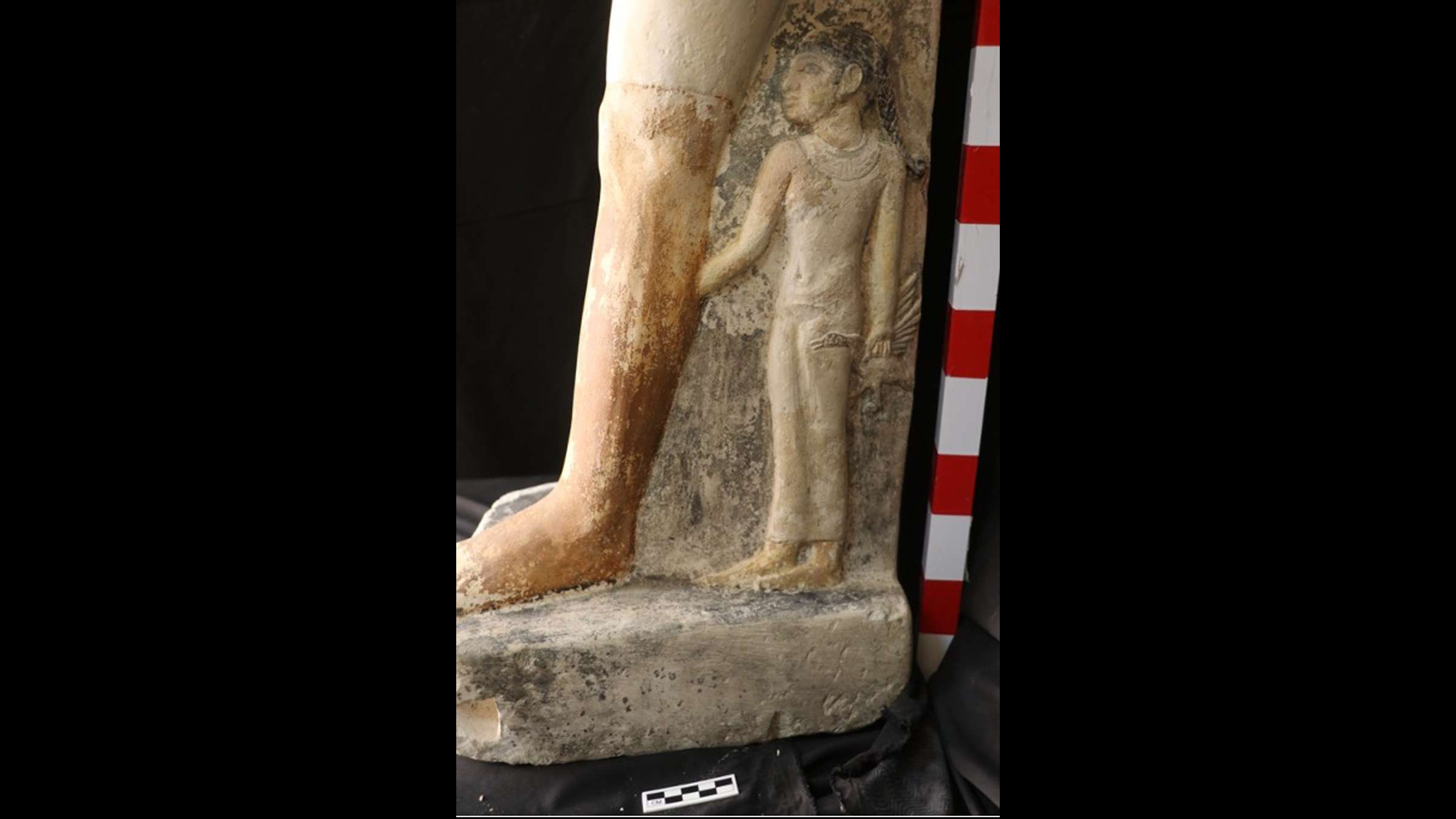
Detailed stylistic examination—focusing on hair, garment folds, and posture—places the creation of the Messi statue between 2465 and 2323 BCE, aligning with the reigns of Pharaohs Niuserre and Djedkare Isesi. This era marked a transition in tomb architecture, with a decline in pyramid construction by elites and the rise of more personalized burial sites.
“The fusion of lifelike representation and symbolic imagery reflects a conscious and sophisticated artistic choice,” Abdoh explained. “It reveals that even during rigidly traditional periods, experimentation remained possible.”
Artistic Innovation Amidst Tradition
Previously, the combination of sculptural techniques seen here was believed to originate only much later, during the Ptolemaic period, over two millennia after the Old Kingdom. This Saqqara discovery demonstrates these approaches existed and were applied far earlier than previously assumed.
Beyond its innovative craftsmanship, the statue underscores Saqqara’s longstanding status as a vibrant cultural and spiritual center. As a prominent burial ground for officials, clergy, and craftsmen across centuries, ongoing excavations—from animal mummies to intact coffins—continue to reveal new dimensions of its archaeological value. For instance, in 2020 alone, more than 100 sealed sarcophagi were uncovered there, reinforcing its enduring significance.
- Categories:
- Science




0 comments
Sign in to Comment