
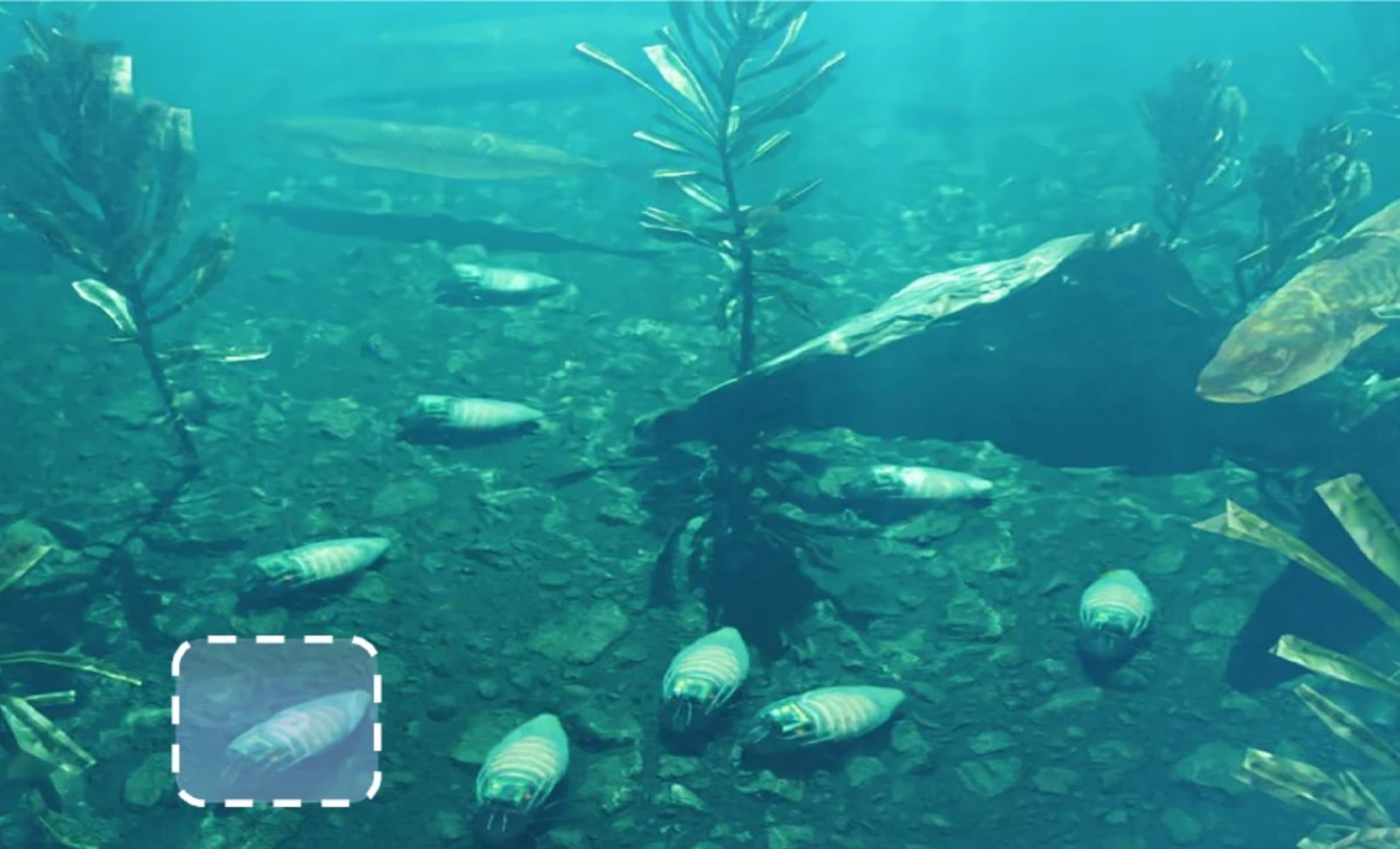
Scientists have engineered Madagascar hissing cockroaches into amphibious “cyborg” creatures by equipping them with a compact diving apparatus that enables underwater activity for up to three hours. Published in Nature Communications, this innovation promises to assist exploration in flooded and hazardous environments unsuitable for human entry.
While it may sound futuristic, the method is grounded in a straightforward principle: enhancing the cockroaches’ innate agility with a lightweight oxygen delivery system that supports underwater respiration. This modification transforms a primarily terrestrial insect into one capable of navigating submerged settings.
The team selected Madagascar hissing cockroaches due to their size and durability, making them ideal candidates to carry the apparatus without limiting their ability to maneuver in confined spaces.

The Key: A Miniature Diving Apparatus
Each cockroach was outfitted with a custom-made “diving suit” comprising a protective casing and oxygen tubes linked to the insect’s thoracic spiracles—their natural breathing ports. This system functions similarly to a scuba regulator, supplying oxygen to enable the insects to remain submerged.
The researchers highlight that this technology enables a land-dwelling insect to survive and stay active underwater, even in environments with limited oxygen.
“By fitting a cockroach, which is a terrestrial species, into this diving suit, we allowed it to survive and operate in oxygen-deprived environments such as underwater, transforming it into an amphibious cyborg robot capable of operation across land and water,” explained Hirotaka Sato, senior author of the study and a professor at Nanyang Technological University in Singapore.
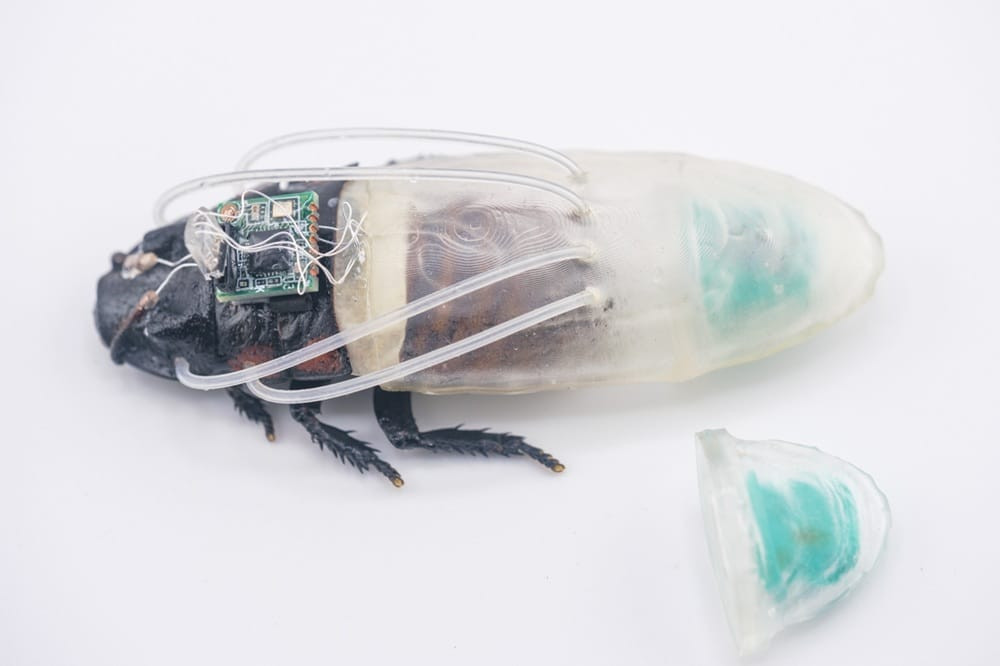
Observations reported in the study indicated that these cyborg cockroaches could maintain underwater operation for up to three hours while carrying the apparatus.
Applications in Flooded and Hazardous Locations
The research team envisions these modified insects assisting in circumstances where human access is restricted or risky. The study outlines potential uses such as internal inspections of pipelines and exploration of waterlogged disaster sites.
During floods, traditional rescue routes become impassable due to water and debris. Small, durable insects capable of navigating narrow and flooded spaces could reach places that remain inaccessible to human responders.
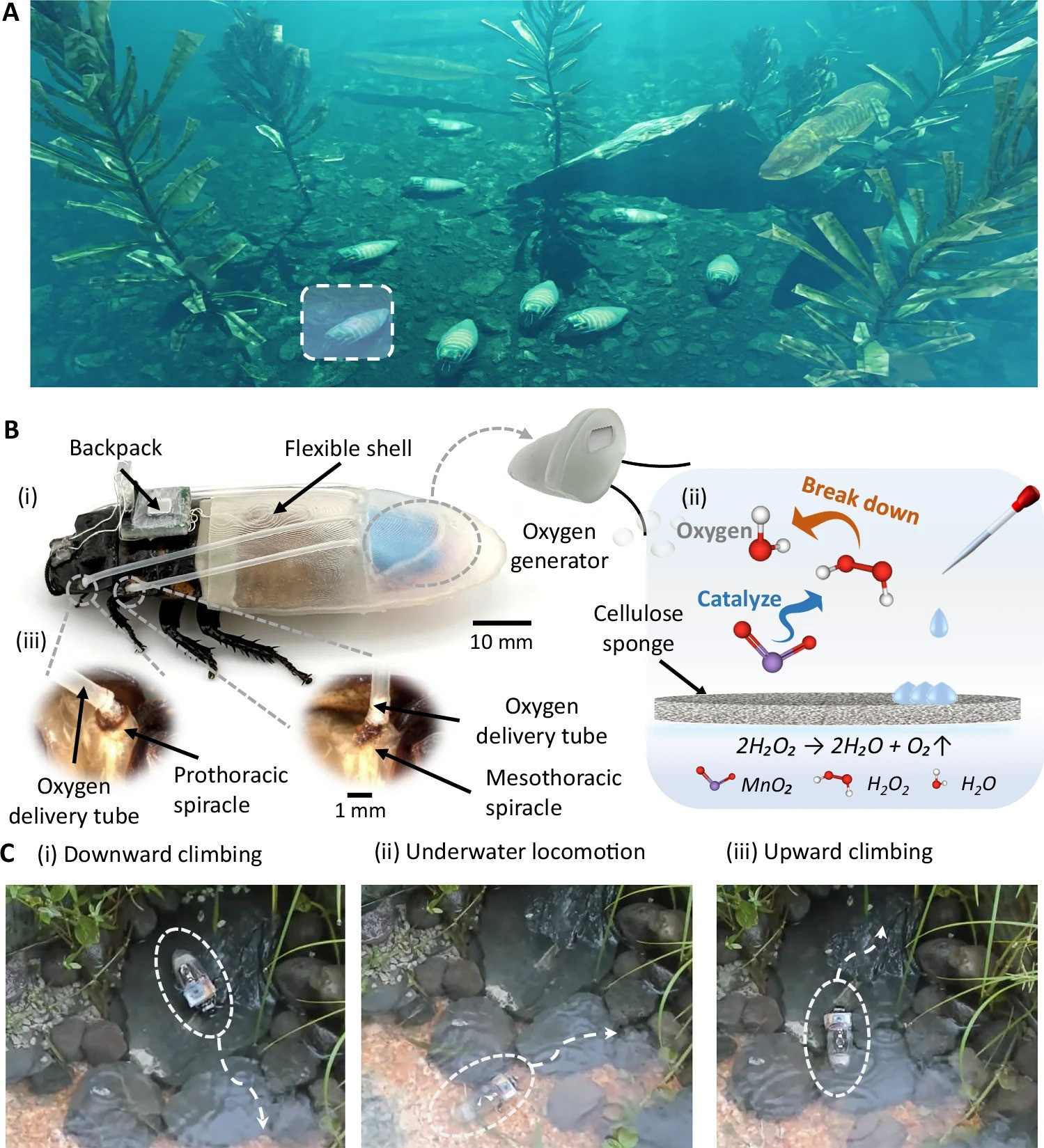
Hirotaka Sato emphasized that enabling these insects to function underwater broadens their utility in future emergency search-and-rescue missions, particularly in flood-affected areas.
“This is important because real disaster sites can be challenging after heavy rain or flooding, blocking access routes in the rubble, drains and narrow gaps. By expanding the operating parameters of our cyborg insects to include underwater travel, we believe that they can enhance search and rescue efforts,” he explained in a statement published by Nanyang Technological University (NTU).
Why Madagascar Hissing Cockroaches?
The choice of species was deliberate, as not every insect is capable of bearing a tiny breathing apparatus. Madagascar hissing cockroaches stand out because of their resilience and size—growing up to about 7.5 centimeters long, approximately the length of an adult finger, and living as long as five years.
Their relatively large bodies allow mounting the protective shell and oxygen supply system while preserving natural movement. The researchers suggest this approach might also be adapted for other insects such as locusts and beetles.
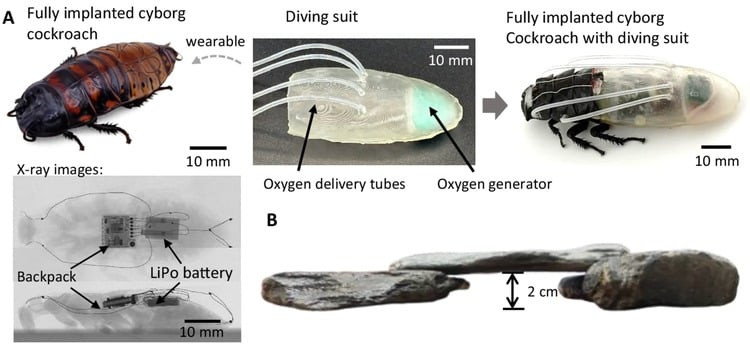
This pioneering study confirms that terrestrial insects can be engineered with light breathing systems to traverse both land and aquatic environments. According to Nature Communications, this technology aims to establish insect-based platforms capable of operating in areas that are challenging or unsafe for humans.
- Categories:
- Science





0 comments
Sign in to Comment