
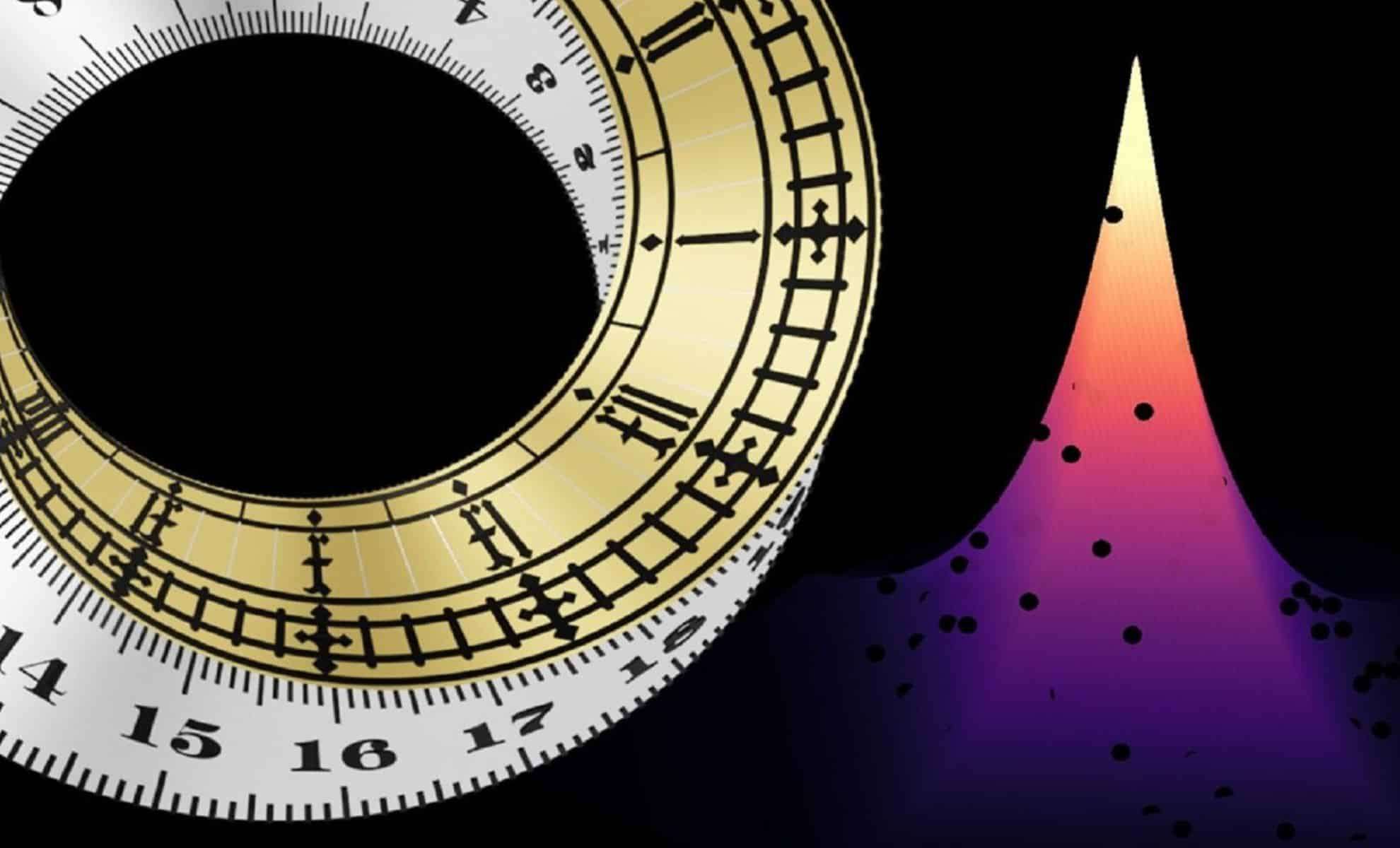
Scientists at the University of Rostock and the University of Birmingham have unveiled a remarkable phenomenon that challenges conventional views of time and space in physics. Their findings, detailed in a recent article in Nature Photonics, introduce the concept of “space-time-topological events,” where light seems to spontaneously appear and vanish, a process that may seem magical but is deeply rooted in sophisticated mathematical frameworks.
Transforming Our Perspective on Time and Space
Time is often described as a unique dimension, flowing steadily forward, unlike the three spatial dimensions. Although critical to physics, time has historically attracted less scrutiny than space. However, advances in the study of spatiotemporal crystals have prompted scientists to revisit and expand our understanding of time’s role in physical phenomena.
This new viewpoint has revealed phenomena with far-reaching implications, particularly in manipulating light in unprecedented ways, potentially revolutionizing related technologies.

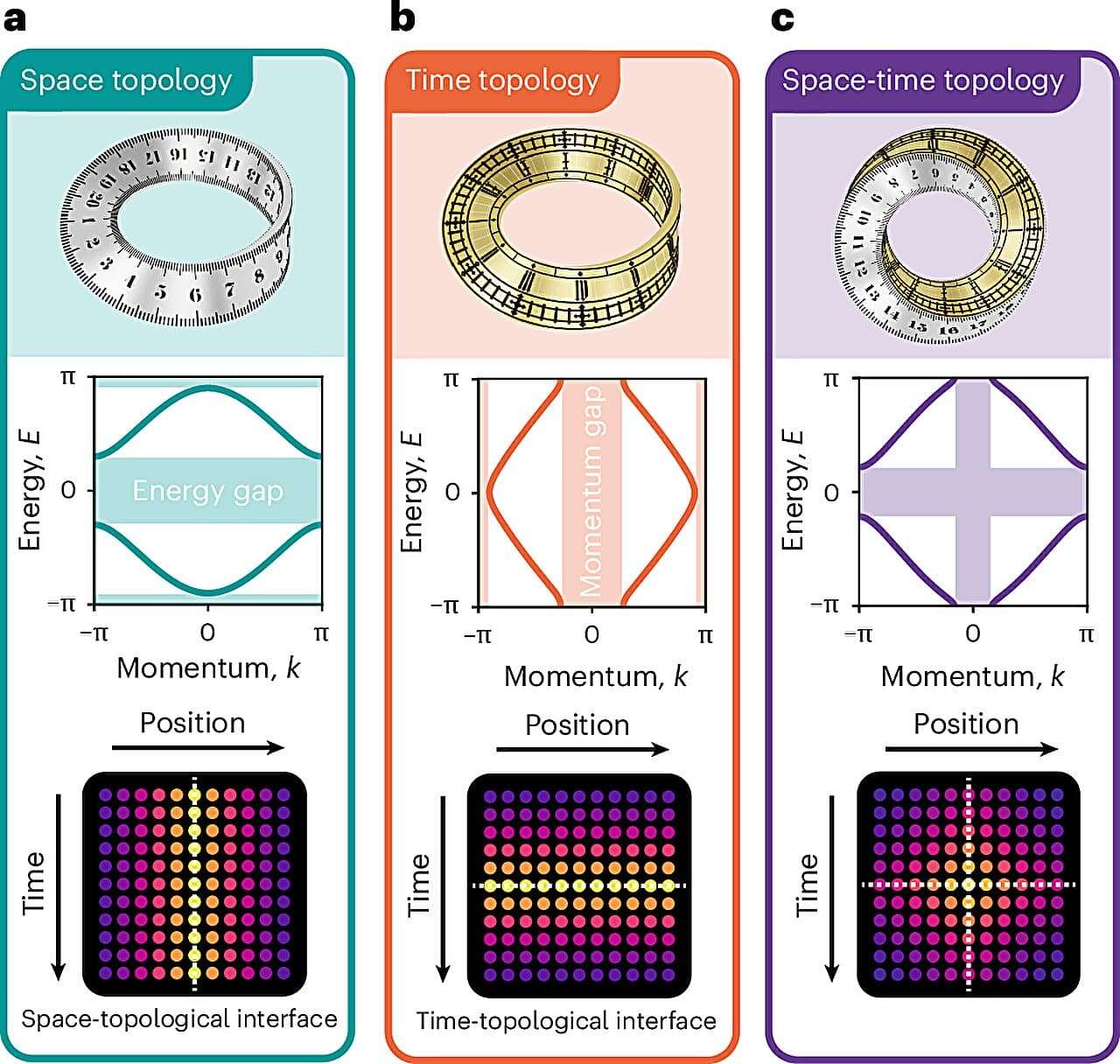
Light Emerging from Nowhere: Understanding Space-Time-Topological Events
The core discovery revolves around experiments where light was observed to be confined to a specific point in the space-time continuum. Prof. Alexander Szameit from the University of Rostock illustrates this by stating that the experiment captured a moment where “at first, there is nothing. Then physics declares, ‘Let there be light!’ and light materializes precisely at a single time and location.”
Such occurrences, termed space-time-topological events, are explained through the lens of topology, a mathematical discipline that governs light’s characteristics under these unique conditions.
Exceptional Stability Against Disruptions
A standout feature of these space-time-topological events is their remarkable tolerance to external interference. The team discovered that the sudden bursts of light maintained their integrity despite typical experimental challenges, like setup inaccuracies or ambient light intrusions. Dr. Joshua Feis from the University of Rostock highlighted that this robustness could significantly impact domains such as imaging, telecommunications, and laser technology.
Dr. Sebastian Weidemann from the same institution emphasized that this durability is crucial for precision control of light waves and may lead to substantial improvements in various technological fields.
Implications and Prospects for Space-Time and Photonics
This development signifies a pivotal shift in comprehending space-time and the behavior of light. It opens a pathway not only for theoretical physics but also for innovative technological applications. The insights gleaned from reconsidering time’s function in physics hold promise for unanticipated breakthroughs.
Prof. Hannah Price from the University of Birmingham remarks that these revelations mark just the starting point, with the time dimension poised to unlock further transformative discoveries.
- Categories:
- News







0 comments
Sign in to Comment