
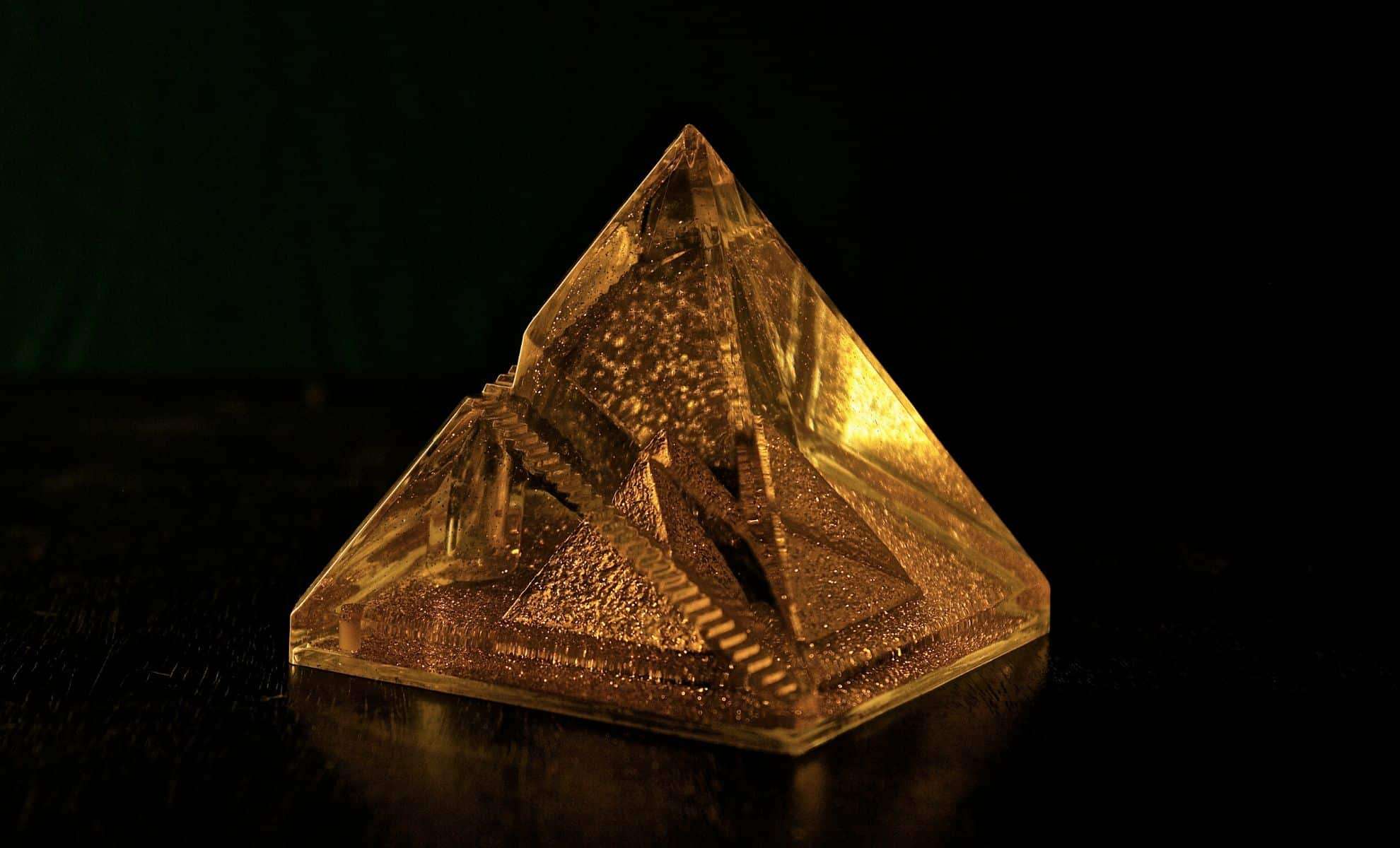
A group of scientists has constructed a peculiar four-sided pyramid called Bille that unfailingly settles on the same face no matter how it is tossed. This unique object, known as a monostable tetrahedron, validates a mathematical hypothesis first suggested over four decades ago by the eminent British mathematician John Conway.
Cracking Geometry’s Most Challenging Balance Problem
The pyramid is characterized by having just one stable resting position, enabling it to return to that specific face after any disturbance. Researchers reveal that Bille represents the first confirmed example of such a shape. Its frame is crafted from lightweight carbon fiber, while the base consists of tungsten carbide — a dense metal twice as heavy as steel — achieving an extraordinary equilibrium between geometry and mass.
The original idea came from Conway who suggested that a tetrahedron with an uneven distribution of weight could always land on a single side. However, he later abandoned the pursuit due to complexities related to angular momentum, much like how a vehicle can overcome a bump while moving but struggles when static. Still, mathematicians like Robert Dawson remained captivated by the mystery. In the 1980s, Dawson approached a solution using lead foil and bamboo but couldn’t fully remove external forces needed to stabilize the shape.

Crafting Bille: A Masterpiece of Mathematics and Design
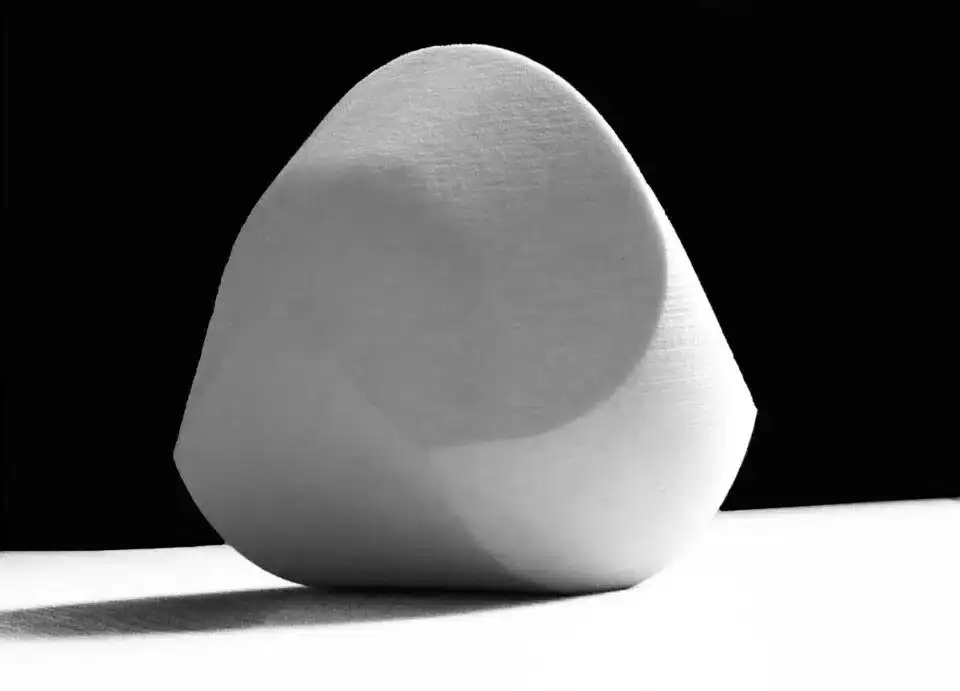
The scientific breakthrough occurred three years ago when Hungarian mathematician Gábor Domokos and his student Gergő Almádi from Budapest University of Technology and Economics reached out to Dawson to revive the investigation. Domokos, famed for discovering the gömböc—a monostable object with two equilibrium points—called the tetrahedron challenge “the hardest problem, highest category” because of its sharp vertices and small surface angles.
Almádi led the detailed design process, calculating an intricate balance of materials with contrasting weights. Carbon tubes formed the lightweight skeleton, while a heavy, dense alloy was used for the base. Each element, including the glue’s weight and shape, had to be executed with perfect precision. Even a tiny, unintended droplet of glue once caused inconsistent behavior. After correcting this, Bille reliably landed on the same face every time it was tested.
Domokos highlighted that creating Bille went beyond theory; it was an integration of geometry, engineering, and technology that had to align perfectly. A second Bille was produced to verify the results, though duplicating the object remains challenging without access to the original parameters.
Applications from Space Missions to Medical Devices
The realization of Bille could impact engineering fields, especially in aerospace, where self-righting designs are vital for operational success. For instance, the Athena spacecraft by Intuitive Machines toppled during its landing earlier this year—an issue that a structure like Bille might have prevented.
Domokos also pointed to the unconventional uses of the gömböc shape. Its geometry inspired teams at MIT, Harvard, and pharmaceutical company Novo Nordisk to develop a self-orienting insulin capsule that correctly positions itself inside the stomach, removing the need for injections.
Reflecting on the significance, Domokos remarked that objects like the gömböc and Bille represent not only mathematical achievements but catalysts for innovation. “The gömböc has shown that tangible shapes are essential—many talented individuals who aren't specialized in math can observe a physical object and conceive a multitude of ideas,” he said.
- Categories:
- News







0 comments
Sign in to Comment