
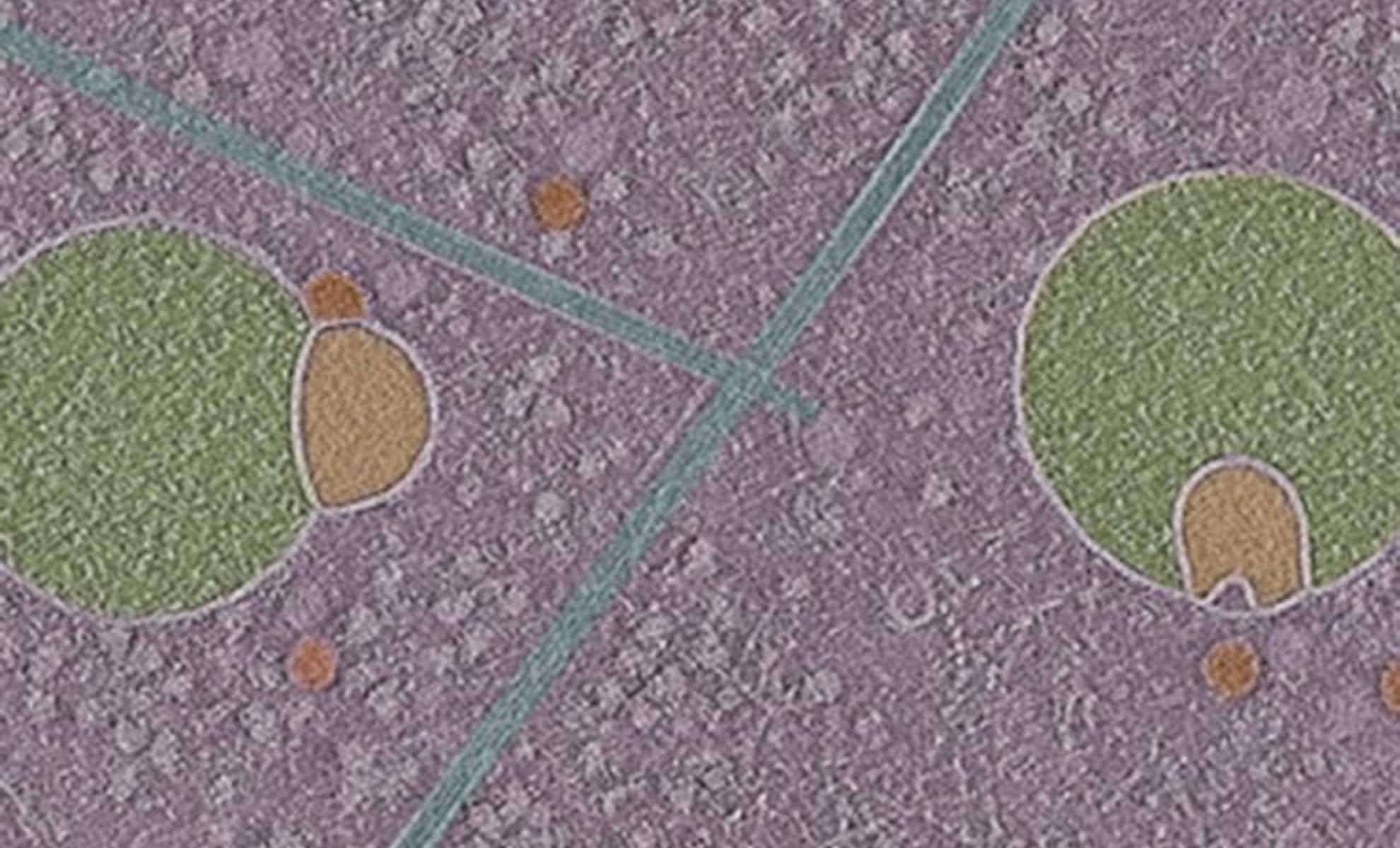
Despite extensive study over the years, the human body continues to reveal unexpected complexities. Scientists from the University of Virginia and the National Institutes of Health (NIH) have now identified a new organelle inside human cells. Their findings, featured in Nature Communications, highlight a crucial cellular structure dubbed the hemifusome.
Hemifusome: The Cell’s Novel Recycling Hub
The hemifusome is a small, membrane-encased organelle that acts as a recycling hub within cells. It plays an important role in organizing and managing cellular cargo—vital components necessary for cell function. As biophysicist Seham Ebrahim from the University of Virginia described, “This is like discovering a new recycling center inside the cell.” The study indicates that the hemifusome supports how cells sort and handle their internal materials, with disruptions potentially linked to various ailments.
This organelle is associated with the production of vesicles, which are tiny transport sacs moving substances inside cells. Vesicles are essential for delivering materials where needed within the cell. Data also implies that the hemifusome may assist in assembling other complex organelles composed of multiple vesicles. Because the hemifusome only forms under specific conditions, it has remained largely undetected until now.

Advanced Imaging Techniques Reveal the Hemifusome
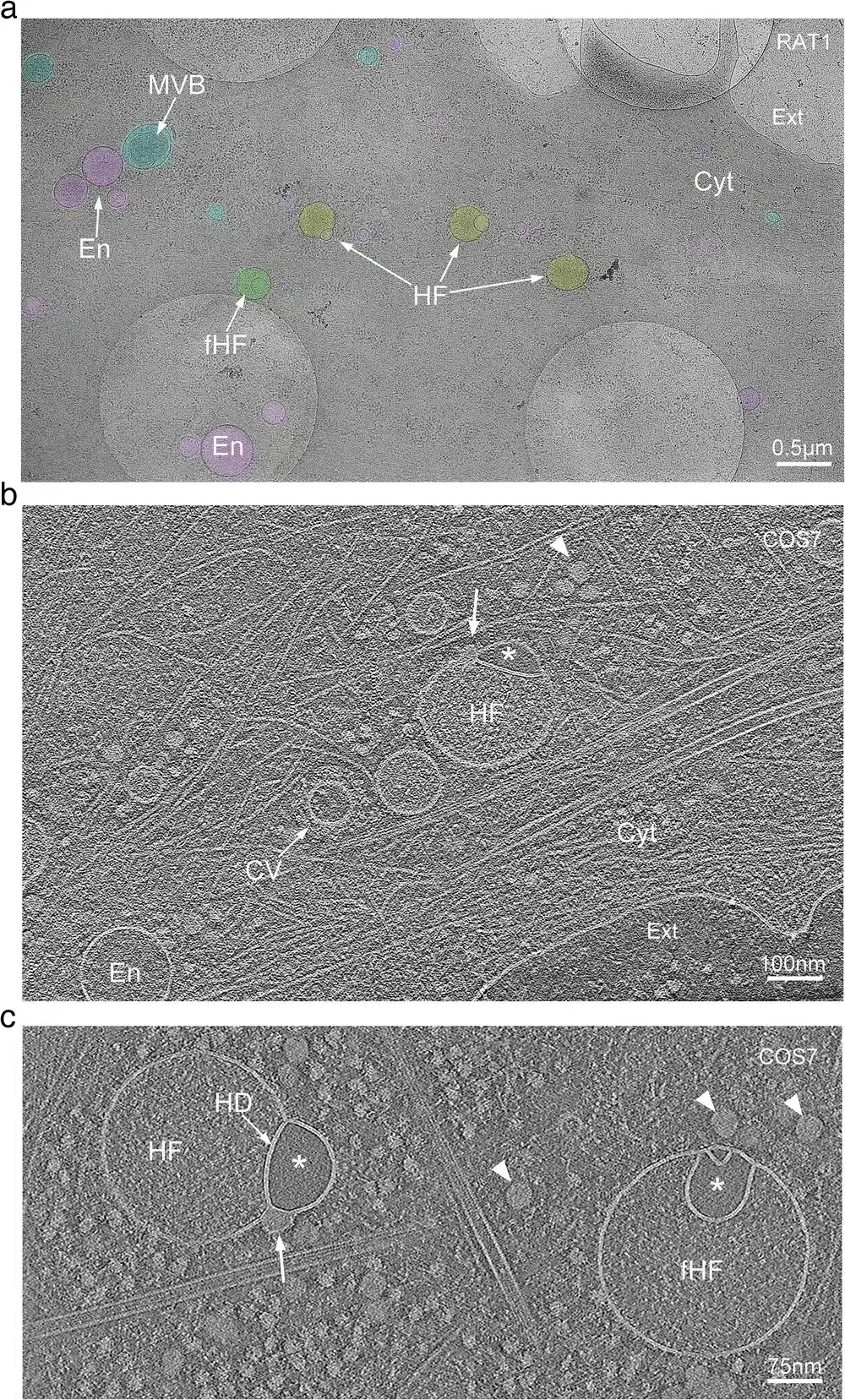
The breakthrough was made possible through cryo-electron tomography, an innovative imaging method that rapidly freezes cells to produce highly detailed 3D images at near-atomic scale. This technique enables scientists to capture transient cellular structures that were previously invisible. Utilizing cryo-electron tomography, researchers achieved an unprecedented view of the hemifusome, uncovering new insights into its functions.
Previously, detecting the hemifusome had proved challenging because it emerges only when activated and vanishes shortly afterward. Its elusive nature complicated real-time observation. However, cryo-electron tomography allowed the team to study how the hemifusome interacts with other cellular components.
Implications for Treating Genetic Disorders
The identification of the hemifusome opens new avenues for investigating genetic diseases. Researchers believe that malfunctions in cellular cargo management contribute to numerous genetic conditions. Since the hemifusome plays a key part in these processes, gaining a deeper understanding of its role may lead to innovative therapeutic strategies.
Because of its involvement in vesicle formation and cellular operations, the hemifusome represents a vital focus for future study. Scientists aim to clarify the specific mechanisms controlling its behavior and to determine what causes its failure in disease states.
- Categories:
- News










0 comments
Sign in to Comment