
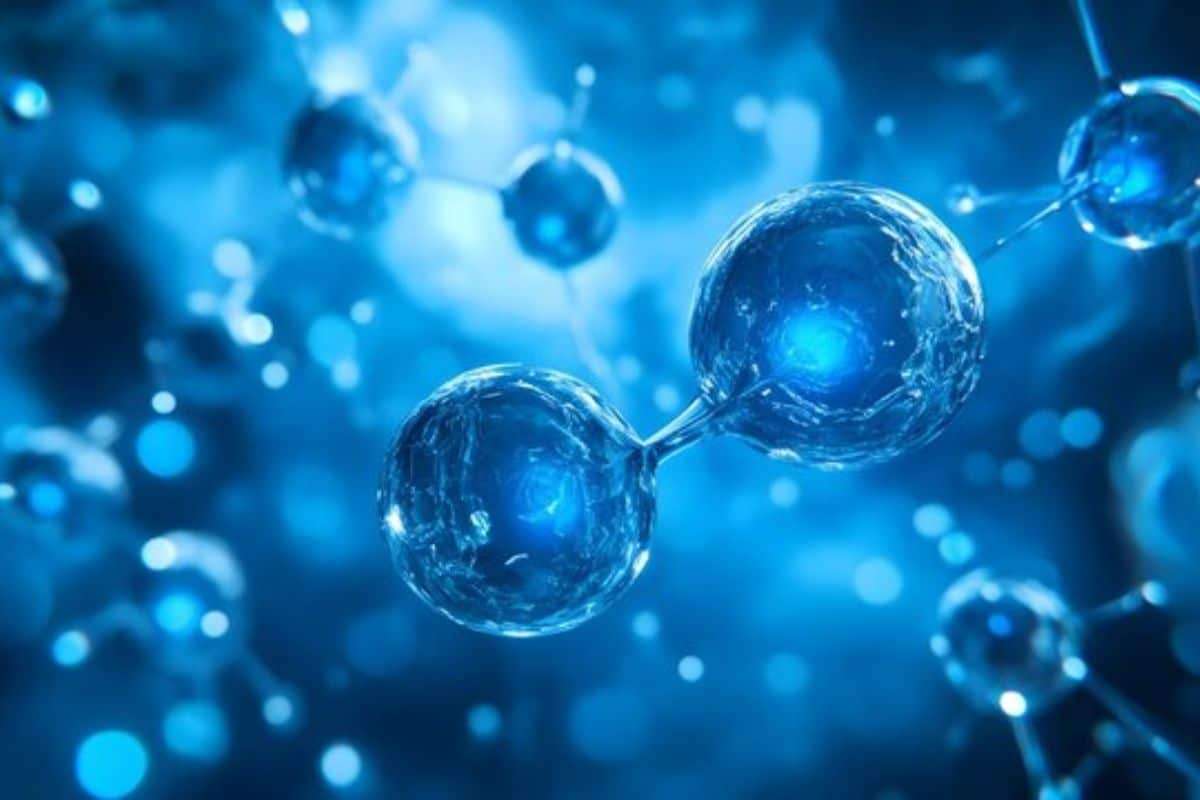
A collaboration of international researchers has successfully identified a rare and previously unobserved form of ice that might exist naturally on far-off exoplanets and icy satellites. Termed plastic Ice VII, this water phase had been hypothesized for years but eluded direct observation until this breakthrough. The finding provides fresh insight into water’s behavior under intense conditions and could reveal details about the internal makeup of ocean-bearing celestial bodies beyond Earth.
Defining Plastic Ice VII
Unlike the familiar ice found on Earth’s poles, plastic Ice VII is an extraordinary water form that emerges only under extremely high pressures and elevated temperatures. To create it, scientists compressed water to around 6 gigapascals—which is nearly 60,000 times atmospheric pressure—and heated it to about 327°C (620°F).
In these harsh conditions, water molecules arrange into a distinctive cubic lattice where the hydrogen atoms display unusual mobility. Unlike standard ice where hydrogen atoms are fixed, here they move freely, akin to a liquid state. This dynamic behavior places plastic Ice VII between conventional solid and liquid phases.

How Was Plastic Ice VII Reproduced in the Lab?
To verify the existence of this exotic ice form, researchers employed quasi-elastic neutron scattering (QENS) at the renowned Institut Laue-Langevin (ILL) in France, a technique that tracks subtle atomic and molecular movements inside materials.
QENS measurements revealed that the hydrogen atoms in plastic Ice VII did not merely spin freely, as earlier models suggested. Instead, their motion resembled a staggered hopping pattern, indicating that hydrogen bonds constantly break and reform between molecules.
Physicist Maria Rescigno from Sapienza University of Rome emphasized the importance of this method, stating, “QENS provides a unique advantage by simultaneously probing translational and rotational dynamics, vital for investigating such unusual phase transitions beyond other spectroscopic approaches.”
Potential Presence on Other Worlds
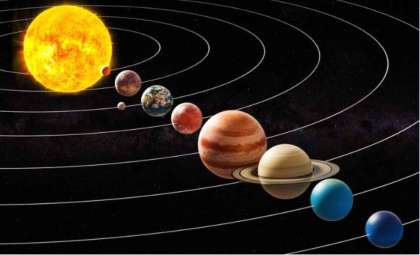
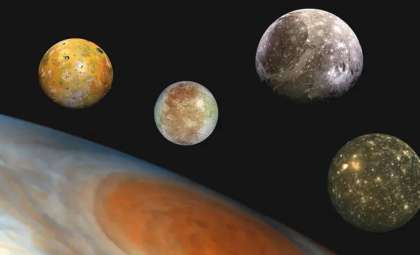
Researchers propose that plastic Ice VII could naturally occur on planets and moons experiencing intense pressure and heat. Candidates include Neptune, Uranus, as well as Jupiter’s moon Europa, which is believed to harbor a vast ocean beneath its frozen crust.
In such environments, water may be subjected to the immense forces needed to create layers of plastic ice deep inside these worlds, potentially altering our comprehension of their geology, atmospheric processes, and habitability prospects.
Link to the Superionic Ice Phase?
A particularly exciting aspect of the discovery is its potential connection to an even more extreme water phase known as the superionic state.
In this superionic form, hydrogen atoms behave like a fluid while oxygen atoms remain fixed solidly. Theorized to exist in the depths of ice giants like Uranus and Neptune, this phase might influence those planets’ magnetic fields and internal heat flow.
Physicist Livia Bove from Sapienza University commented, “The idea of a continuous transition is fascinating. It suggests plastic Ice VII may serve as a stepping stone to the elusive superionic phase—a further exotic hybrid water state anticipated under hotter, higher-pressure conditions.”






0 comments
Sign in to Comment