

The variety and number of natural satellites orbiting planets have intrigued astronomers for ages.
While our planet Earth hosts a single moon, other planets—like the gas giants Jupiter and Saturn—boast dozens, sometimes hundreds, of moons.
Exploring the reasons behind the abundance of moons around certain planets requires investigating their gravitational influence and specific planetary traits.

Gravitational Influence on Moon Numbers
The quantity of moons a planet can sustain primarily depends on its gravitational strength, linked to its size and mass. More massive planets exert stronger gravitational pull, enabling them to capture and hold more satellites. This ability is measured by the Hill sphere, indicating the area around a planet where its gravity is stronger than that of the sun.
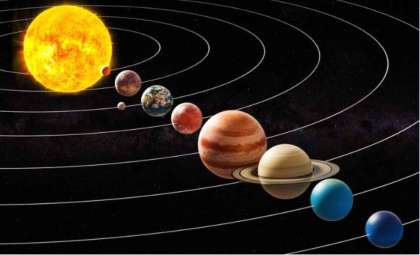
Take Jupiter for example, our solar system's largest planet, whose extensive Hill sphere allows it to maintain gravitational control over its 95 moons. Meanwhile, Saturn tops the list with a staggering total of 146 moons. Smaller rocky planets such as Mercury and Venus have far smaller Hill spheres.
Since they orbit close to the sun, these smaller planets struggle to retain moons because the sun’s gravitational force easily dominates, preventing them from holding onto multiple satellites.
Sun Distance and Origins of Moons
A planet’s distance from the sun also critically influences how many moons it has. Those located in the solar system’s outer regions—like Saturn, Uranus, and Neptune—experience lesser solar gravitational effects, allowing them to capture and sustain numerous moons. These regions, rich with icy and rocky debris, provided abundant material for moon formation.
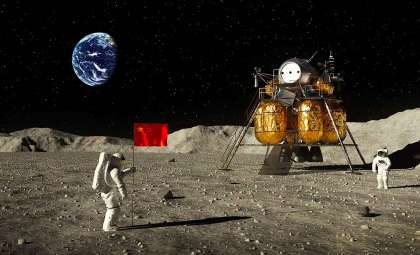
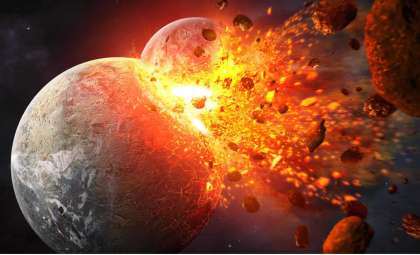
By contrast, Earth’s proximity to the sun results in a smaller Hill sphere, limiting its capacity to gather multiple satellites. Additionally, Earth's single moon likely originated from a massive collision with a Mars-sized object, producing debris that eventually merged to form our moon.
Processes Behind Moon Creation
Moons arise via different mechanisms: accumulation of debris orbiting the planet, capture of passing bodies, or as byproducts of large impacts. The particulars of these processes vary according to the planet’s location and gravitational conditions.
JupiterSaturn
Significance for Understanding Planetary Systems
Insights into why some planets harbor many moons help unravel the history and development of the solar system, while also informing studies of exoplanets orbiting distant stars. Examining gravitational patterns and moon-forming conditions around various planets enhances our knowledge of planetary system formation.
As exploration of our solar system and exoplanetary realms progresses, analyzing the interaction of moons and their host planets remains crucial. These satellites reveal critical information on planetary origins and the forces shaping them.
Ultimately, a planet’s capacity to support numerous moons depends on a complex interplay of gravity, distance from the sun, and moon formation dynamics. Grasping these factors unlocks deeper understanding of planetary evolution and system architectures.
- Categories:
- Astronomy ,
- News ,
- Space ,
- Physics






0 comments
Sign in to Comment