
In London, experts have meticulously reconstructed a fragmented Roman fresco found in the Southwark area, dubbing it the “most challenging puzzle in the world.” Dating back over 1,800 years, this vibrant artwork was scattered into thousands of pieces following the destruction of a Roman villa built between A.D. 43 and 150. Unearthed in 2021 during redevelopment, the fresco once embellished the walls of an impressive residence and has remained hidden since ancient times.
A Landmark Roman Discovery in Britain
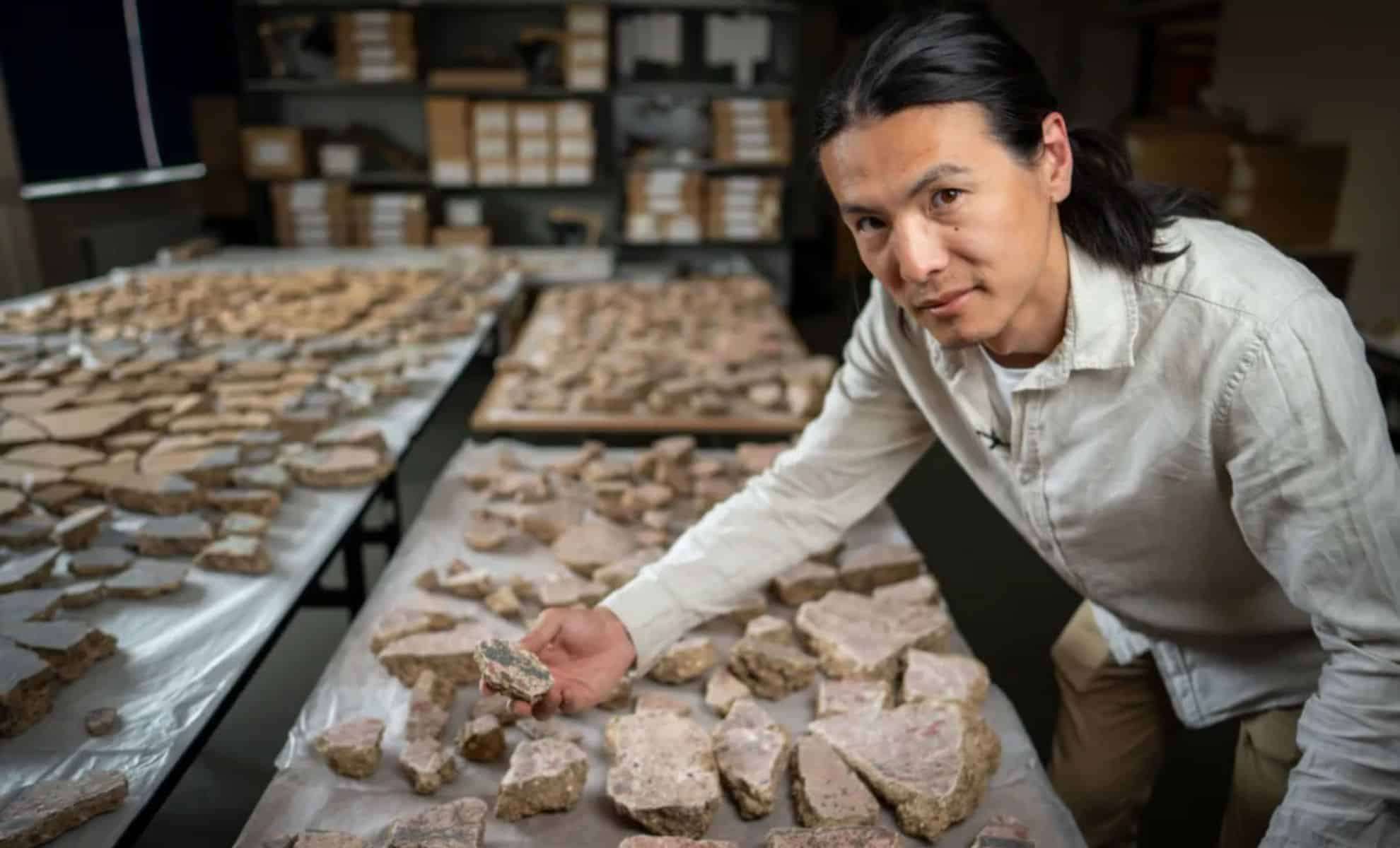
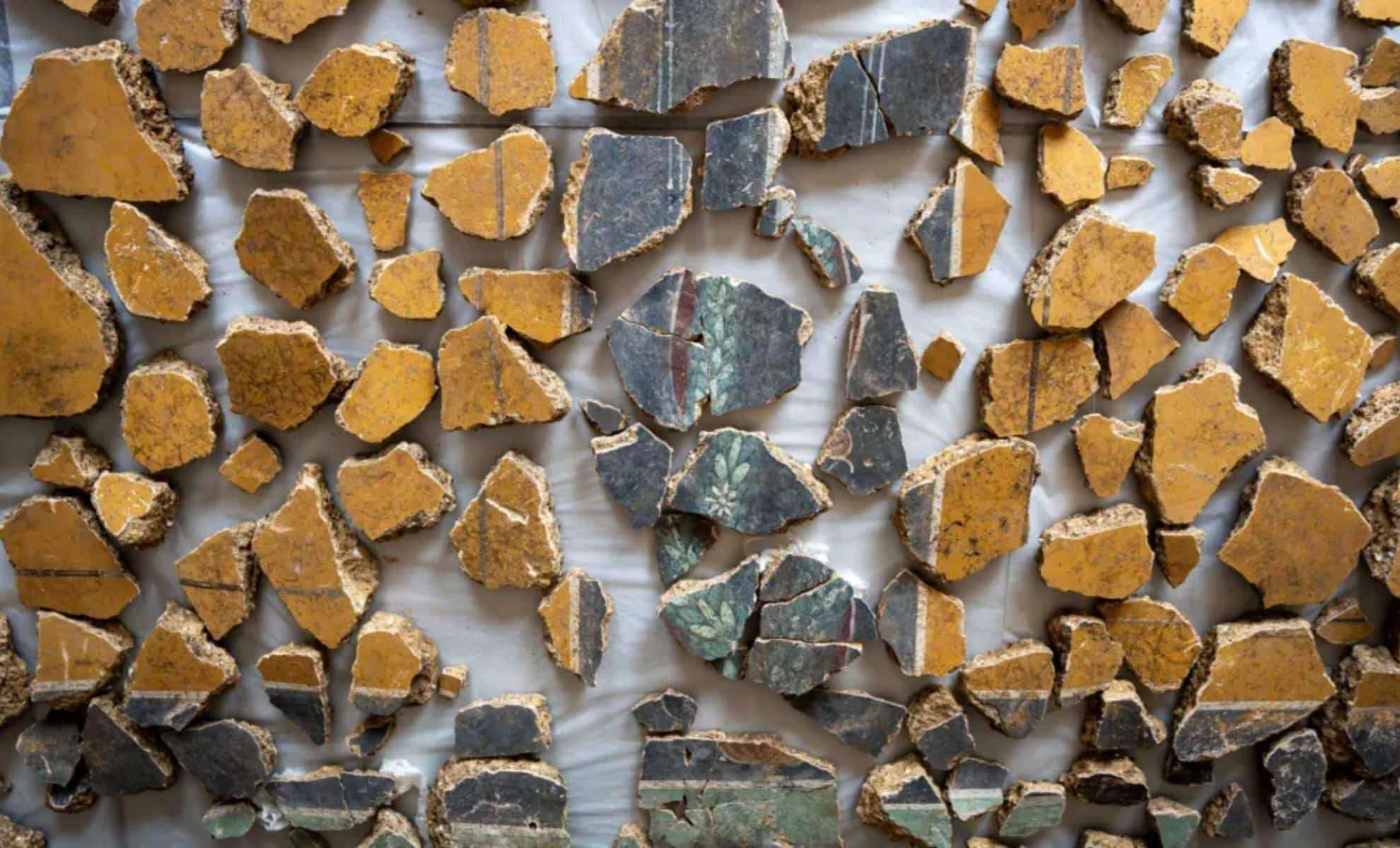
The restoration project was spearheaded by Han Li, a senior specialist at the Museum of London Archaeology (MOLA). Over three months, Li’s team carefully pieced together the plaster fragments, unveiling a detailed fresco adorned with motifs of birds, lyres, fruits, and flowers.
Due to the disarray and fragility of the shards—originating from various wall sections—Li compared the task to “assembling the world’s toughest jigsaw puzzle.”

The fresco was destroyed within 157 years of its creation, probably during a sudden, destructive event that shattered and buried the artwork. Despite this, the team’s reconstruction returned the fresco to its near-original form, shedding light on Roman-era artistic practices in Britain.
Insights from Ancient Inscriptions and Pigments
The fresco offers more than visual appeal; it reveals clues about the creators and their environment. Among the fascinating findings is the presence of the Greek alphabet inscribed on the plaster. Similar markings discovered in Italy suggest these could have functioned as a record or inventory, crafted by someone with notable literacy.
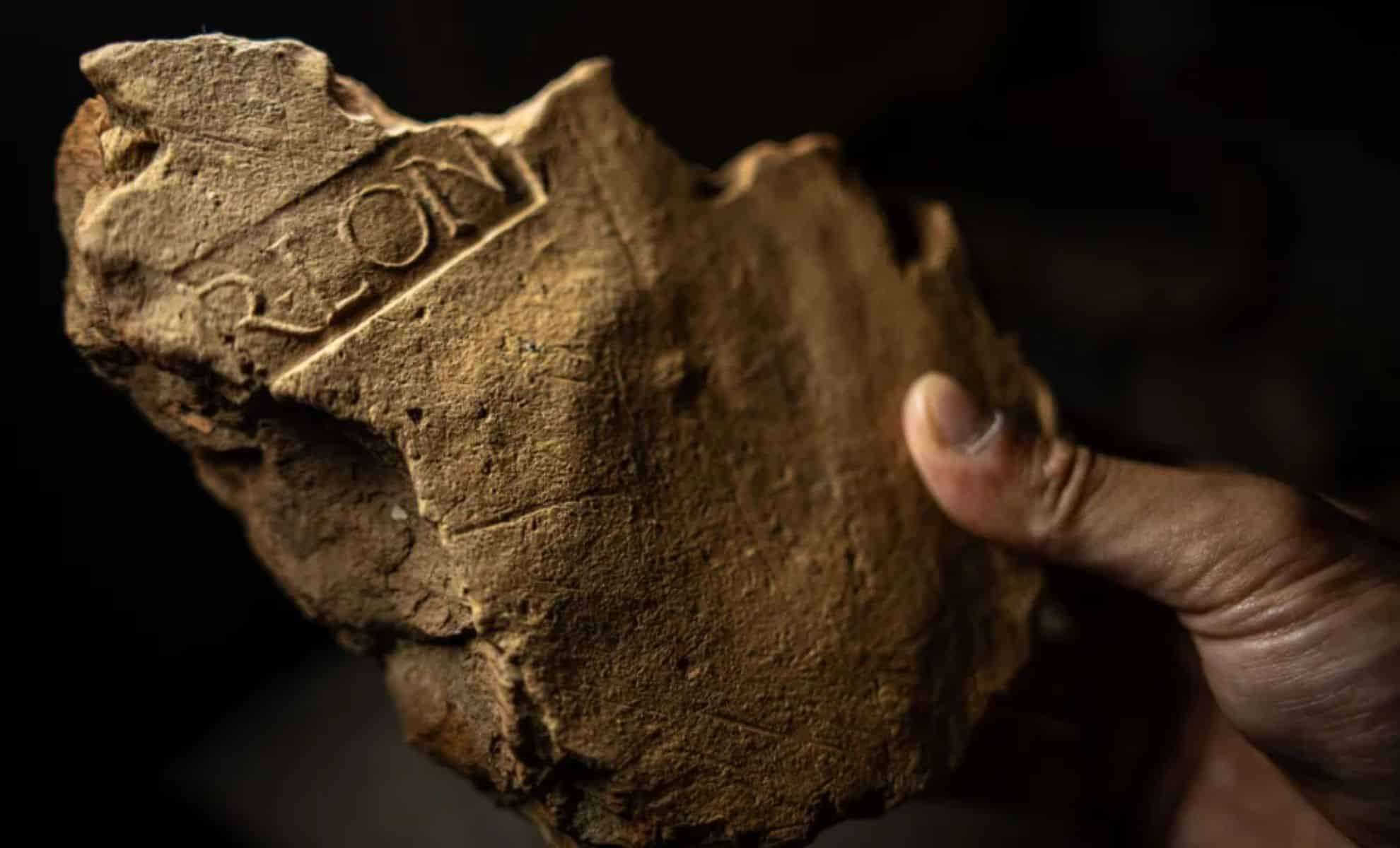
Another key feature is the Latin term “fecit”, meaning “made this”, engraved within an ornate cartouche—a common Roman tradition for signing art. Unfortunately, the plaster’s damaged section obscures the artist’s name. Additionally, faint painter’s outlines appear under special lighting, indicating preliminary guidelines used during creation.
Cross-Regional Influences and Artistic Techniques
The fresco’s design reflects artistic influences extending beyond Britain. Excavators report stylistic elements reminiscent of areas now within Germany and France, illustrating the broad scope of Roman artistic conventions. The fresco incorporates rectangular panels, a favored Roman decorative style, enhanced by the rare application of a yellow pigment, seldom observed in similar works.
This blend of established Roman motifs with regional touches highlights the affluent and worldly nature of the villa’s inhabitants. The elaborate artwork underscores the role of such decoration as a symbol of wealth and identity during Roman times in Britain.
The Enigma of the Roman Villa Persists
Despite the detailed fresco restoration, the exact use of the Roman building remains uncertain. Archaeologists propose it might have had a commercial function, potentially linked to the storage or trade of jars and containers transported from across the Roman Empire to London.
Its location near trade arteries and the presence of home-like decorations support this hypothesis, though no definitive answers exist yet. Presently, the assembled fresco fragments stand as a testament to archaeological skill and offer a captivating glimpse into the Roman past.
- Categories:
- News









0 comments
Sign in to Comment