
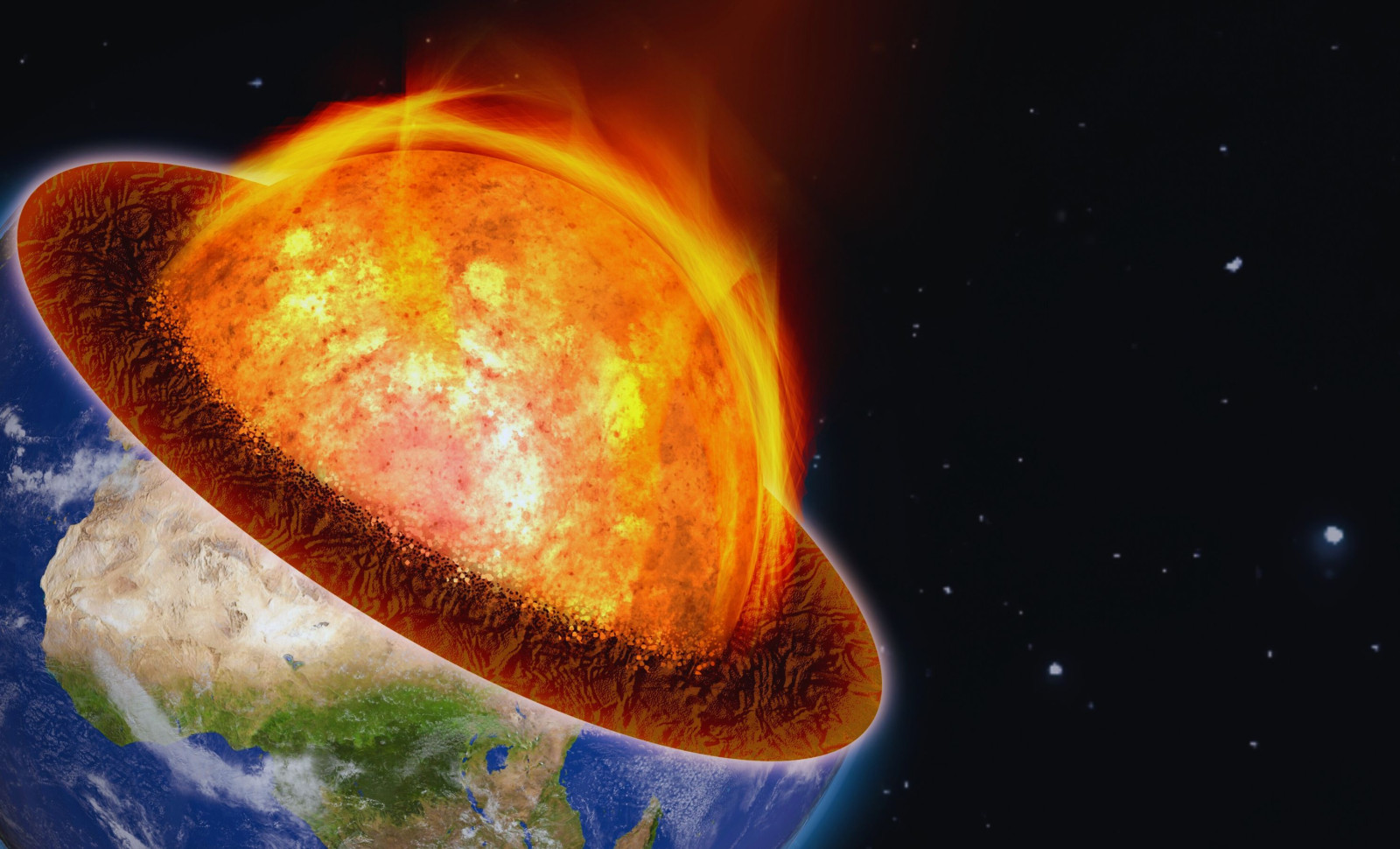
Scientists now believe that the Earth’s deepest layers may conceal a hydrogen supply far exceeding all the hydrogen present in surface waters. Lab experiments imply that the planet’s metallic core could hold up to 45 times more hydrogen than all the oceans combined.
Published in Nature Communications, the new research highlights the ability of iron under immense pressure and heat to trap significant amounts of hydrogen. These insights deepen our understanding of the planet’s formation and the origins of its water.
Although hydrogen is one of the most common elements in the cosmos, on Earth it mostly exists bonded with oxygen in water. This apparent scarcity might be deceptive, as the extreme conditions during Earth’s early molten phase could have enabled hydrogen to be absorbed directly into the core as it formed.

Simulating Core Formation Conditions in the Laboratory
Since the core itself is unreachable, the research team conducted simulations to mimic its environment. According to their findings, led by Dongyang Huang of Peking University, they utilized a diamond anvil cell to reproduce internal pressures and temperatures.
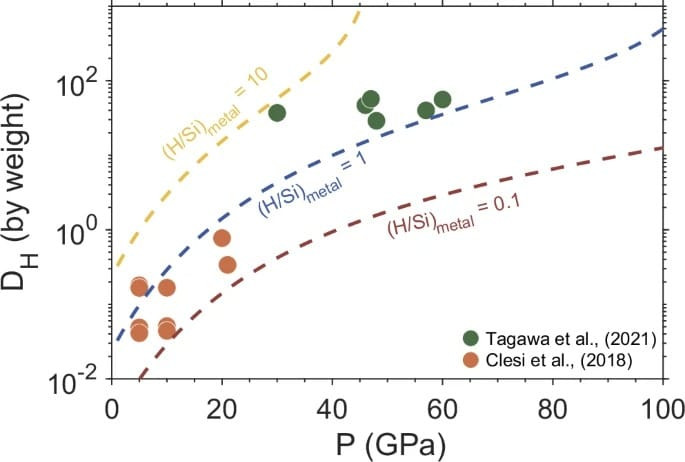
The experiment involved compressing a tiny iron sphere inside hydrated silicate glass to pressures of 111 gigapascals and heating the sample to about 5,100 kelvins. Since Earth’s core starts around 136 gigapascals and reaches temperatures estimated between 5,000 and 6,000 kelvins, these conditions closely approximate those in the core.
At these pressures and temperatures, the materials fully melted, allowing iron, silicon, oxygen, and hydrogen to mix. Observations showed hydrogen readily dissolved in molten iron and combined with silicon and oxygen, behaviors resembling those at the time of Earth's core formation billions of years ago.
Quantifying the Core’s Hydrogen Content
Seismic data have long suggested the core contains elements beyond pure iron, resulting in a density less than expected. Prior research estimated silicon might make up 2 to 10 percent of its mass.
Using these proportions and their lab results, the team estimated that hydrogen could constitute between 0.07 and 0.36 percent of the core's mass, equating to approximately 1.35 to 6.75 sextillion kilograms of hydrogen.
For context, the hydrogen in all the Earth’s oceans totals around 150 quintillion kilograms. This means the core’s potential hydrogen inventory might be 9 to 45 times greater than that found in the entire ocean.
Reevaluating Earth’s Water Origins
The authors note that such a large hydrogen reservoir implies that “the Earth acquired most of its water during the primary phases of planetary accretion, rather than through cometary delivery later on.”
While scientists have long hypothesized hydrogen storage in the core, estimates varied greatly. This new research provides strong experimental evidence pointing to a significant reservoir inside Earth’s interior.
Determining the amount of hydrogen stored within the core is crucial for better understanding the planet’s water history and its geological recycling processes over eons.
- Categories:
- Science






0 comments
Sign in to Comment