
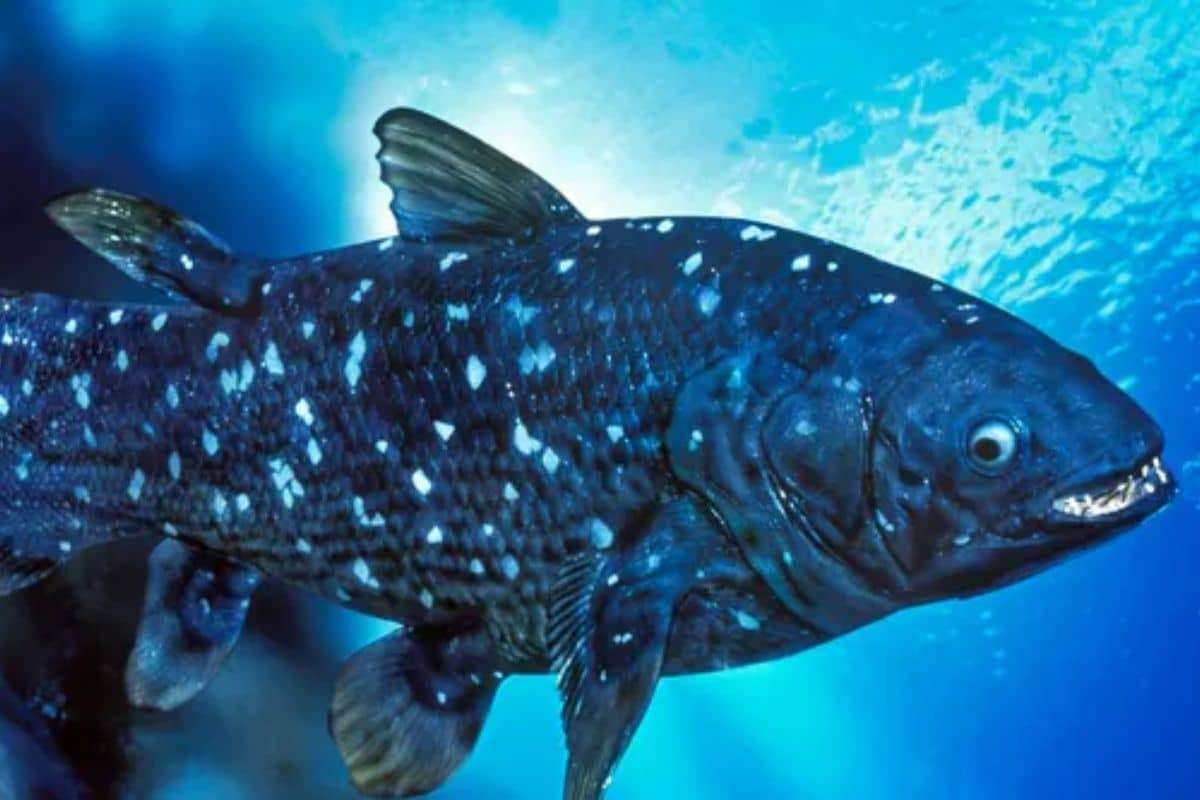
For many years, the coelacanth was known only through fossils—until one was unexpectedly caught off the coast of South Africa. In 1938, a museum curator in East London spotted an unusual fish in a catch from the Chalumna River.
Its distinct blue-gray coloring and uniquely jointed fins were unlike any species she had encountered. She reached out to marine biologist James Leonard Brierley Smith, who quickly recognized the fish as a living coelacanth, a species believed extinct for over 60 million years.
From Fossil Records to Living Specimens
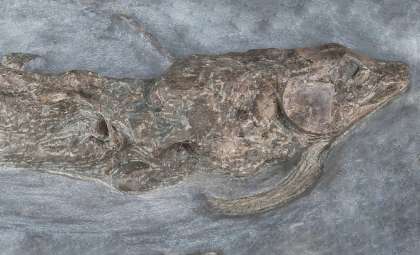
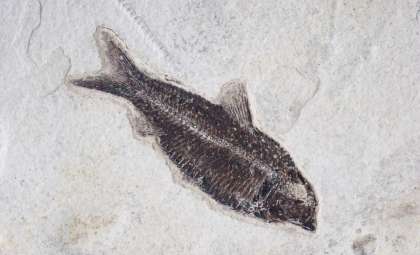
Prior to this discovery, scientists considered the coelacanth to be an ancient relic from the Devonian Period, dating back more than 400 million years. With no sightings of live individuals, it was widely accepted that the species had vanished from the Earth.

This discovery popularized the term “Lazarus taxon,” describing species that vanish from scientific records only to resurface later. It highlighted the gaps in our understanding of the fossil record and species survival.
Discovering Multiple Species Over Time
It wasn’t until 1952, fourteen years later, that fishermen in the Comoro Islands caught another coelacanth. This event reignited global interest and prompted research expeditions investigating their deep-sea environment.
Later, in the 1990s, scientists identified a second species near Indonesia called Latimeria menadoensis. This finding expanded knowledge of the fish’s distribution and confirmed that diverse populations have survived across different regions.
An Evolutionary Window into Limb Development
The coelacanth’s most remarkable feature lies in its anatomy. As part of the lobe-finned fish group Sarcopterygii, it shares lineage with the forerunners of amphibians, reptiles, and mammals. Its thick, paired fins move in a way that mimics the four-limbed locomotion of early land vertebrates.
This fish also possesses a hinged skull, enabling it to open its mouth broadly while feeding. Located in its snout is a rostral organ thought to detect electrical signals, aiding in locating prey in dark ocean depths.
Dwelling in Secluded Underwater Habitats
A recent Scientific Reports study reveals that coelacanths inhabit deep caves and rocky underwater slopes, typically between 150 and 700 meters down. These environments are minimally affected by fishing activities and have remained stable for millions of years.
Thanks to their slow metabolic rate, coelacanths require little nourishment, which may contribute to their long lifespan, with some individuals believed to live for up to a century. Their preference for cool, dark habitats helps them evade numerous predators and environmental stresses.
More Than a Living Fossil: An Evolutionary Success Story
While often labeled a relic from prehistoric times, the coelacanth’s survival showcases a different narrative. Evolutionary success can sometimes mean thriving in a specialized niche without significant change.
Today, every sighting is a powerful reminder of the vast unexplored realms beneath the ocean’s surface. The coelacanth’s ongoing existence invites fresh exploration into biodiversity, evolutionary adaptation, and the possibility of other ancient creatures yet to be discovered.
- Categories:
- Science





0 comments
Sign in to Comment