
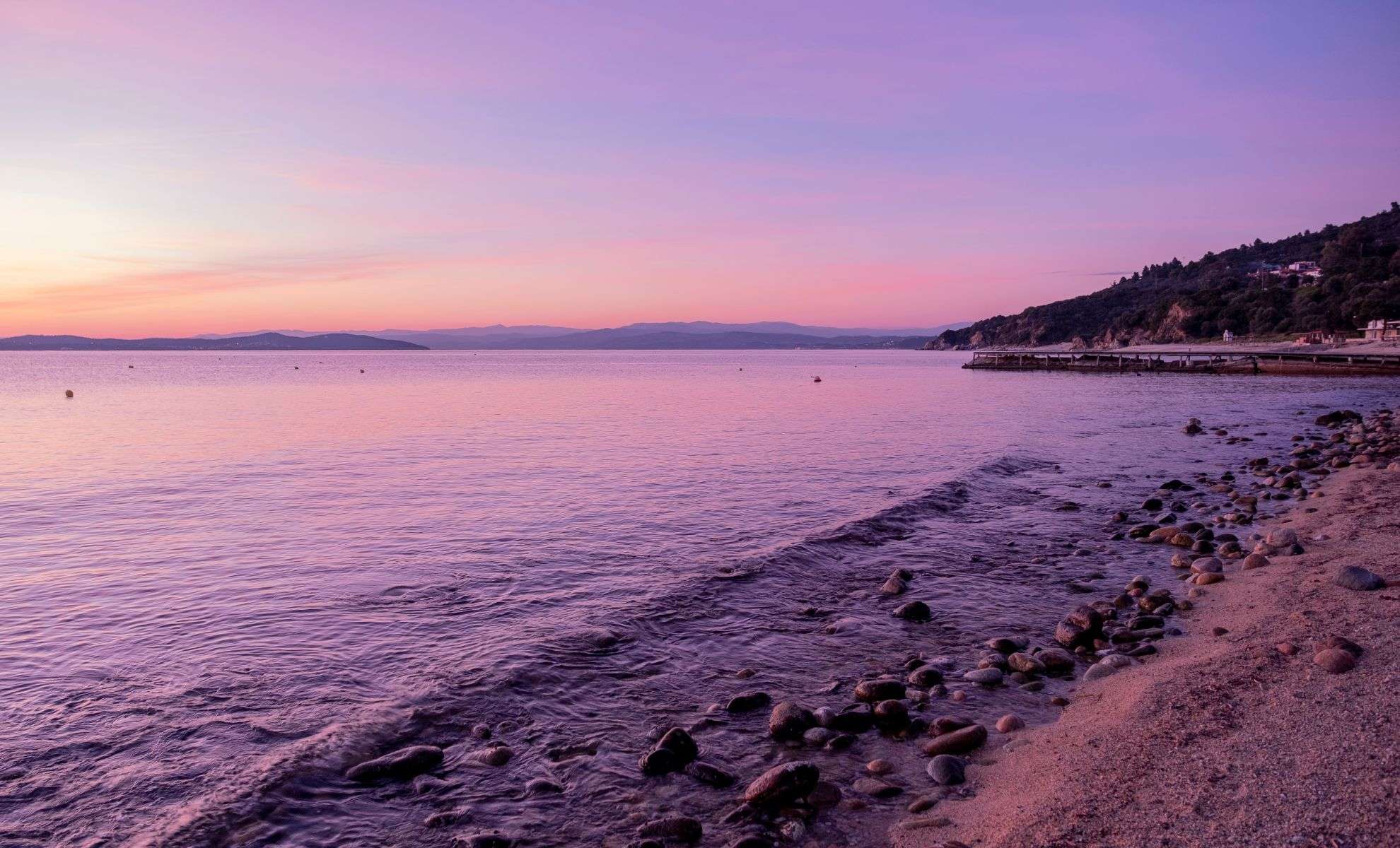
Groundbreaking research by Japanese scientists unveils a captivating perspective on the ancient oceans of our planet. Their findings indicate that billions of years ago, Earth's seas were a vivid green, contrasting with the familiar blue we observe today.
Iron’s Influence on the Ocean’s Hue
Published in Nature, the research explores conditions during the Archaean eon, spanning roughly 3.8 to 1.8 billion years ago. During this era, Earth's atmosphere and oceans lacked oxygen. Contrary to the long-held belief that early oceans were blue, scientists from Nagoya University propose that high concentrations of iron, especially oxidized iron, tinted the waters green.
The Role of Blue-Green Algae in Early Earth’s Ecosystems
This hypothesis arose after observations near Iwo Jima in the Ogasawara Archipelago, where researchers detected a distinct green coloration in the surrounding waters traced back to cyanobacteria, or blue-green algae. These microorganisms flourish in iron-abundant settings and are vital for photosynthesis, sustaining life without oxygen.

Cyanobacteria: The First Photosynthesizers
According to a piece from Interesting Engineering, “Blue-green algae, known scientifically as cyanobacteria, have inhabited Earth for approximately 3.5 billion years. They were among the earliest life forms to photosynthesize by utilizing ferrous iron as an electron source, releasing oxygen as a byproduct.”
This anaerobic photosynthesis facilitated a gradual increase in atmospheric oxygen, precipitating the pivotal “great oxidation event” that paved the way for more complex organisms.
Strengthening the Green Ocean Model
The idea that ancient oceans appeared green aligns with the unique pigment composition of cyanobacteria. These microbes contain phycoerythrobilin (PEB), a pigment distinct from chlorophyll that enables efficient light capture in iron-rich waters.
The Japanese team advanced this understanding by genetically modifying cyanobacteria to express PEB. Remarkably, these enhanced algae prospered more in green-tinted waters, reinforcing the likelihood that ancient oceans were indeed green during the Archaean.
Looking Ahead: A Shift Toward Purple?
The study poses a provocative question: could oceans change color again, perhaps turning purple? As solar radiation intensifies over time, environmental shifts might alter ocean chemistry dramatically.
Some scientists speculate that, prior to eventual evaporation due to the sun’s life cycle, oceans may adopt new hues, potentially red or purple, driven by evolving atmospheric and chemical factors.
- Categories:
- Science








0 comments
Sign in to Comment