
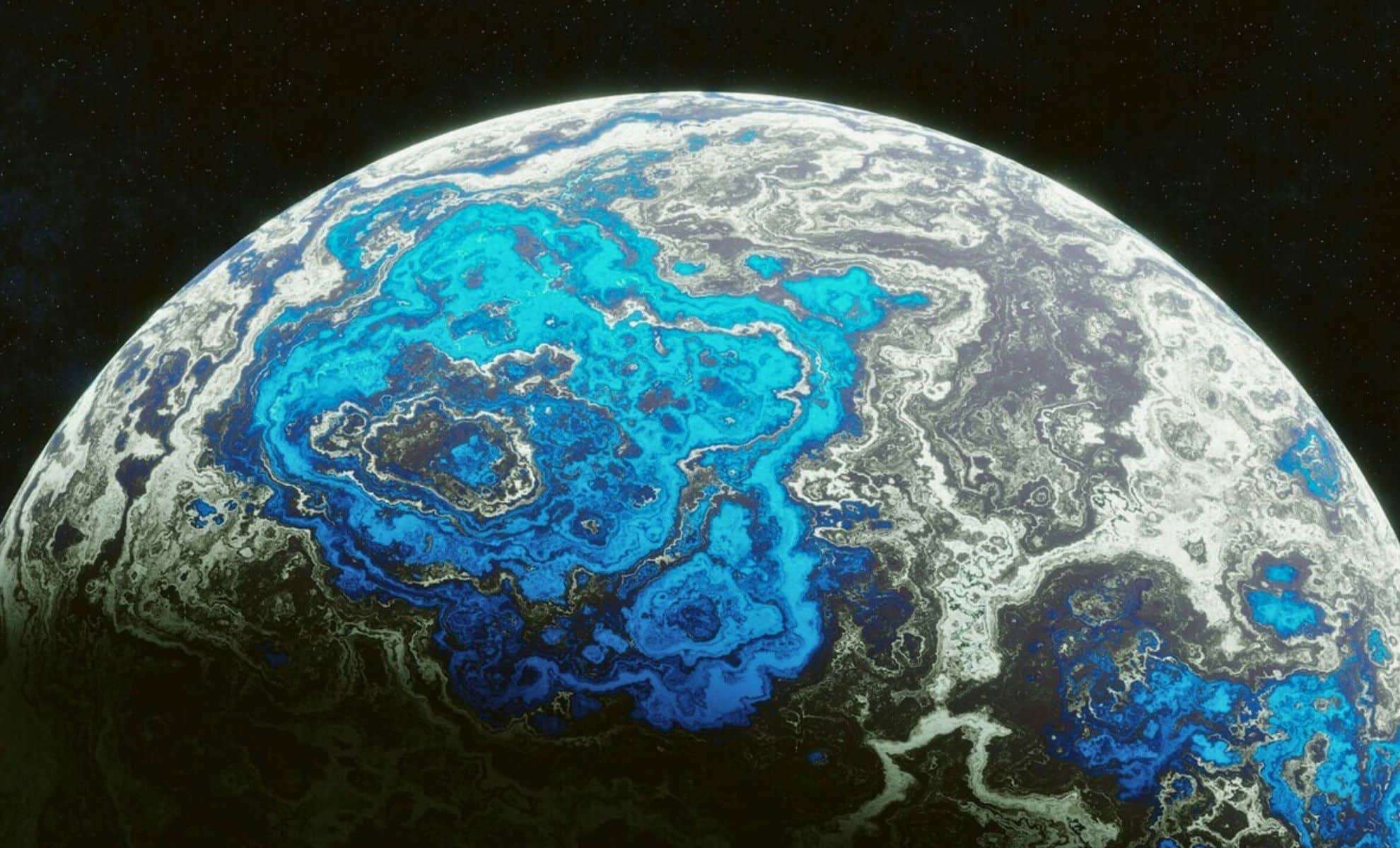
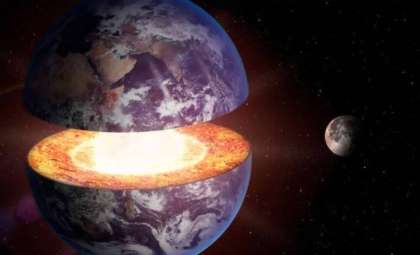
Recent investigations have confirmed a long-held hypothesis in geology: immense amounts of water exist deep within Earth’s interior. This hidden reservoir could be up to three times larger than the total volume of the planet's oceans, not as liquid but chemically bound within minerals in the mantle.
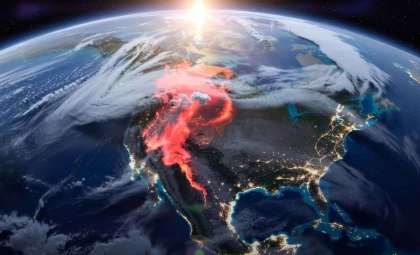
This conclusion stems from a variety of scientific approaches. Back in 2014, geophysicist Steve Jacobsen (Northwestern University) and seismologist Brandon Schmandt (University of New Mexico) unveiled a pioneering publication in Science highlighting seismic irregularities beneath North America indicative of an active subterranean water cycle hundreds of kilometers underground. It was, however, in 2022 that conclusive mineralogical evidence emerged, thanks to a rare diamond discovery in Botswana.
The mounting evidence now strongly supports the existence of a “deep Earth water” system that could dramatically alter our comprehension of plate tectonics, volcanism, and Earth's climate regulation mechanisms over geological timescales.

Ringwoodite: The Mineral Reservoir of Earth’s Hidden Water
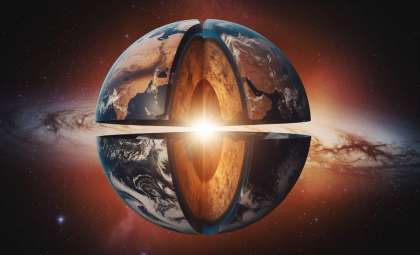
Central to this breakthrough is the mineral ringwoodite, a high-pressure form of the common mantle mineral olivine, residing within the mantle transition zone, approximately 410 to 660 kilometers beneath Earth’s crust.
Exposed to extreme pressures and temperatures above 2,000°F (1,100°C), ringwoodite incorporates water molecules into its lattice structure—not as free water, but as hydroxyl ions bonded within the crystal matrix.
Jacobsen’s experiments, which recreated these intense conditions using cutting-edge high-pressure devices and diamond anvil cells, demonstrated that “ringwoodite can retain close to 1% of its weight in water,” he explained to Northwestern Now in 2014. “While this may seem small, multiplying by the huge scale of the mantle results in an enormous total.”
The lab results aligned well with Schmandt’s seismic data collected by the USArray—a vast network of over 2,000 sensors—revealing signs of partial melting that corresponded with water being released as minerals sank deeper into the mantle. This process, known as dehydration melting, occurs when water-containing minerals like ringwoodite break down and expel their trapped water.
The Botswana Diamond Sets the Record Straight
The most definitive proof appeared in 2022 with the publication of a paper in Nature Geoscience, revealing ringwoodite inclusions within a diamond from the Karowe mine in Botswana. Unlike ordinary gems, this diamond encased multiple hydrated mineral inclusions, proving that water was indeed present during its formation deep—about 660 kilometers below the surface.
Co-author Fabrizio Nestola describes the diamond as a “geological time capsule” that protects samples from the deep mantle that would otherwise alter or dissolve before reaching the surface.
Moreover, the mineral inclusions were not singular but a consortium of hydrated minerals, indicating that this was a widespread water-rich environment rather than isolated pockets.
This discovery, combined with previous findings, solidifies the theory that the mantle transition zone contains a vast, planet-wide water reserve—entrenched in minerals rather than existing as liquid reservoirs.
The Deep Water Cycle Influencing Surface Geodynamics
The concept of a “deep water cycle” has gained widespread acceptance. Unlike the familiar surface water cycle that involves evaporation, condensation, and precipitation, this deep cycle unfolds over millions of years, driven by the motions of plate tectonics.
Oceanic plates sinking into the mantle at subduction zones transport water-rich sediments and rocks downwards. This water is partially stored in minerals like ringwoodite and partially released during mantle melting, fueling volcanic eruptions and impacting earthquake processes at the surface.
As Schmandt remarked in 2014, “The geological phenomena we see on the surface are manifestations of the dynamic processes happening deep inside Earth, hidden from direct view. We are finally uncovering evidence for a planetary-scale water cycle operating beneath our feet.”
This paradigm shift suggests that Earth’s hydrosphere is not a closed system limited to the surface; it continually exchanges water with the mantle, which may be crucial for maintaining the planet’s stable long-term climate.
- Categories:
- Science






0 comments
Sign in to Comment