

At the ancient Göbekli Tepe site in southern Turkey, scientists have uncovered what may be the earliest evidence of a solar calendar in human history.
This primitive timekeeping mechanism, carved into the site’s elaborately decorated stone pillars, marks a major advancement in our comprehension of early societies and their capacity to observe and record celestial cycles.
Evidence indicates that Göbekli Tepe’s ancient inhabitants possessed detailed knowledge of solar and lunar motions and crafted a complex system to track these rhythms, likely guiding the emergence of agriculture-based communities.

Decoding the Göbekli Tepe Inscriptions
The stone pillars at Göbekli Tepe feature distinctive V-shaped motifs that have intrigued researchers for years. New research identifies these V marks as possible day indicators, collectively forming a complete 365-day solar calendar carved upon a single pillar at the site.
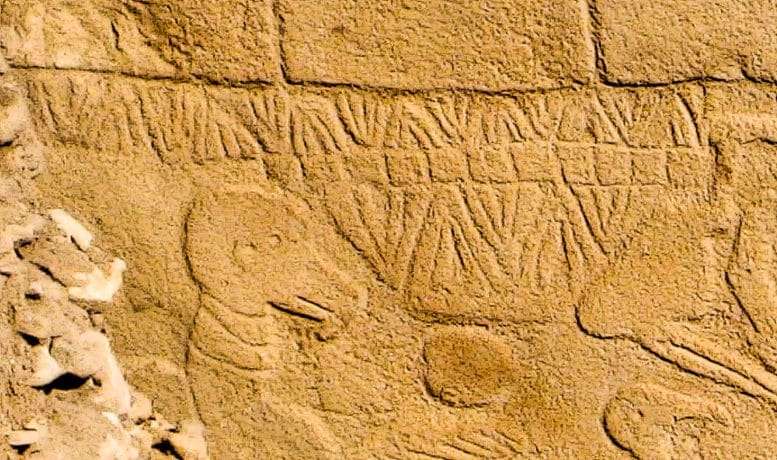
This calendar follows a pattern of 12 lunar months plus an extra 11 days, reflecting the design of subsequent lunisolar calendars that harmonize moon and sun cycles. The technological sophistication implied by this discovery places Göbekli Tepe’s creators far ahead of previous estimates for the origin of complex astronomical observation.
University of Edinburgh’s Dr. Martin Sweatman, who spearheaded the study, commented, “The people at Göbekli Tepe were evidently skilled sky watchers, likely influenced by a catastrophic comet impact which drastically affected their world.” This highlights the site’s dual role as both a spiritual center and a pioneering venue for scientific observation.
A Calendar Forged in the Wake of Disaster
One intriguing theory is that this solar calendar emerged as a direct response to a devastating comet impact believed to have occurred around 13,000 years ago. This cosmic event possibly triggered the Younger Dryas, a brief but intense period of global cooling, profoundly reshaping climate and human lifeways. The carvings may serve as a record of the event and a tool to mark time since that environmental upheaval.
This linkage suggests that Göbekli Tepe’s ancient population harnessed their astronomical insights to adapt to dramatic environmental shifts. Dr. Sweatman noted, “The comet strike may have catalyzed the birth of civilization by inspiring new religious beliefs and prompting agricultural innovation aimed at surviving harsher conditions.” Such a perspective sheds light on the adaptability and creativity of humanity in prehistoric times.
Reevaluating Ancient Astronomy and Human Progress
The Göbekli Tepe discovery reshapes our understanding of early observational astronomy. Carvings depict events like the Taurid meteor stream, thought to be connected with comet debris impacting Earth.
This indicates the site’s inhabitants not only followed regular celestial patterns but also noticed and documented extraordinary cosmic phenomena.
Furthermore, evidence suggests an awareness of precession—the slow gyration of Earth’s axis, altering star and constellation positions over thousands of years. This knowledge predates Hipparchus’ formal identification of precession by nearly 10,000 years.
This early mastery of complex astronomical concepts implies that Göbekli Tepe’s people were highly advanced observers, capable of extensive data collection and careful interpretation of the heavens.
The Lasting Impact of Göbekli Tepe’s Cultural Heritage
Beyond being the home of the world’s earliest solar calendar, Göbekli Tepe stands as a testament to long-lasting cultural and religious practices. Its artistic engravings and monumental constructions reflect a sophisticated social order that challenges conventional views about civilization’s beginnings.
These discoveries support the idea that the comet event and ensuing climate changes served as catalysts for major societal transformations, including the dawn of agriculture and complex communities.
The site’s inscriptions might represent one of humanity's first recorded histories, establishing a tradition of using celestial observations to comprehend and organize the world—a tradition that later evolved into writing and complex calendrical science.
Ongoing research at Göbekli Tepe aims to further reveal how ancient peoples lived, interpreted the cosmos, and influenced the dawn of civilization. The unveiling of this prehistoric calendar highlights the profound links between astronomy, spirituality, and social advancement in human history.












0 comments
Sign in to Comment