
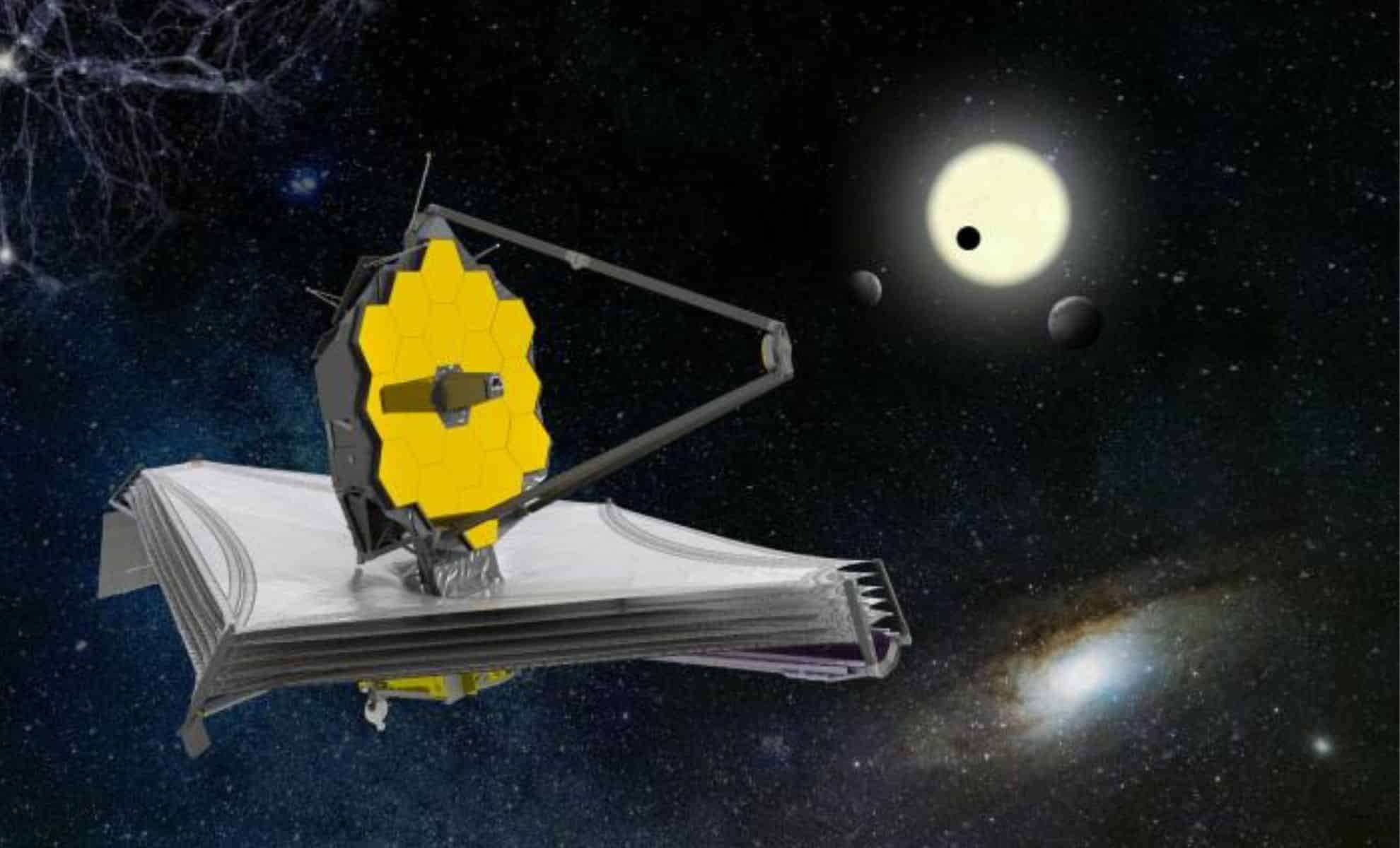
The James Webb Space Telescope (JWST) has offered an unprecedented glimpse into the ancient solar system by examining icy objects like trans-Neptunian objects (TNOs) and centaurs. Using sophisticated spectroscopic tools, scientists have uncovered new information about the formation and development of the solar system’s outer regions billions of years ago. Identifying distinct composition groups among these primordial bodies provides fresh clues about the materials and processes that influenced our cosmic environment.
Located beyond Neptune in areas such as the Kuiper Belt and Oort Cloud, TNOs are preserved remnants from the solar system's earliest era. Centaurs, which gradually move closer to the Sun, serve as intermediate bodies bridging the icy outer zones and the rocky inner planets. Studying both offers a deeper understanding of the solar system’s complex evolution and structure.
Decoding the Composition of Trans-Neptunian Objects
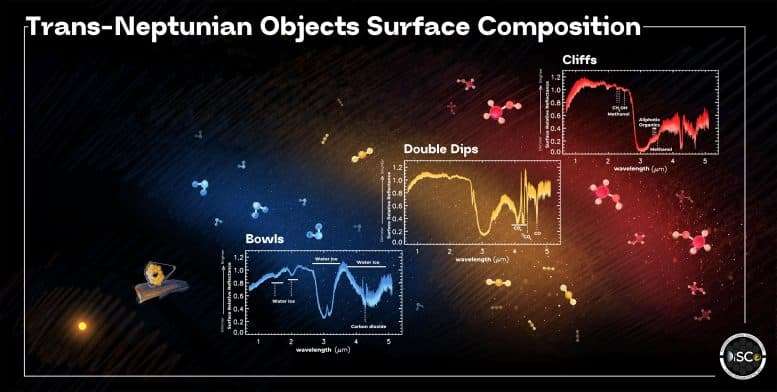
Trans-Neptunian objects are small, frozen masses orbiting far from the Sun where cold temperatures maintain their primordial makeup. These range from dwarf planets like Pluto and Eris to smaller rock and ice fragments. Recent JWST data shows that TNOs fall into three main compositional categories, related to their formation locales and ice preservation zones in the early protoplanetary disk.

Rosario Brunetto, a researcher at the Centre National de la Recherche Scientifique affiliated with the Institute d’Astrophysique Spatiale (Université Paris-Saclay), notes the uneven spread of these groups:
“The compositional groups of TNOs are not evenly distributed among objects with similar orbits,” Brunetto says. “For instance, cold classicals, which formed in the outermost regions of the protoplanetary disk, belong exclusively to a class dominated by methanol and complex organics. In contrast, TNOs on orbits linked to the Oort cloud, which originated closer to the giant planets, are all part of the spectral group characterized by water ice and silicates.”
This classification sheds light on the early solar system's materials, enhancing knowledge of the links between TNOs and other proximate objects.
Investigating the Evolution of Centaurs
Centaurs, originally part of the TNO family, are nudged inward by Neptune’s gravity, acquiring unstable orbits through the giant planets’ zone. These bodies sometimes show comet-like tails caused by surface warming and ice sublimation. Their varied makeup and evolutionary tracks reveal a complexity that surpasses earlier assumptions.
Javier Licandro, a lead scientist at the Instituto de Astrofísica de Canarias and principal investigator on centaur research, highlighted the unexpected range in centaur compositions:
“The spectral diversity observed in centaurs is broader than expected, suggesting that existing models of their thermal and chemical evolution may need refinement. The variety of organic signatures and the degree of irradiation effects observed were not fully anticipated.”
Licandro emphasized that centaurs represent diverse and evolving entities rather than a uniform group:
“The diversity detected in the centaurs populations in terms of water, dust, and complex organics suggests varied origins in the TNO population and different evolutionary stages. The effects of thermal evolution observed in the surface composition of centaurs are key to establishing the relationship between TNOs and other small bodies populations, such as the irregular satellites of the giant planets and their Trojan asteroids.”
Connecting Ancient History to Modern Insights
The discoveries made possible by the JWST have far-reaching consequences for deciphering the solar system's formative epoch. Brittany Harvison, a doctoral candidate in physics at UCF, emphasized the study’s importance:
“The three groups defined by their surface compositions exhibit qualities hinting at the protoplanetary disk’s compositional structure. This supports our understanding of the available material that helped form outer solar system bodies such as the gas giants and their moons or Pluto and the other inhabitants of the trans-Neptunian region,” she says.
These findings not only enhance our knowledge of the outer solar system’s makeup but also open pathways for further research into how TNOs, centaurs, and other small objects are related.
- Categories:
- News







0 comments
Sign in to Comment