

Astronauts journeying to the lunar surface may soon be outfitted with innovative clothing that detects radiation exposure through color-changing bacterial pigments. Developed by a team of scientists, this new textile technology aims to safeguard space travelers while offering practical benefits for Earth-based users.
Addressing the persistent challenge of space radiation, which poses severe health threats due to the absence of Earth's magnetic shield, this bacterial-infused fabric offers a fresh solution to monitoring radiation levels in situ.
Harnessing Bacteria for Radiation-Responsive Fabrics
The project's core concept revolves around bacteria-generated dyes that undergo color transformations when subjected to radiation. Known as Pigmented Space Pioneers, the initiative employs harmless bacteria such as Serratia marcescens, familiar to many as the source of red stains found near damp household areas. These microbes produce pigments that diminish in color intensity upon radiation exposure.

Katie Tubbing, the designer collaborating on the project, shares insights:
“What we’re developing is a fabric with a design that is visually interesting but is also easily readable, so that in the future it will be easy to see at a glance when the dye has faded in response to potentially dangerous radiation exposure. It’s an exciting challenge, and it’s a unique fusion of art and science,” she said in a release from the University of Glasgow.
Utilizing 3D printing, the bacteria are embedded within the fabric forming dynamic, functional patterns. An additional benefit of the bacterial dyes is their biodegradability, representing an environmentally responsible alternative compared to traditional synthetic dyes, which often contribute to water pollution.
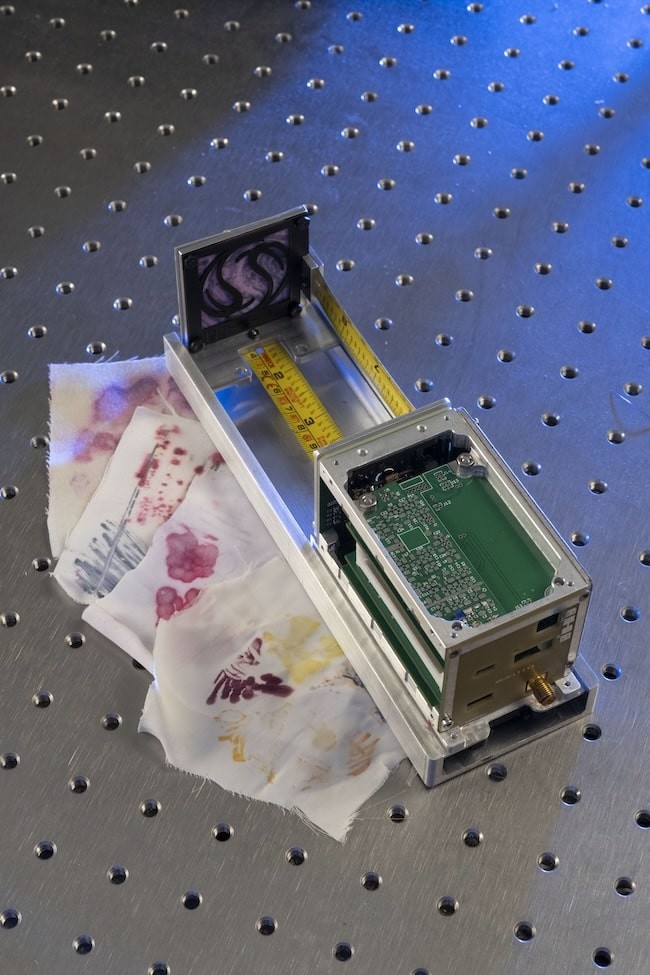
Protecting Space Travelers from Harmful Radiation
Space radiation presents a major health risk for astronauts, especially on the Moon’s surface where the Sun’s intense high-energy particles can inflict DNA damage, increasing the likelihood of cancer and other conditions. The lack of Earth’s atmospheric protection makes reliable radiation detection critical.
“Exposure to radiation breaks up the pigments in the bacteria, while similar exposure to radiation in humans breaks our DNA,” explains Dr. Gilles Bailet, project lead at the University of Glasgow.
The concept behind the fabric is to provide astronauts with an immediate visual indicator of dangerous radiation levels without relying on bulky or complicated devices. The textile acts as a straightforward warning system by signaling changes through its color shift. The first application will debut aboard the Spinning Around SpinnyONE satellite mission, anticipated to launch in February 2026.
Practical Earth Applications of Radiation-Sensitive Textiles
Although devised to enhance astronaut safety, this technology holds considerable promise for terrestrial applications. It could serve medical staff exposed to radiation or individuals working with imaging equipment. Furthermore, it can alert everyday users to excessive UV radiation, helping to reduce skin cancer risk.
Dr. Keira Tucker of ASCUS highlights that integrating this fabric into daily clothing could transform how we monitor sun exposure, especially during outdoor activities when UV risk is heightened.
Beyond health, this innovation also promotes a more sustainable fashion industry by replacing harmful dyes with eco-friendly bacterial pigments. It exemplifies how science and design can collaborate to address critical environmental and safety challenges.












0 comments
Sign in to Comment