

On September 20, 2024, Rocket Lab achieved a milestone by carrying out its 53rd Electron launch, successfully deploying a second group of five satellites for Kinéis, a French company specializing in Internet of Things (IoT) connectivity solutions.
This launch advances Kinéis’ ambition to assemble a fleet of 25 satellites designed to deliver worldwide IoT capabilities, with full constellation completion expected by mid-2025.
Launch Mission Overview
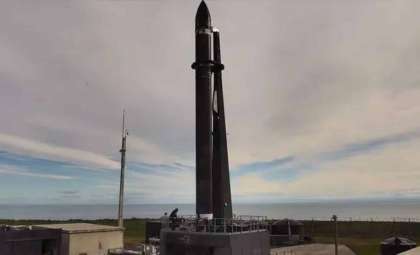
The Electron rocket lifted off from Launch Complex 1 in Mahia, New Zealand, at 11:01 a.m. NZST (23:01 UTC on September 20). All five Kinéis satellites were successfully inserted into a sun-synchronous orbit approximately 643 kilometers above Earth. This marked the second of five dedicated launches planned for Kinéis, the first having taken place in June 2024, with operations expected to begin in January 2025.

The Kinéis satellite network aims to offer IoT services featuring data latency between 15 and 20 minutes, providing near-real-time connections critical to sectors like logistics, energy monitoring, and environmental observation. Alexandre Tisserant, Kinéis’ CEO, highlighted the importance of compact, low-power devices, stating that “The competition is too expensive or not small enough. That’s what we see today in the market.”
Rocket Lab’s CEO, Peter Beck, also emphasized the mission’s significance: “With each mission, we are bringing the world closer together, allowing vital data to be transmitted from the remotest corners of the Earth.” This launch success reinforces Rocket Lab’s growing prominence as a leading provider of customized small satellite launch services.
Rocket Lab’s Expanding Influence in Small Satellite Deployment
The deployment of the Kinéis satellites represents Rocket Lab’s 11th launch in 2024, setting a new annual high for the company. The Electron rocket serves as Rocket Lab’s primary vehicle for small satellite missions, uniquely delivering dedicated launches that meet specific orbital requirements for clients like Kinéis. While rideshare launches that carry payloads from multiple customers remain common, dedicated missions offer superior precision in orbital placement essential for satellite constellations.
Peter Beck elaborated on the benefits of dedicated launches for customers transitioning from prototypes to fully operational spacecraft. “We see a number of customers go on a rideshare mission and get prototypes and whatnot on orbit,” Beck said. “When those companies need to deploy operational spacecraft into precise orbits, then we see them come off Transporter and onto a dedicated platform.” This tailored approach has enabled Rocket Lab to become a trusted launch partner for commercial satellite operators needing specialized service.
Since its inaugural orbital flight in 2018, Rocket Lab’s Electron vehicle has become the second most active U.S. rocket, trailing only SpaceX. To date, nearly 200 satellites have been launched for clients that include NASA, the National Reconnaissance Office (NRO), and the Space Force, along with numerous commercial enterprises. These payloads support diverse missions like earth observation, scientific research, national security, and space debris management.
Driving IoT Connectivity into Remote Regions
Kinéis’ satellite network is poised to revolutionize IoT connectivity worldwide, especially for applications that require data collection from challenging environments. By extending IoT access to isolated locations such as oceans, forests, and mountainous areas, Kinéis’ constellation will enable advancements in forest fire warning systems, water management, wildlife monitoring, and energy grid supervision. These capabilities will allow near real-time data availability, enhancing operational insights and decision support across several industries.
CEO Alexandre Tisserant noted that Kinéis’ emphasis on smaller, energy-efficient devices distinguishes them from rivals. The satellites support low-power IoT terminals, ideal for deployment in areas with limited power infrastructure. Tisserant remarked, “When you have someone that is actually launching and has an actual service, it really makes a difference,” underscoring the importance of turning years of development into market-ready IoT solutions.
This latest satellite batch signifies major progress toward Kinéis’ constellation completion target by mid-2025. Following full deployment, Kinéis anticipates offering IoT service latency between 15 and 20 minutes, enabling unprecedented connectivity for global IoT applications, especially in sectors requiring constant asset monitoring in remote environments.
Rocket Lab’s Growth Trajectory in the Aerospace Sector
The collaboration with Kinéis reflects increasing demand for small satellite deployment services to support communication, Earth observation, and IoT constellations. The Electron rocket’s flexibility and reliability make it an attractive choice for operators seeking dedicated launches with carefully controlled orbital insertions.
Looking ahead, Rocket Lab is advancing the development of the Neutron launch vehicle, a more powerful rocket designed to carry larger payloads for constellation deployment and future human spaceflight missions. This initiative fits within Rocket Lab’s broader plan to provide comprehensive space solutions, spanning satellite production, launch, and on-orbit services.
Peter Beck reiterated Rocket Lab’s commitment to shaping the future of space-based data connectivity: “With each mission, we are bringing the world closer together, allowing vital data to be transmitted from the remotest corners of the Earth,” emphasizing the crucial role of global connectivity today.
Having now launched 197 satellites for a diverse suite of customers and missions, Rocket Lab continues building capabilities to serve Earth observation, scientific, security, and commercial needs. The recent Kinéis satellite deployment marks another significant step in the company’s leadership in the small satellite launch market.
- Categories:
- News ,
- Aircraft ,
- Tech









0 comments
Sign in to Comment