

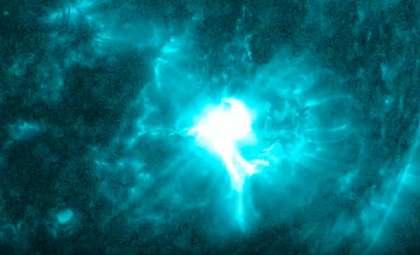
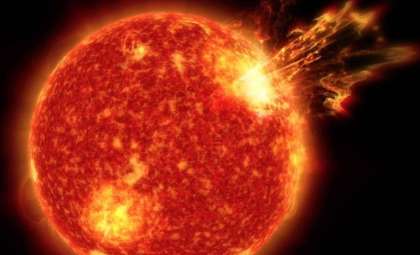
The resilient sunspot cluster known as AR 3723 has made its third comeback, immediately unleashing a powerful M9.3-class solar flare.
This active region has a history of sparking vibrant auroras and strong geomagnetic storms. It first appeared as AR 3664, then re-emerged as AR 3697, and is linked to the most intense geomagnetic storm observed in two decades. Its flare on June 23, 2024, nearly reached the X-class flare threshold—the highest solar flare ranking.
Background and Recent Developments
AR 3723 has shown extraordinary durability and strength, surviving two full rotations hidden from Earth's view on the Sun’s far side. Initially detected in May as AR 3664, it rotated away on May 15 after causing a massive geomagnetic event.

This event produced spectacular auroral displays globally. When it returned as AR 3697 on May 27, the sunspot emitted an X12-class flare—the most potent flare recorded in the current solar cycle—and triggered the most severe solar radiation storm since 2017. After disappearing again on June 11, it came back as AR 3723 on June 23, marked by a striking M9.3 solar flare.
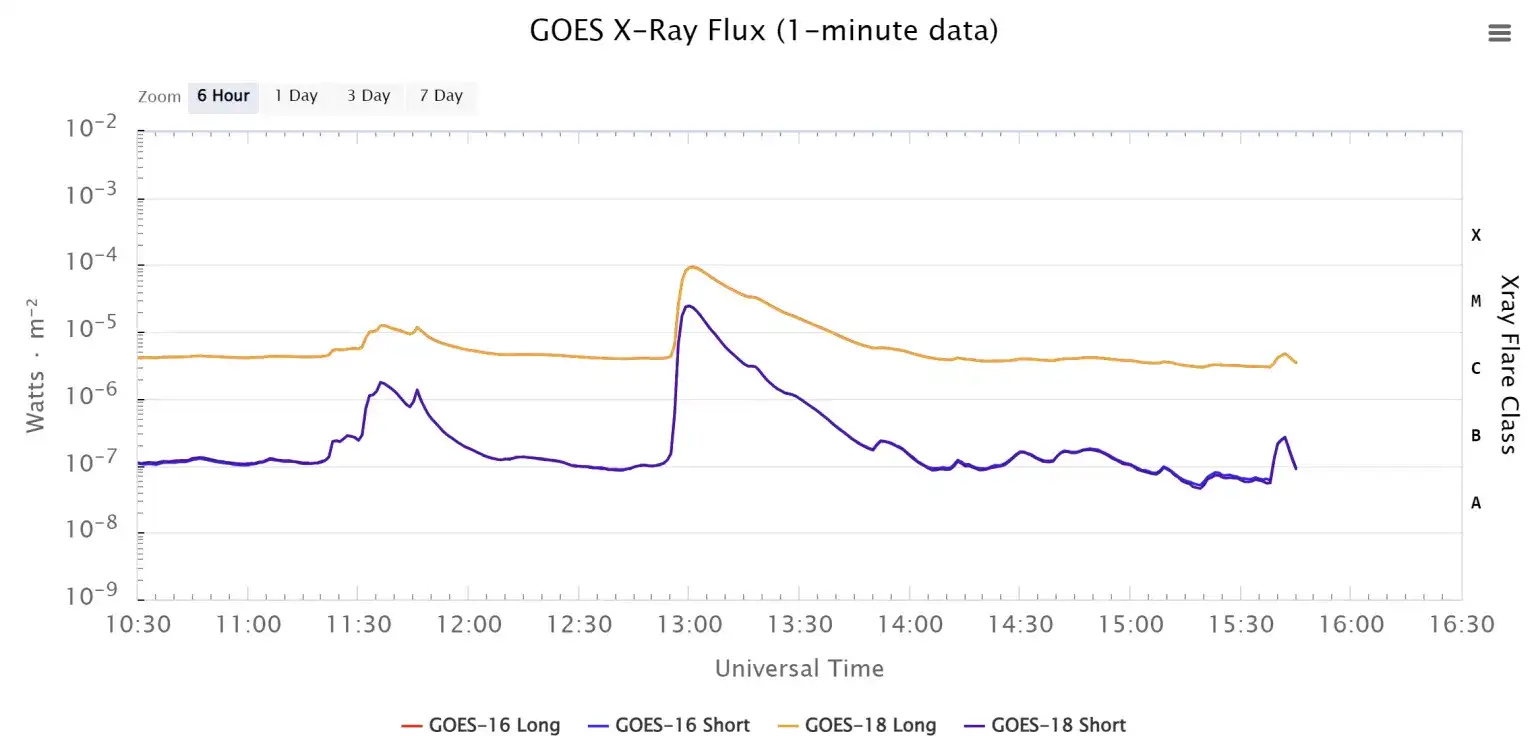
Solar physicist Keith Strong noted the importance of the flare on X (formerly Twitter), stating: “SO NEAR AND YET SO FAR! A new sunspot region on the SE limb just produced an M9.7 flare (just 3% short of an X flare).”
SO NEAR AND YET SO FAR! A new sunspot region on the SE limb just produced an M9.7 flare (just 3% short of an X flare). As it is so far east (i.e., poorly magnetically connect to Earth) it is unlikely to affect us in any significant way. pic.twitter.com/KqK1dRmAes
— Keith Strong (@drkstrong) June 23, 2024
Understanding Solar Flare Categories and Their Effects
Solar flares are classified by their X-ray brightness, spanning categories A, B, C, M, and X, with each step indicating a tenfold increase in strength. The M9.3 flare from AR 3723 approaches the powerful X-class level, underlining its intensity.
Often linked with these flares are coronal mass ejections (CMEs), where energetic plasma bursts escape the Sun’s corona. The intense geomagnetic storm witnessed in May was triggered by several CMEs from AR 3723, which combined and advanced the Sun’s magnetic influence toward Earth.
When observed as AR 3697, this region produced an X-class flare that disrupted radio communications in Western Europe and the Eastern US. During that rotation, it generated 28 M-class flares and 6 X-class flares, signaling its capability for ongoing solar activity with potential geomagnetic and auroral consequences.
Impact on Earth and Ongoing Observations
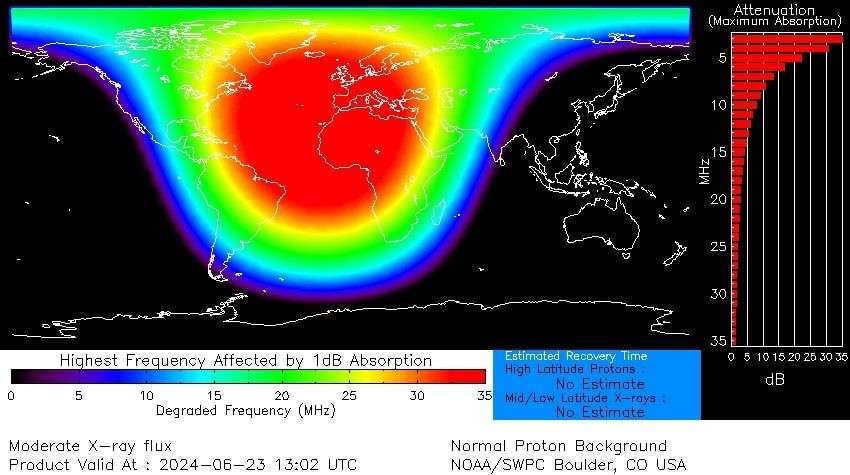
The M9.3-class flare on June 23 caused moderate shortwave radio blackouts over Western Europe and Africa. Such blackouts typically follow major solar flares because high-energy X-rays and ultraviolet radiation ionize parts of Earth’s upper atmosphere, interfering with high-frequency radio transmissions. These disturbances can disrupt aviation, marine navigation, and emergency communication networks.
As AR 3723 continues to rotate across the Sun’s surface, solar scientists remain vigilant. Its propensity for high-energy flares and geomagnetic disturbances makes it a prime target for space weather monitoring. The sunspot's recurring intense activity exemplifies the Sun’s dynamic and unpredictable nature, which directly influences space weather and modern technology on Earth.
The resurgence of the aurora-causing AR 3723 cluster, with its formidable solar eruptions, highlights the vital role of continuous solar observation in anticipating and understanding space weather events.
- Categories:
- Astronomy ,
- News ,
- Space







0 comments
Sign in to Comment