
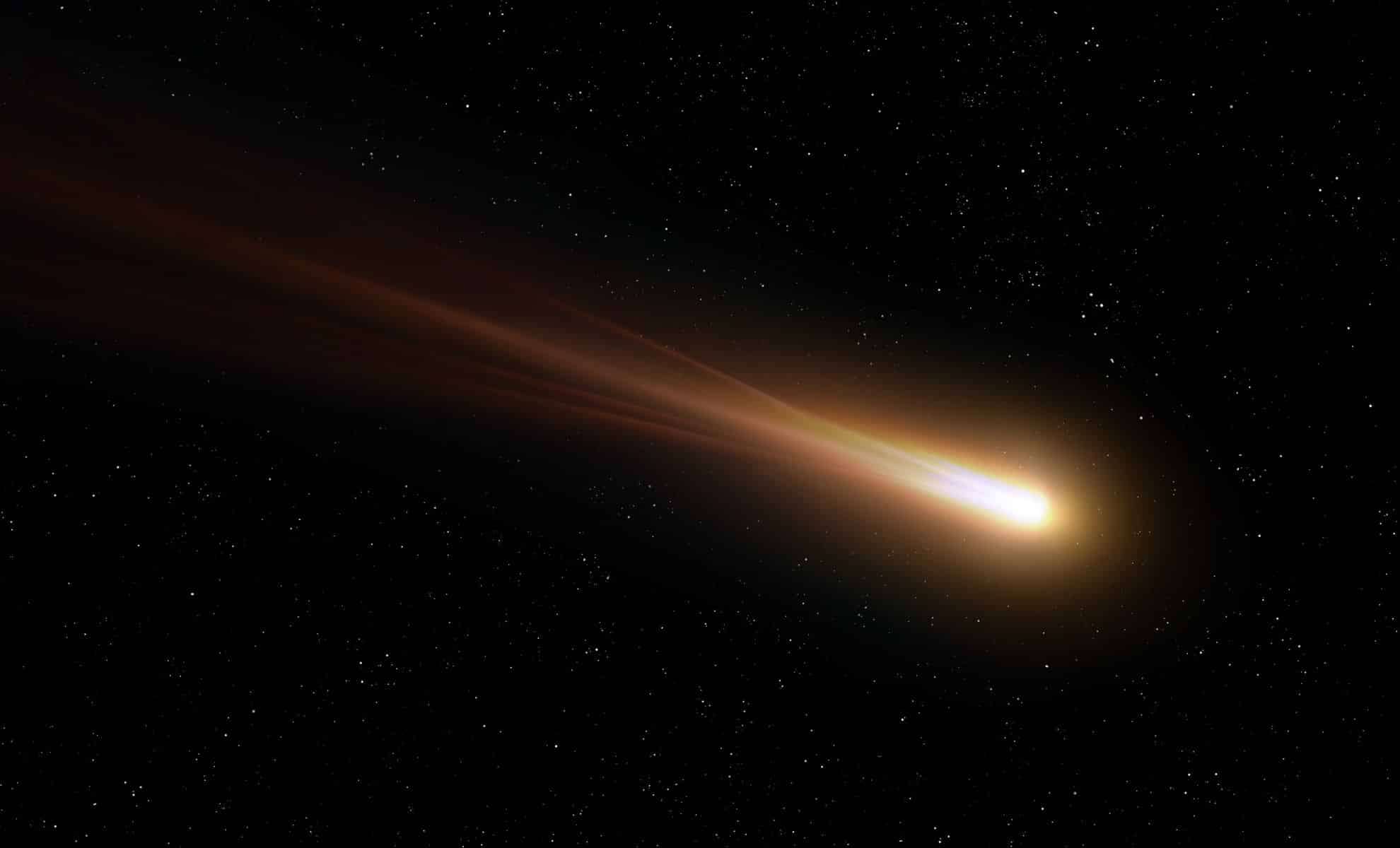
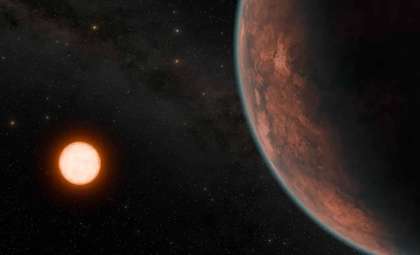
A wandering star is approaching the boundary of our solar system sooner than previously predicted. The rogue dwarf star known as Gliese 710 is now expected to make its closest pass in just 1.29 million years, which is tens of thousands of years earlier than earlier estimates. Additionally, the star's trajectory suggests it will come much closer to our solar neighborhood than scientists initially believed, according to a recent study available on the preprint server arXiv.
Is Gliese 710's Approach Cause for Concern?
Using high-precision data from the European Space Agency’s Gaia mission, astronomers recalculated Gliese 710's path. This orange dwarf star has long been identified as a future visitor to the far reaches of the solar system. While it poses no direct threat to the planets due to its modest mass and velocity, its gravitational influence could disturb the outermost regions dominated by the Sun’s pull.
One major area of interest is the Oort Cloud, the hypothesized spherical shell of icy objects encircling the solar system. Gliese 710’s flyby may perturb these distant icy bodies, offering scientists a rare opportunity to study how stars passing nearby can impact planetary system structures.

Refined Data Alters Our Understanding—Slightly but Significantly
In 2016, astronomers Filip Berski and Piotr A. Dybczyński utilized initial observations from the ESA’s Gaia mission to predict Gliese 710’s closest approach to our solar system as occurring around 1.36 million years from now, at roughly 13,365 astronomical units (AU) — more than 100 times the Earth-Sun distance.
Recently, as ScienceAlert reports, researchers Raúl and Carlos de la Fuente Marcos from the University of Madrid updated these projections using Gaia’s second data release, which offers improved accuracy. Their analysis suggests the encounter will occur nearly 70,000 years earlier and that Gliese 710 will pass significantly closer, at just 4,303 AU, placing it well inside the outer limit of the Oort Cloud.
The team notes that their results “confirm, within errors, those in Berski & Dybczyński (2016), but suggest a closer — both in terms of distance and time — flyby of Gliese 710 to the solar system.”
Gliese 710’s Presence Could Stir the Solar System’s Outskirts
Traveling at approximately 51,499 kilometers per hour, Gliese 710 is not fast enough to be considered a runaway star but moves swiftly on a galactic scale. With about 60% of the Sun’s mass, it won’t have any destabilizing effects on planets inside 40 AU of the Sun, ensuring Earth and its neighboring worlds remain safe.
However, in the vast icy expanse of the Oort Cloud, the star’s gravity may act much like a cue ball, nudging dormant objects and potentially sending some hurtling toward the inner solar system. This process unfolds over thousands of years and could gradually increase the influx of comets toward our planetary neighborhood.
Historical Close Encounters of Stars with Our Solar System
Gliese 710 is merely the latest star predicted to come near our solar system. According to ScienceAlert, Gliese 208 approached within roughly five light-years approximately 500,000 years ago, while Scholz’s star passed through the Oort Cloud roughly 70,000 years ago. Neither close encounter seems to have caused any noticeable effects on Earth.
Curiously, Scholz’s star passage coincided with a critical moment when Homo sapiens populations nearly faced extinction — likely coincidental, but nonetheless intriguing. These events highlight the dynamic nature of our galaxy where stars drift, cross paths, and subtly influence each other across vast epochs.
- Categories:
- News





0 comments
Sign in to Comment