
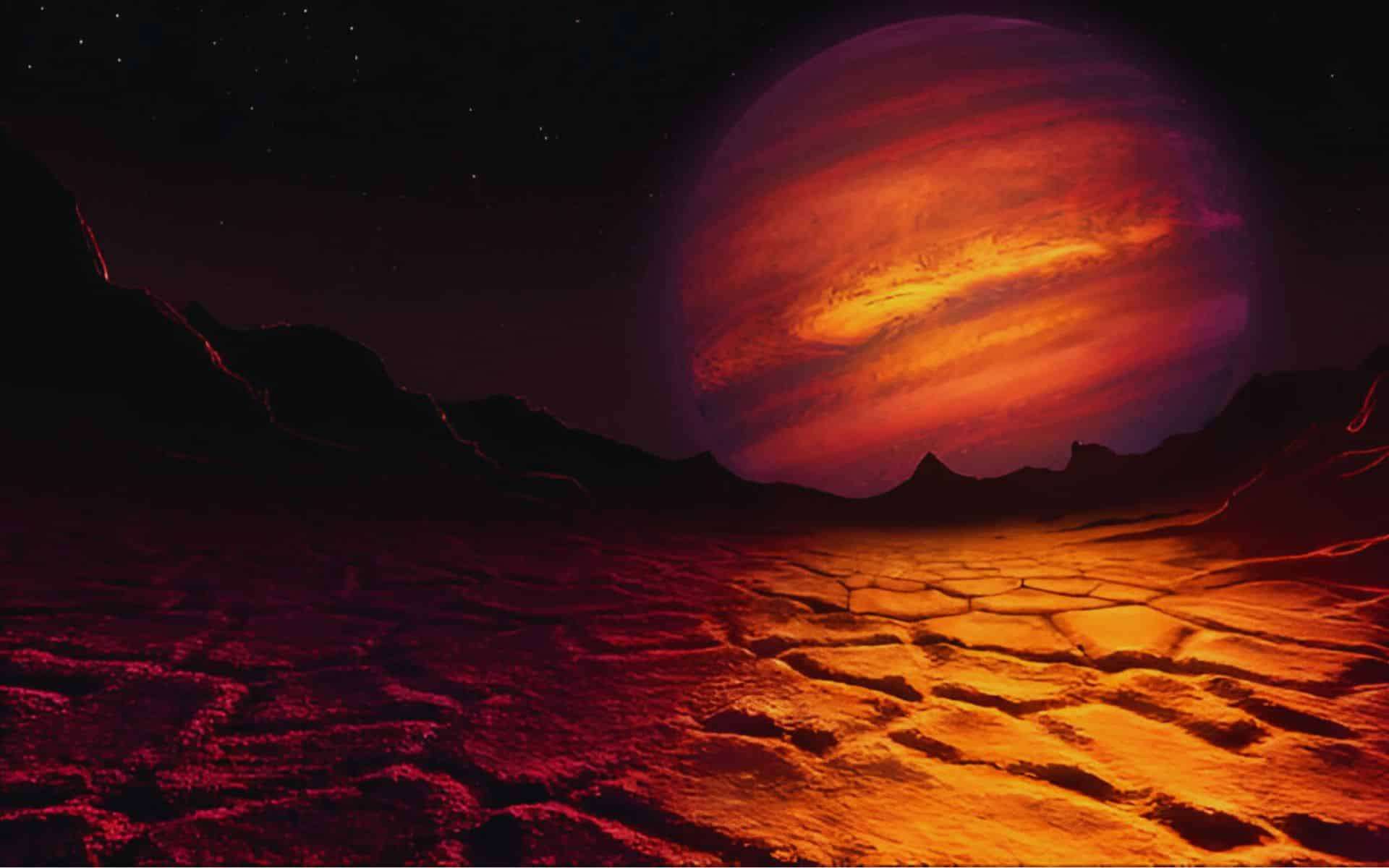
Breakthrough findings from two separate research groups have transformed our knowledge of the brown dwarf Gliese 229 B. Both teams independently determined that Gliese 229 B isn’t a lone brown dwarf but a pair of brown dwarfs orbiting each other. Using cutting-edge telescopes and techniques, they reached this conclusion through different methods yet uncovered consistent results.
Understanding the Mysteries of Brown Dwarfs
Brown dwarfs inhabit the space between gas giant planets and true stars. Though they are massive, they lack the core pressure to sustain nuclear fusion, instead emitting faint light from residual heat. Typically, their luminosity is linked to their mass, making Gliese 229 B’s relatively faint glow puzzling given its estimated mass.
First identified in 1994, Gliese 229 B was the pioneering confirmed brown dwarf, discovered orbiting a red dwarf star. Its methane-rich atmosphere, akin to that of Jupiter, highlighted its unusual characteristics. Yet measurements via astrometry and radial velocity pointed to a mass around 71 times that of Jupiter, creating a dilemma: an object of this size should be much more luminous, which conflicted with existing brown dwarf models.

Xuan’s Study with European Observatories
To resolve this discrepancy, Jerry Xuan and colleagues at Caltech utilized the Very Large Telescope (VLT) in Chile, equipped with two specialized instruments:
- CRIRES+, a high-resolution infrared spectrograph capable of finely separating light from multiple sources.
- GRAVITY, an interferometric system that combines signals from four telescopes to produce extremely detailed spatial data.
As Xuan detailed, “CRIRES+ separates spectral features at high resolution, while GRAVITY synthesizes light from four telescopes to reveal detailed spatial structure.”
Integrating data from both tools, they uncovered that Gliese 229 B is actually a close binary pair—designated Gliese 229Ba and Gliese 229Bb—orbiting with a 12-day period and spaced apart by roughly 16 Earth-Moon distances. Spectral signatures showed two distinct atmospheres, confirming the binary nature.
Verification from the Keck Observatory
At around the same time, Samuel Whitebrook’s team at the University of California, Santa Barbara applied the Near-Infrared Spectrograph (NIRSPEC) at the Keck Observatory in Hawaii. Thanks to NIRSPEC’s high spectral resolution, they detected periodic spectral shifts indicative of a gravitational companion. These subtle variations provided strong independent proof supporting the binary interpretation of Gliese 229 B.
The combined results from both research groups indicate a previously hidden binary system whose total mass was erroneously attributed to a single brown dwarf. Significantly, each member of the pair, Gliese 229Ba and Gliese 229Bb, is noticeably less luminous than a solitary brown dwarf with the same mass. This insight clarifies the long-standing mystery of why Gliese 229 B’s brightness seemed anomalously low for its measured mass.
Wider Impact on Stellar and Planetary Science
These discoveries have implications far beyond just Gliese 229 B. Xuan’s team suggests that other brown dwarf binaries may be common around stars, and similar binary structures might also exist among massive exoplanets like Jupiter. Investigating these systems could unlock further secrets about how stars and planets form and evolve. Xuan remarked, “Our results highlight the intricate and chaotic nature of star formation. The Milky Way’s diversity constantly challenges our assumptions and encourages us to expect the unexpected.”
- Categories:
- Astronomy ,
- News ,
- Space








0 comments
Sign in to Comment