
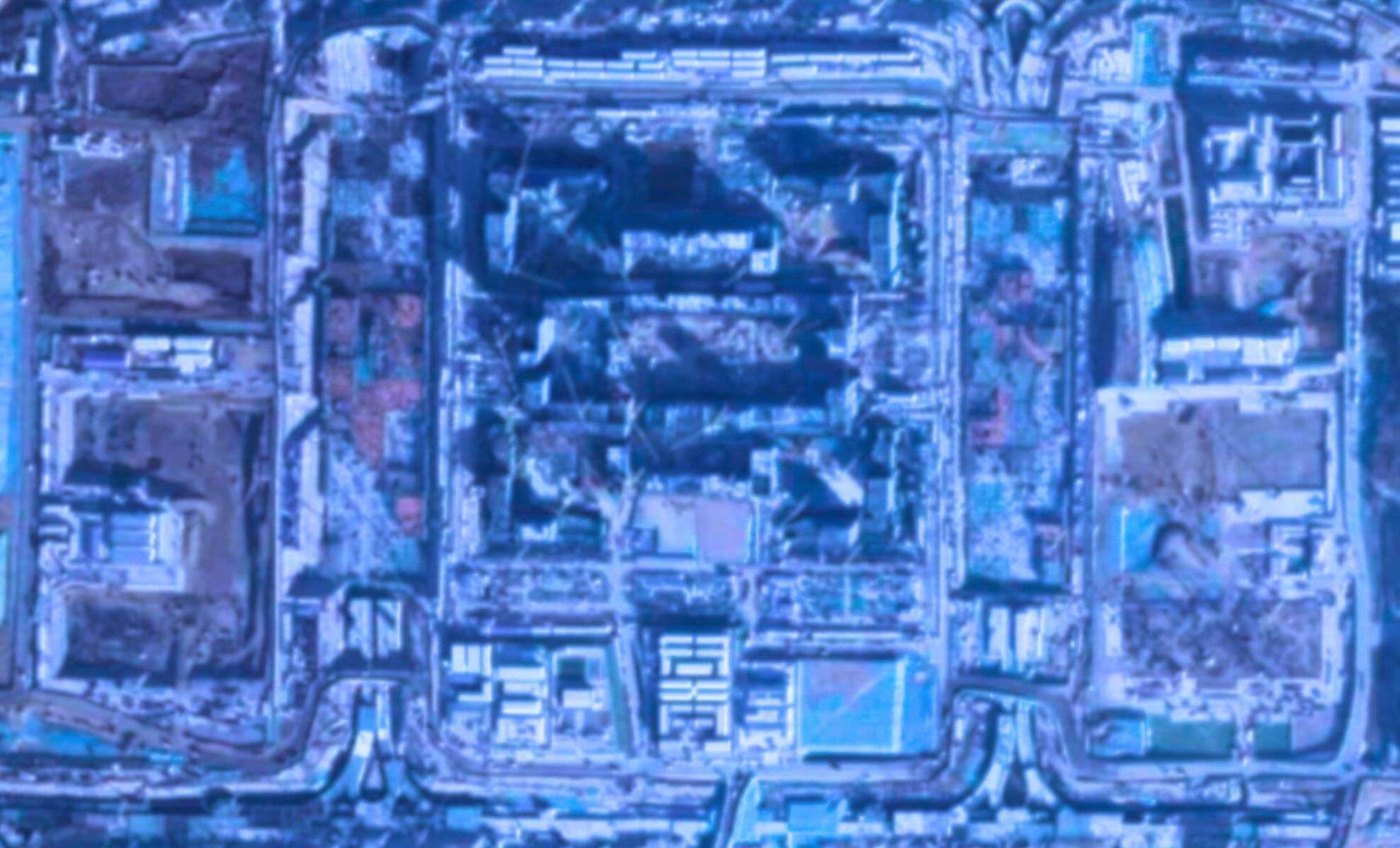
The most profound military shift of our era is unfolding silently, etched onto the landscape and visible only from space. In China’s vast western deserts and atop former reefs in the South China Sea, an expansive new network of military installations is taking shape.
This ambitious construction effort marks a critical evolution in China’s defense strategy, moving from a primarily land-focused power to a globally capable force developing advanced and hardened military infrastructure.
Recent analysis of commercial satellite images by defense specialists has exposed what appears to be the world’s largest military base, discreetly hidden in the remote terrain of the Gobi Desert. This facility spans hundreds of square miles, featuring an intricate network of underground bunkers, surface buildings, and high-security perimeters.

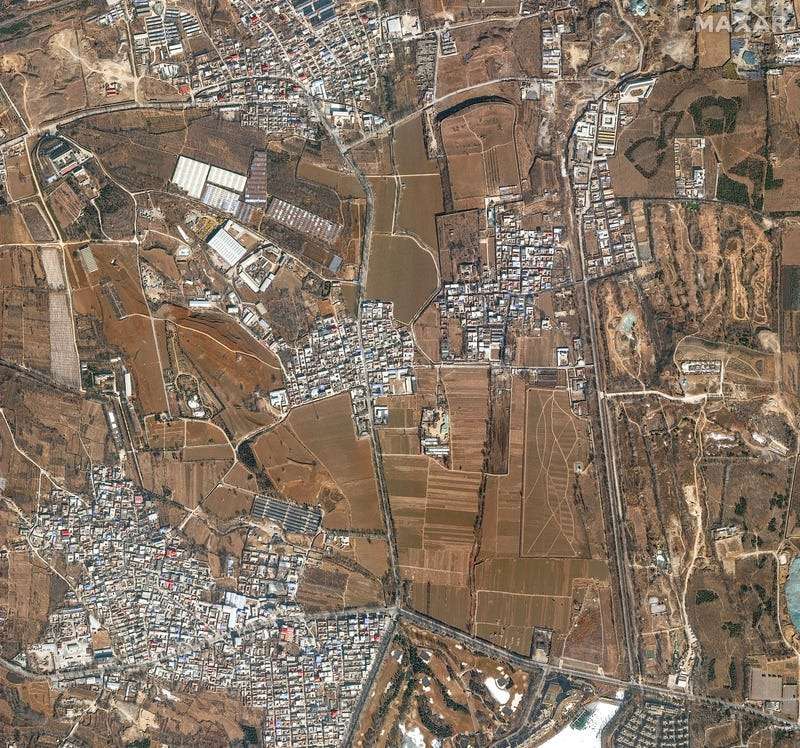
The vast excavation work and intricate tunneling imply a key aim of ensuring resilience. This complex is designed to endure sophisticated precision strikes, preserving vital command centers and potentially secure nuclear capabilities during extended conflicts.
At the same time, more than a thousand kilometers south, China is transforming maritime territories by reclaiming land on sensitive reefs in the Spratly Islands, creating man-made islands.
Reports from the Asia Maritime Transparency Initiative (AMTI) reveal these are not simple outposts but sophisticated military bases. They include harbors suited for large naval vessels, airstrips long enough for bombers and reconnaissance aircraft, and extensive hardened facilities for aircraft shelter.
These maritime installations carry significant geopolitical weight. The South China Sea is a vital global shipping corridor handling roughly $3 trillion in trade annually. By fortifying this zone, China has established a powerful military presence controlling critical sea lanes.
This enhances the People’s Liberation Army (PLA) with persistent surveillance abilities and restrictions on foreign naval movements, reshaping regional security. This development expands China’s strategic reach by creating a robust anti-access/area-denial (A2/AD) framework.
Technology Fuels China’s Military Expansion
Alongside these physical projects, the PLA is undergoing a sweeping technological transformation, shifting towards a connected and “intelligentized” force primed for cutting-edge warfare. This progress was highlighted in a recent parade emphasizing advanced weaponry like the DF-17 hypersonic glide vehicle over traditional infantry formations.
The DF-17 represents a significant breakthrough, traveling at over Mach 5 with complex maneuvering capabilities designed to challenge missile defense systems and increase evasion chances.
The event also spotlighted new focuses on warfare domains including cyber operations, electronic countermeasures, and autonomous systems. Demonstrations of robotic pack animals and swarming drones signal a future battlefield wherein human soldiers are supported by sophisticated robotics. This shift towards “intelligentization” aims to combine control of information with firepower, disrupting adversaries before combat begins.
In parallel, Western intelligence has attributed the expansive cyberespionage campaign called Salt Typhoon to Chinese state actors. This operation targets critical infrastructure worldwide to establish covert, long-term digital footholds as strategic assets.
Funding such massive dual expansions in infrastructure and technology requires huge resources. Although China’s official 2025 defense budget is $245 billion, analysts suggest actual expenditures are considerably higher.
The U.S. Department of Defense’s latest report maintains that China’s published figures likely understate its real military spending. Including independent research and development expenses, some U.S. officials estimate China’s true defense budget could near $700 billion annually.
This comprehensive modernization is part of a deliberate, long-range strategy. The authoritative Annual Report to Congress on Military and Security Developments Involving the People’s Republic of China outlines Beijing’s reorganization of its defense industry to boost innovation and production rates.
The report details a strategic initiative aimed at gaining supremacy across emerging military fields. The sprawling desert installation, fortified maritime bases, hypersonic technologies, and cyber campaigns constitute a unified vision to establish a “world-class” armed force capable of defending China’s interests and influencing global power dynamics by mid-century.
- Categories:
- News










0 comments
Sign in to Comment