
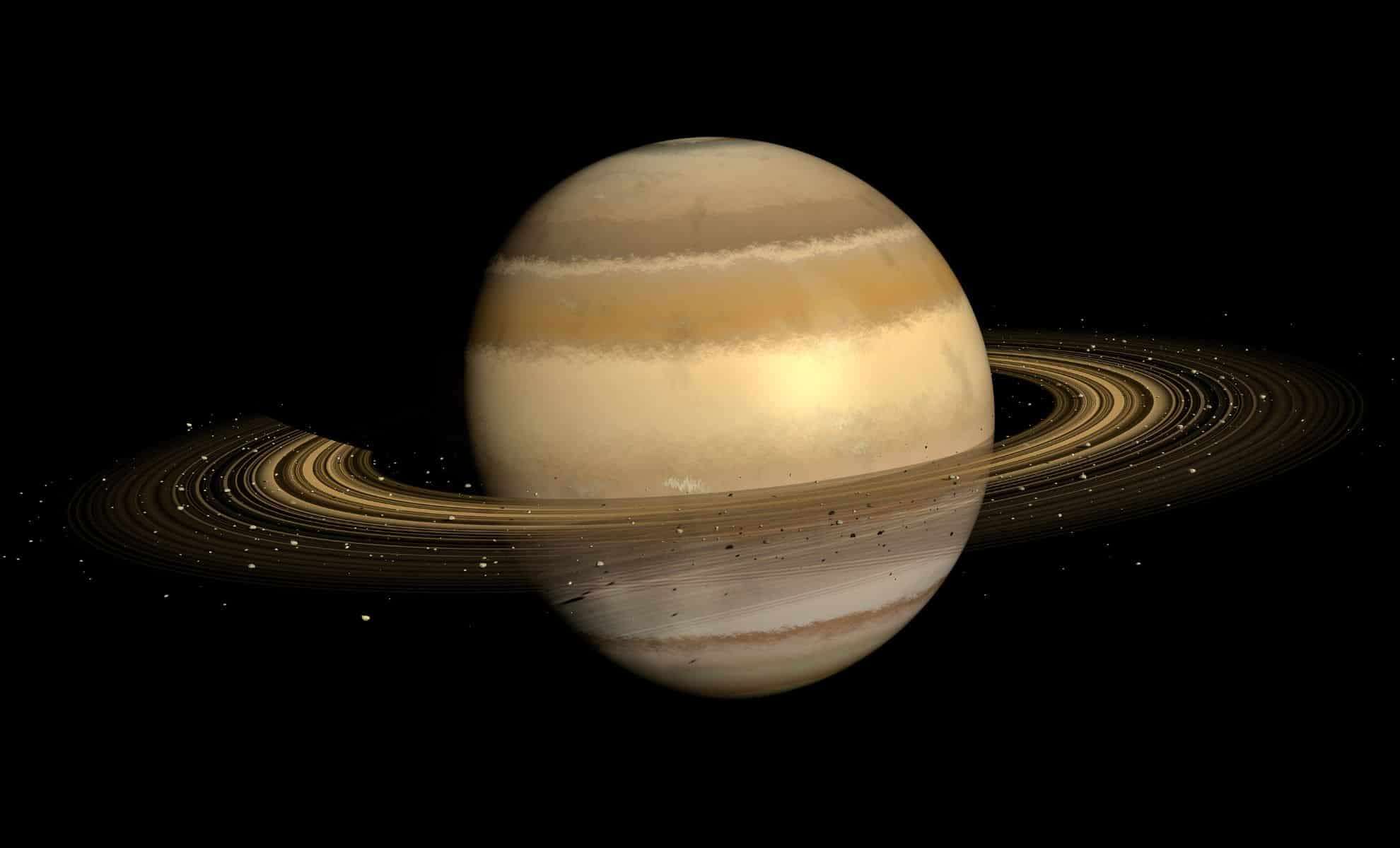
Astronomers have identified that Saturn propelled a swiftly moving comet, named Comet A117uUD, beyond our solar system at a remarkable speed of 6,700 miles per hour.
Through extensive observations combined with advanced simulations, this discovery illustrates the dynamic forces at work within our solar neighborhood, showcasing how gravitational interactions can eject objects into interstellar space.
Unveiling Comet A117uUD and Its Trajectory
Comet A117uUD was initially spotted on June 14, 2024, by the Asteroid Terrestrial-impact Last Alert System (ATLAS). Following this detection, astronomers conducted 142 separate observations over the subsequent month to map its orbit. These efforts uncovered crucial information about its pathway and how it interacted with the solar system’s planets. This included detailed tracking of its location, velocity, and orbital changes.

Analysis confirmed that in 2022, Comet A117uUD experienced a close encounter with Saturn. This encounter wasn’t merely a routine pass but significantly modified the comet’s course.
Saturn’s strong gravitational influence thrust the comet onto a hyperbolic escape path, breaking free from the Sun’s gravitational hold and sending it out into interstellar space. “Our results show that the case of comet A117uUD is similar to that of C/1980 E1 (Bowell), disfavoring an extrasolar origin for A117uUD,” the researchers explained in their study published in the Research Notes of the AAS.
Such gravitational slingshot maneuvers are uncommon but well-documented. The researchers concluded that the comet’s speed and escape trajectory following this interaction ensured its permanent departure from the solar system, classifying it as an interstellar traveler.
Saturn’s Gravitational Influence as a Cosmic Launcher
The study emphasized Saturn’s critical role in reshaping the comet’s orbit. As Comet A117uUD neared the gas giant, Saturn’s enormous gravitational pull catapulted the comet out of its usual solar orbit. This dramatically boosted its speed, granting it enough momentum to leave our solar system’s bounds.
Simulation results indicate that such interactions are potent mechanisms capable of sending objects into deep space. “The fact that two ejections after planetary encounter were observed in less than 45 years suggests that such events are relatively frequent,” the team highlighted, underscoring the significance of these gravitational interactions in solar system dynamics.
This phenomenon isn’t unprecedented. The earliest known case involved Comet C/1980 E1 (Bowell), which underwent a comparable encounter with Jupiter in 1980. Comparing these cases offers valuable insights into how massive planets influence the trajectories of smaller objects like comets.
Distinguishing from Other Interstellar Visitors
Initially, Comet A117uUD prompted speculation about origins outside our solar system, akin to ‘Oumuamua in 2017 and Comet 2I/Borisov in 2019. Yet, trajectory analysis confirmed that A117uUD originated within our solar system. This differs from ‘Oumuamua, which was unusual in shape and course, sparking theories such as Harvard’s Avi Loeb’s hypothesis suggesting an artificial origin.
‘Oumuamua was the first recognized interstellar object entering our solar system, notable for its strange form and lack of typical comet features like a coma or tail. This led to debates about its origin—some viewed it as interstellar debris, while others proposed it was a light-sail propelled artifact. Meanwhile, Comet 2I/Borisov, discovered in 2019, revealed a more conventional comet appearance, including a visible coma and tail.
Unlike these visitors, detailed examination of Comet A117uUD’s orbital path and planetary interactions confirmed its solar system origin. This finding reinforces the understanding that while true interstellar objects do pass through, the majority of comets we observe stem from within our own cosmic neighborhood.
Implications for Planetary Science and Beyond
The researchers’ insights shed light on the intricate gravitational choreography governing celestial bodies in our solar system. Saturn’s ability to redirect and accelerate comets reveals the complex nature of planetary influence on smaller objects.
These findings enable refined models of solar system behavior and enhance predictions of comet trajectories. “The discovery of such a subtle effect is remarkable, thanks to the innovative idea of combining observational data with detailed modeling,” commented Justin Hu, a lunar soils scientist at Cambridge University.
Understanding these gravitational effects is vital for planetary defense efforts and forecasting near-Earth object movements. Lessons drawn from events like the ejection of Comet A117uUD may guide future strategies for tracking or even altering the course of potentially hazardous objects.
Moreover, these results contribute to piecing together the solar system’s history, revealing mechanisms that have shaped how comets and asteroids move over billions of years.
- Categories:
- Astronomy ,
- News ,
- Space






0 comments
Sign in to Comment