
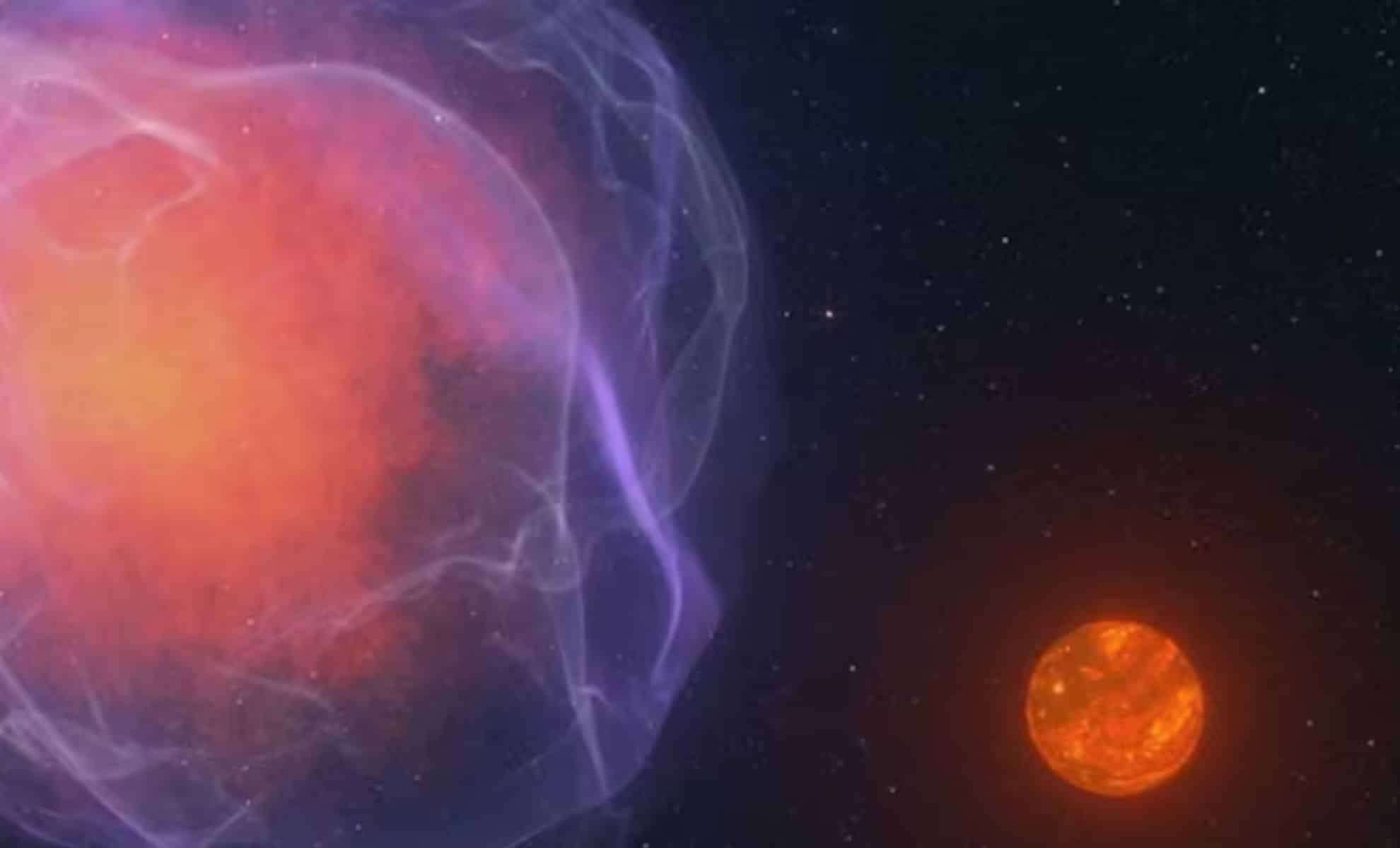
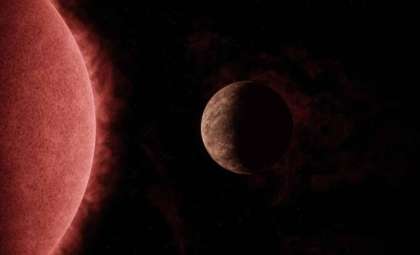
A remarkably old star, designated CWISE J124909+362116.0 (J1249+36), has been recorded traveling through space at a staggering rate close to 600 km/s (approximately 1.3 million mph).
This speed exceeds the gravitational hold of the Milky Way, ranking it among the fastest stars ever tracked within our galaxy. Discovered by citizen scientists involved in the Backyard Worlds: Planet 9 initiative, J1249+36 is classified as an L subdwarf, a rare low-mass main sequence star that is among the oldest stellar objects in the Milky Way.
Initial Detection and Follow-Up Studies
This extraordinary star was first spotted by volunteers analyzing data from NASA’s Wide-field Infrared Survey Explorer (WISE), with observations spanning the last ten years. J1249+36 caught immediate attention due to its speed, nearly triple the Sun’s orbital velocity around the galactic center. Given its velocity, this hyperfast star is very likely to leave the Milky Way entirely.

Something ‘kicked’ this hypervelocity star racing through the Milky Way at 1.3 million miles per hour (video) https://t.co/rCOAGsogJB pic.twitter.com/GLXQ2Nxjat
— SPACE.com (@SPACEdotcom) June 17, 2024
To gain further insights, Professor Adam Burgasser from the University of California, San Diego employed the infrared capabilities of the W.M. Keck Observatory located in Maunakea, Hawaii, to analyze the star’s spectrum.
This detailed study confirmed the star’s classification among the ancient L subdwarfs, known for their relatively modest mass and cooler temperatures. By integrating spectral data with advanced atmospheric modeling, researchers precisely determined J1249+36’s location and velocity within the Milky Way.
Explanations for the Star’s Exceptional Speed
The remarkable velocity of J1249+36 has inspired several hypotheses about its origin. One possibility is that it originated in a binary system with a white dwarf companion. Over time, the white dwarf might have accreted material from J1249+36 until reaching the Chandrasekhar mass threshold, about 1.4 solar masses.
This would lead to a catastrophic supernova explosion that obliterated the white dwarf, ejecting its companion star at tremendous speed. According to Burgasser, “In these supernova events, the white dwarf is completely destroyed, freeing its partner to speed away at its original orbital velocity plus an additional push from the explosion.”
Another suggestion by Caltech astrophysicist Kyle Kremer involves interactions within dense globular clusters. There, encounters with pairs of black holes can hurl stars out at extreme speeds. Kremer’s simulations indicate that such a scenario could expel a small subdwarf like J1249+36 from these clusters on a rapid trajectory matching what we observe.
A third, more speculative scenario posits that J1249+36 may have originated outside the Milky Way, possibly ejected from a dwarf satellite galaxy orbiting the Milky Way. The star’s velocity could thus reflect gravitational influences from these smaller galaxies prior to its arrival in our home galaxy.
Investigating Chemical Clues to Pinpoint Origins
Future analyses focusing on J1249+36’s chemical makeup are expected to help identify the most plausible origin story. Different formation environments leave unique elemental imprints—for instance, stars from globular clusters exhibit characteristic chemical patterns, while companions of white dwarfs affected by supernova explosions might reveal contamination by specific elements. Such chemical fingerprints will be key to unraveling the star’s history and the cause of its extraordinary speed.
Importance of Studying Hypervelocity Stars
The identification of J1249+36 provides an exceptional window into hypervelocity stars, objects whose velocities challenge current models of galactic dynamics. These stars offer essential clues about stellar evolution, interactions within binary systems, and the gravitational effects exerted by black holes.
Studying these rare, fast-moving stars improves our understanding of the complex physics shaping our galaxy and the innovations needed in models of how stars behave under extreme conditions.
Professor Burgasser shared these compelling results at the 244th national meeting of the American Astronomical Society (AAS) held in Madison, Wisconsin. Continued observations and analysis of J1249+36 and similar hypervelocity stars promise to deepen our knowledge of the powerful cosmic forces driving their incredible voyages.
- Categories:
- Astronomy ,
- News ,
- Space




0 comments
Sign in to Comment