

A groundbreaking new technique now allows researchers to more precisely predict how irregularly shaped airborne particles, such as dust and microplastics, behave. This advancement holds promise for improving climate predictions and tracking disease spread.
Back in 1910, British physicist Ebenezer Cunningham formulated an equation to estimate the drag force on small particles moving through gases. Dubbed the Cunningham correction factor, it significantly advanced aerosol physics. However, the original formula assumed particles were perfectly spherical, a simplification that limited its applicability, since many airborne particles exhibit complex shapes. A recent investigation led by mathematician Duncan Lockerby from the University of Warwick revisits this classic model and generalizes it to encompass particles of all shapes.
Questioning the Sphere Assumption
Cunningham’s 1910 solution, designed to measure drag forces on minute particles in gases, became central to aerosol studies. Yet, its premise that particles were uniformly spherical never mirrored reality, leaving a key issue unaddressed in particle dynamics.

Duncan Lockerby, a mathematician at Warwick, highlights that this idealization was always problematic.
“If we can accurately predict how particles of any shape move, we can significantly improve models for air pollution, disease transmission, and even atmospheric chemistry,” he noted. “This new approach builds on a very old model—one that is simple but powerful—making it applicable to complex and irregular-shaped particles.”
This limitation challenged efforts to accurately model particle motion for decades. Not even Nobel laureate Robert Millikan, who refined Cunningham’s formula in the 1920s, tackled the shape problem until now.
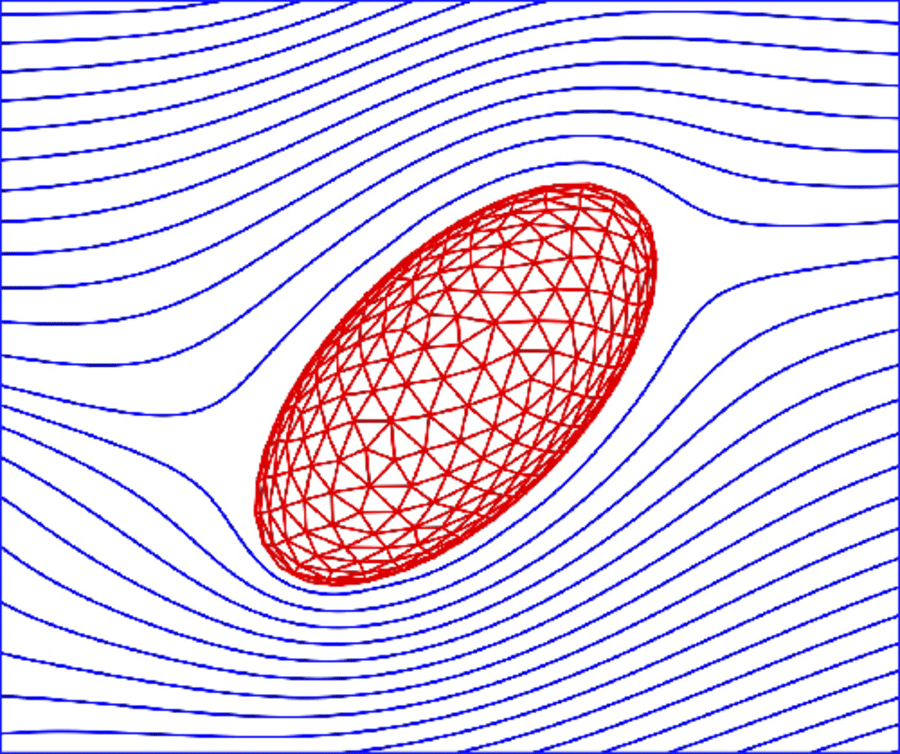
Updating a Century-Old Framework
Lockerby merged mathematical theory and engineering insight to revisit and extend the century-old model, aiming for a fundamental overhaul rather than a simple correction. His findings were recently detailed in the Journal of Fluid Mechanics.
“The motivation was simple,” Lockerby explained in a statement released by the university. “If we can accurately predict how particles of any shape move, we can significantly improve models for air pollution, disease transmission, and even atmospheric chemistry.”
His study revealed that broader and more versatile solutions were overlooked in prior decades. Although Millikan improved the equation's precision, it still failed to capture the effects of irregular geometries.
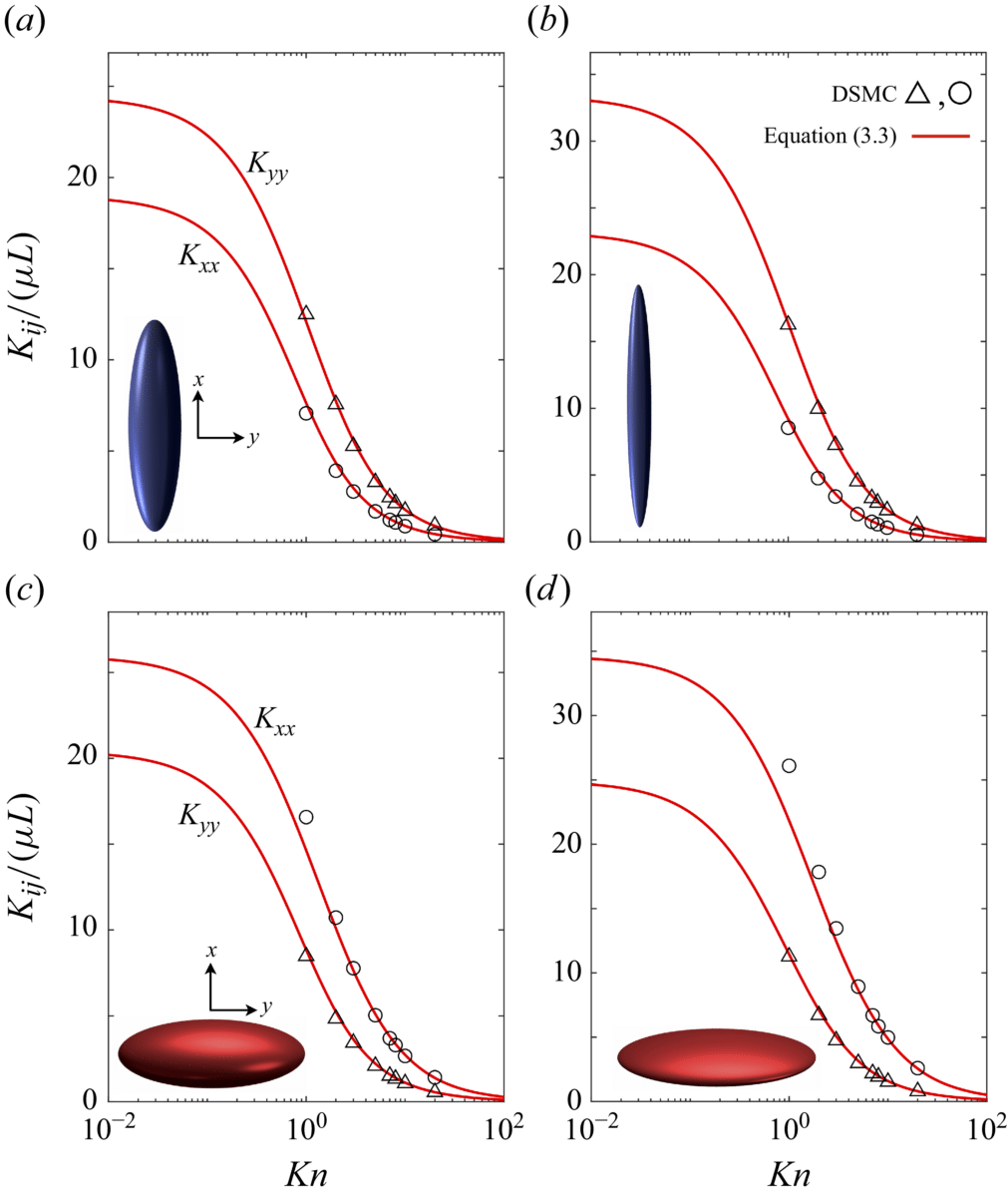
The Innovation of the 'Correction Tensor'
To address this challenge, Lockerby introduced a mathematical innovation called the “correction tensor.” While tensors are often associated with advanced physics concepts like relativity, this tensor serves a practical function in fluid dynamics.
This new mathematical framework evaluates drag and resistance for particles of any shape, enabling accurate analysis of airflow around intricate geometries like jagged microplastic pieces or spiked viruses, rather than forcing them into a spherical approximation.
“It provides the first framework to accurately predict how non-spherical particles travel through the air,” he said.
This advancement carries significant implications for public health, since these microscopic airborne particles are linked to respiratory diseases and cancer.
- Categories:
- Science










0 comments
Sign in to Comment