
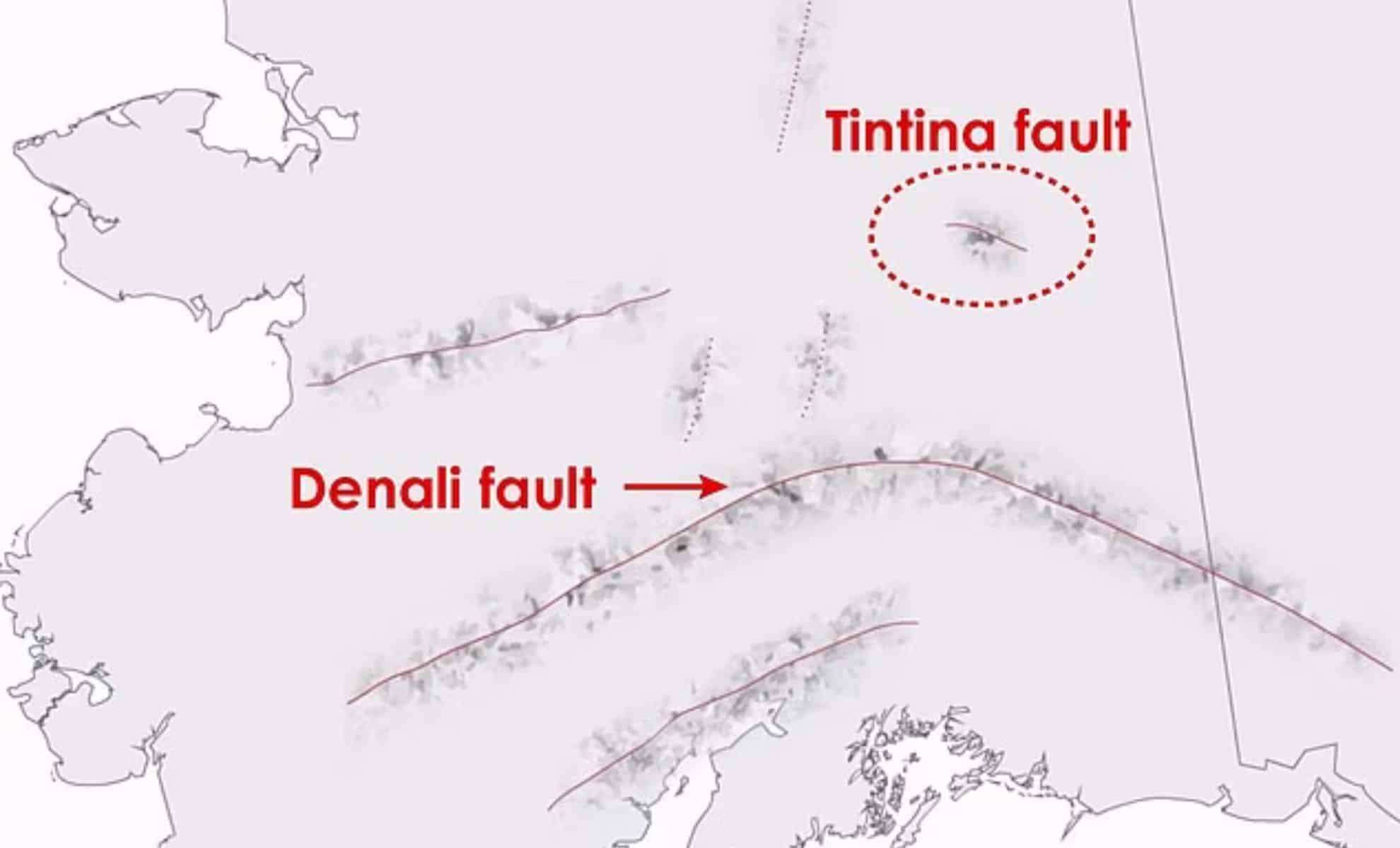
A fault line beneath North America that has largely escaped attention may be far more dangerous than once thought. Researchers in Canada are raising concerns about the Tintina Fault, a vast seismic zone extending from Yukon Territory into Alaska’s interior, which might trigger an earthquake measuring magnitude 7.5 or higher without advance notice.
This newly identified threat could affect regions across Alaska, British Columbia, Alberta, and Montana, prompting experts to warn of serious risks to infrastructure and community safety.
An Underestimated Seismic Hazard Under Alaska and Canada
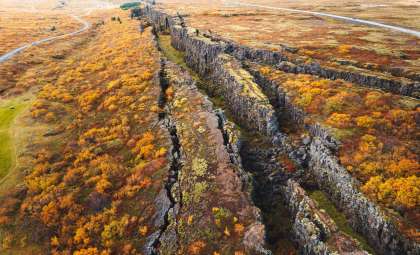
Originally mapped in 1912 by geologist J. B. Tyrrell, the Tintina Fault has been overlooked due to its long period of inactivity. However, state-of-the-art satellite and drone-based surveying methods have now revealed that stress has been steadily accumulating along this fault over millennia.

Dr. Michael West, the state seismologist at the Alaska Earthquake Center, explains that the fault system has been "silently building toward the potential of a very large earthquake." Current estimates suggest the fault has accumulated roughly 20 inches of slip, a displacement capable of being unleashed in a catastrophic seismic event.
The Tintina Fault intersects vital infrastructure, including roadways, waterways, and the Trans-Alaska Pipeline, placing thousands of residents and essential systems at considerable hazard.
Geological Records Reveal Powerful Past Earthquakes
Research published in Geophysical Research Letters combined drone-based laser scanning and 3D geological reconstructions to study ancient rock formations. One site showed a terrace aged approximately 132,000 years that has been laterally shifted, while another exhibited a fault displacement exceeding 4,100 feet in the Flat Creek Beds, dating back about 2.6 million years. These extensive shifts indicate the fault has ruptured multiple times with immense force across geological timescales.
Despite this evidence, the Tintina Fault is notably excluded from official hazard assessments, including the USGS 2024 Alaska seismic model. Lead investigator Dr. Theron Finley from the University of Victoria highlights that geological features imply the fault is likely in the final phase of a seismic cycle and quietly approaching a future rupture.
The Overlooked Risk Posed by the Tintina Fault
According to specialists, the Tintina Fault’s danger lies not only in its earthquake-generating potential but in the lack of attention it has received. Dr. West remarks that while well-known faults like the San Andreas are extensively monitored, Tintina remains understudied despite its capacity for widespread damage.
The fault’s long dormant interval isn’t reassuring. As Dr. West points out, "We are not good at thinking about things that happen every 12,000 years," yet it is during these long intervals that sufficient stress builds up to trigger significant earthquakes. The last major event on this fault occurred over 12,000 years ago, and current geological data suggests another one may be approaching soon.
Potential Effects on Infrastructure and Community Safety
An earthquake along the Tintina Fault could severely damage transportation networks, pipelines, and trigger landslides, especially impacting remote settlements with limited emergency access. The Fairbanks North Star Borough in Alaska, with a population exceeding 125,000, lies within the likely impact zone. A magnitude 7.5 or larger quake could cause substantial harm to the Trans-Alaska Pipeline, a critical conduit for regional energy supply.
Currently, there is minimal monitoring of seismic activity along this fault and no operational early warning system. Researchers stress the urgent need to reallocate scientific focus toward the Tintina Fault, encouraging investment and its integration into national earthquake risk models.
- Categories:
- News






0 comments
Sign in to Comment