

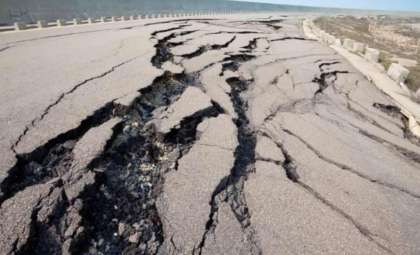
A recent investigation featured in JGR Solid Earth reveals that almost half of California’s fault zones—including the notorious San Andreas Fault—are overdue for large seismic events. This includes faults throughout the state, heightening the urgency for earthquake readiness. With evidence pointing toward impending significant earthquakes yet to strike, researchers caution that California might face a seismic disaster larger than previously anticipated.
This breakthrough study could reshape earthquake prediction. Unlike many areas worldwide, where faults tend to be either less active or overdue for quakes, California’s fault network exhibits a unique seismic pattern. About 45% of the region’s faults are now overdue for major tremors, making California distinct on a global scale.
What Sets California’s Earthquakes Apart
California is widely recognized as America’s earthquake hotspot, containing numerous crucial faults, most prominently the San Andreas Fault. Nevertheless, new findings indicate California’s fault dynamics differ from other quake-prone regions such as Japan or New Zealand. The research, headed by Vasiliki Mouslopoulou and her team at the National Observatory of Athens, compared seismic cycles in five regions: California, Japan, Greece, New Zealand, and the Basin and Range area of the southwestern U.S.

A striking outcome is that roughly 45% of California’s major faults are overdue, meaning the interval since their previous substantial earthquake surpasses the historic average for such events. This percentage sharply contrasts with other regions, where overdue faults make up less than 20% of the total.
This difference may explain ongoing challenges with global seismic modeling. Experts believe that California’s high fraction of overdue faults skews earthquake forecasts, complicating risk assessment both locally and worldwide.
Decoding the Science of Fault Overdue Status
Evaluating fault overdue status involves understanding how seismologists estimate earthquake probabilities. They examine geological evidence, including trench excavations along fault traces, to determine earthquake recurrence intervals. If a fault typically ruptures every 150 years but hasn’t experienced one in 200 years, it’s considered overdue for an event.
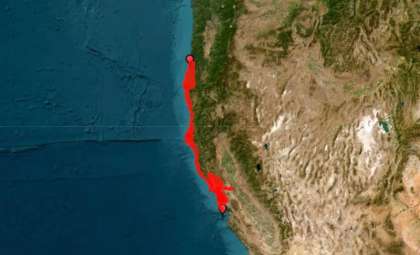
The San Andreas Fault, which stretches from southern California to near the Bay Area, stands as one of the most scrutinized faults. Earthquake occurrences there often follow “supercycle” trends—periods with clusters of significant events separated by quieter intervals. Presently, the San Andreas is in a quiescent phase, with fewer large ruptures than expected. Yet, this phase is unlikely to continue indefinitely, as scientists anticipate a return to heightened activity.
Contrasting California with Global Fault Systems
Mouslopoulou and her team compared California’s seismic overdue data with similar geology worldwide, uncovering major contrasts. California’s faults are delayed relative to predictions, while systems in countries like Japan and New Zealand tend to follow steady earthquake cycles.
The researchers highlight that California’s faults are fast-slipping, meaning they shift more rapidly and produce more frequent earthquakes, making their geological records richer. In contrast, faults with very long recurrence intervals—sometimes exceeding 10,000 years—offer limited data, complicating future rupture predictions.
In comparison, the Basin and Range province, covering parts of Nevada, Arizona, Utah, and northern Mexico, is characterized by slow fault movements. These slow slips yield sparse geological records, making it difficult to assess past earthquake frequency.
- Categories:
- News







0 comments
Sign in to Comment