
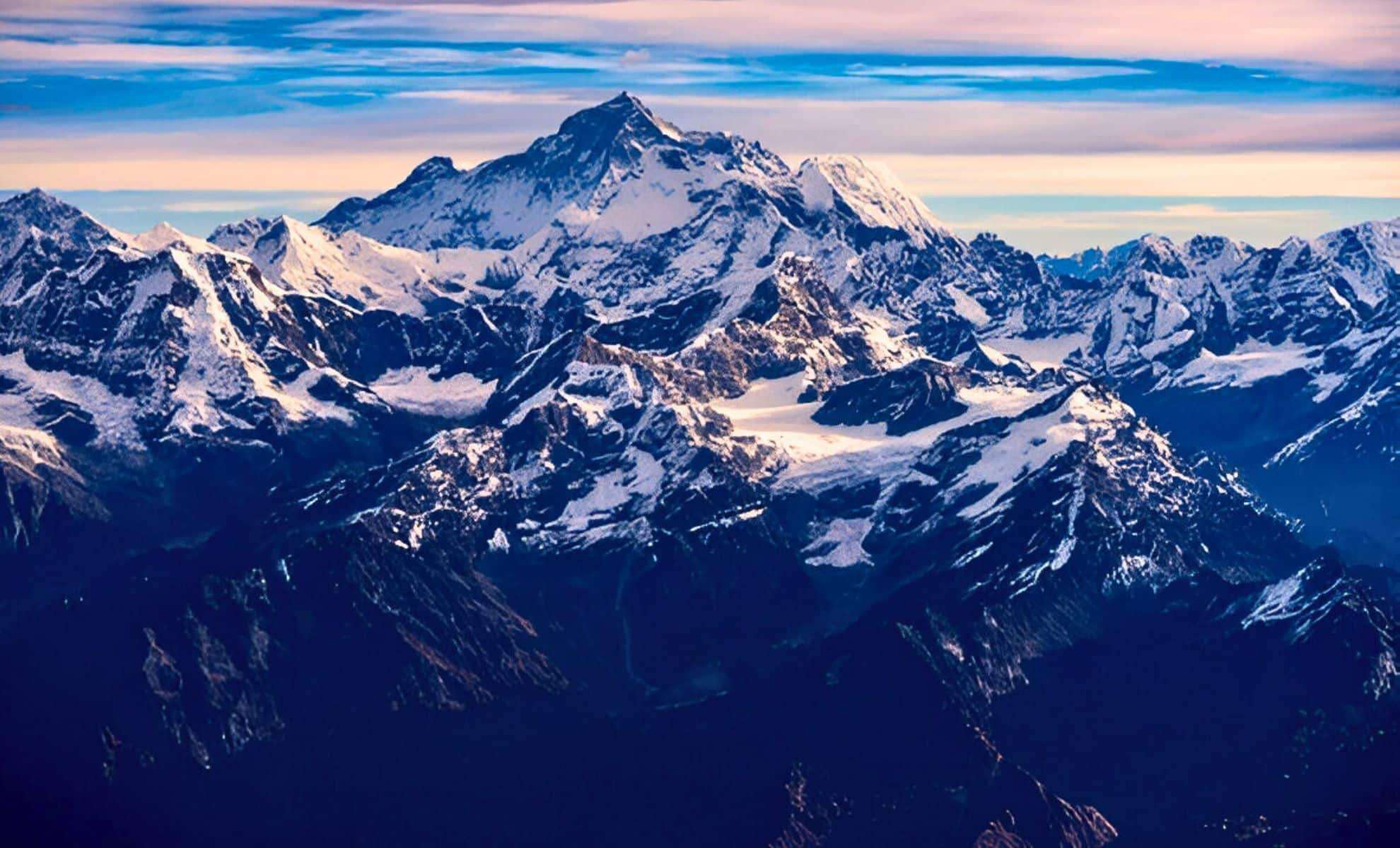
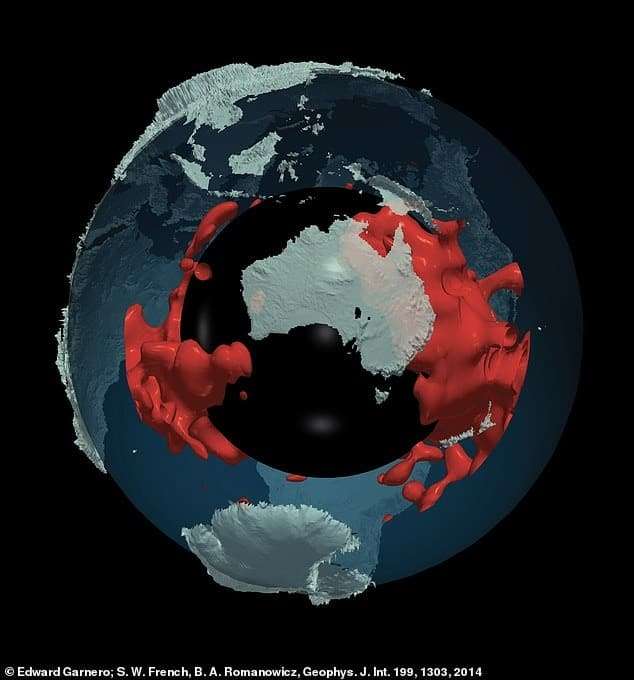
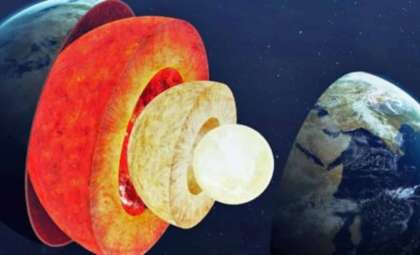
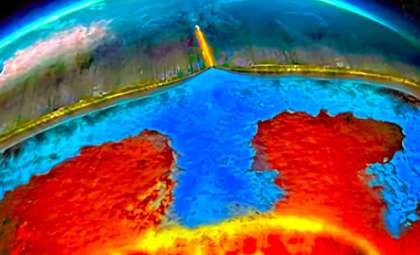
A breakthrough study featured in Nature has uncovered two enormous mountain-like features buried nearly 1,200 miles beneath the Earth’s surface. Each of these formations, called Large Low Shear Velocity Provinces (LLSVPs), rises over 1,000 kilometers (620 miles) tall, making them more than 100 times the height of Mount Everest. These structures are situated beneath Africa and the Pacific Ocean.
Utilizing advanced seismic modeling based on whole-Earth oscillations, the research sheds new light on the mysteries of Earth’s deep interior and challenges existing perceptions about mantle dynamics.
Seismic Vibrations Reveal Massive Structures Deep in the Mantle
Led by Arwen Deuss, the research group employed a technique tracking how seismic waves ripple through the entire planet after significant earthquakes. This method maps the three-dimensional variation in seismic attenuation within Earth’s mantle, revealing how wave speeds differ due to variations in material density, composition, and temperature.

In the zones beneath Africa and the Pacific Ocean, scientists observed a notable decrease in seismic wave velocity, signaling the presence of vast and unusual features at the boundary between the core and mantle. These LLSVPs are compositionally distinct, dense regions extending thousands of kilometers horizontally while towering high vertically—far larger than any surface mountain ranges.
Beyond Conventional Mountains: Immense Mantle Anomalies
Though labeled as “mountains” because of their impressive vertical size, LLSVPs differ from traditional rocky peaks since they are not solid rock formations. Instead, they represent large volumes of chemically and thermally unique mantle material. Their distinct makeup causes seismic waves to slow significantly, allowing their detection.
Data cited in Nature indicates these provinces reach heights near 1,000 kilometers and extend across up to 5,000 kilometers laterally, rivaling continental scales and ranking as some of the largest geological structures inside our planet.
Ancient Origins Possibly Stretching Billions of Years Back
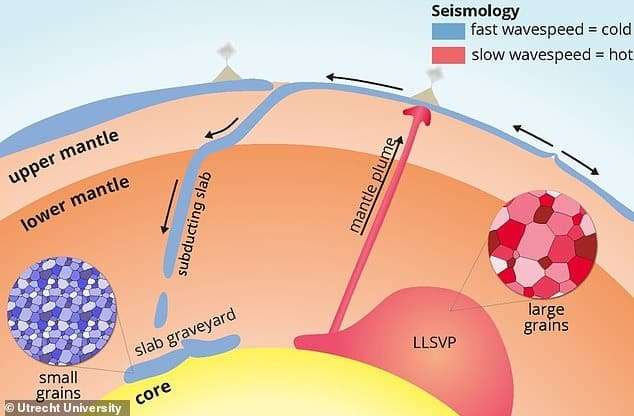
A striking element of this finding is the prolonged existence and age of the LLSVPs. The researchers propose that these formations may be remnants of ancient tectonic plates that sank through subduction processes billions of years ago, positioning them as some of Earth’s most enduring stable features since its early development.
Often referred to as “slab graveyards”, these zones mark areas where colder, denser portions of the crust descend toward the core. Unlike the surrounding mantle, which circulates and evolves, LLSVPs remain compositionally unique and thermally insulated, maintaining their structure over geological time.
High Temperature and Density May Shape Surface Processes
These enormous mantle regions are hotter than the surrounding mantle material, adding new complexity to previous theories that primarily highlighted colder lower mantle areas. Variations in temperature and density between LLSVPs and adjacent mantle may contribute to the formation of mantle plumes, which fuel volcanic hotspot activity such as seen in Hawaii and Iceland.
Emerging evidence also suggests that LLSVPs could influence tectonic plate behavior, potentially affecting the positions where supercontinents break apart. Scientists hypothesize these giants might serve as anchors for mantle convection currents, thereby impacting Earth’s surface geology in profound and still largely unexplored ways.
A 3D Seismic Model Transforming Our View of Earth’s Depths
The Nature publication introduces the first comprehensive 3D model of mantle attenuation based on seismic normal modes. This innovative model not only maps the locations of structures but reveals how energy dissipates through them, helping distinguish effects caused by temperature variances versus compositional differences.
Specifically, the study identified a correlation between low attenuation zones (where seismic energy loss is minimal) and the regions with low seismic velocity, reinforcing that LLSVPs are stable and compositionally unique rather than transient temperature anomalies.
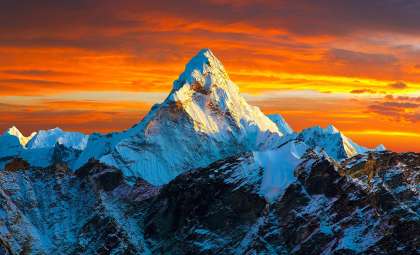
Mount Everest Dominates the Surface, but Colossal Mountains Lie Below
Although Mount Everest remains the tallest peak above sea level, it’s evident now that Earth’s highest “mountains” lie deep within beneath our feet. These vast, ancient formations provide fresh perspectives on Earth’s geological history, the structure of its interior, and the driving forces influencing surface phenomena today.
With advancements in seismic imaging technologies, scientists anticipate revealing even more hidden features nestled deep in the planet’s interior, offering clues that will further illuminate Earth’s complex evolution.
- Categories:
- Science





0 comments
Sign in to Comment