
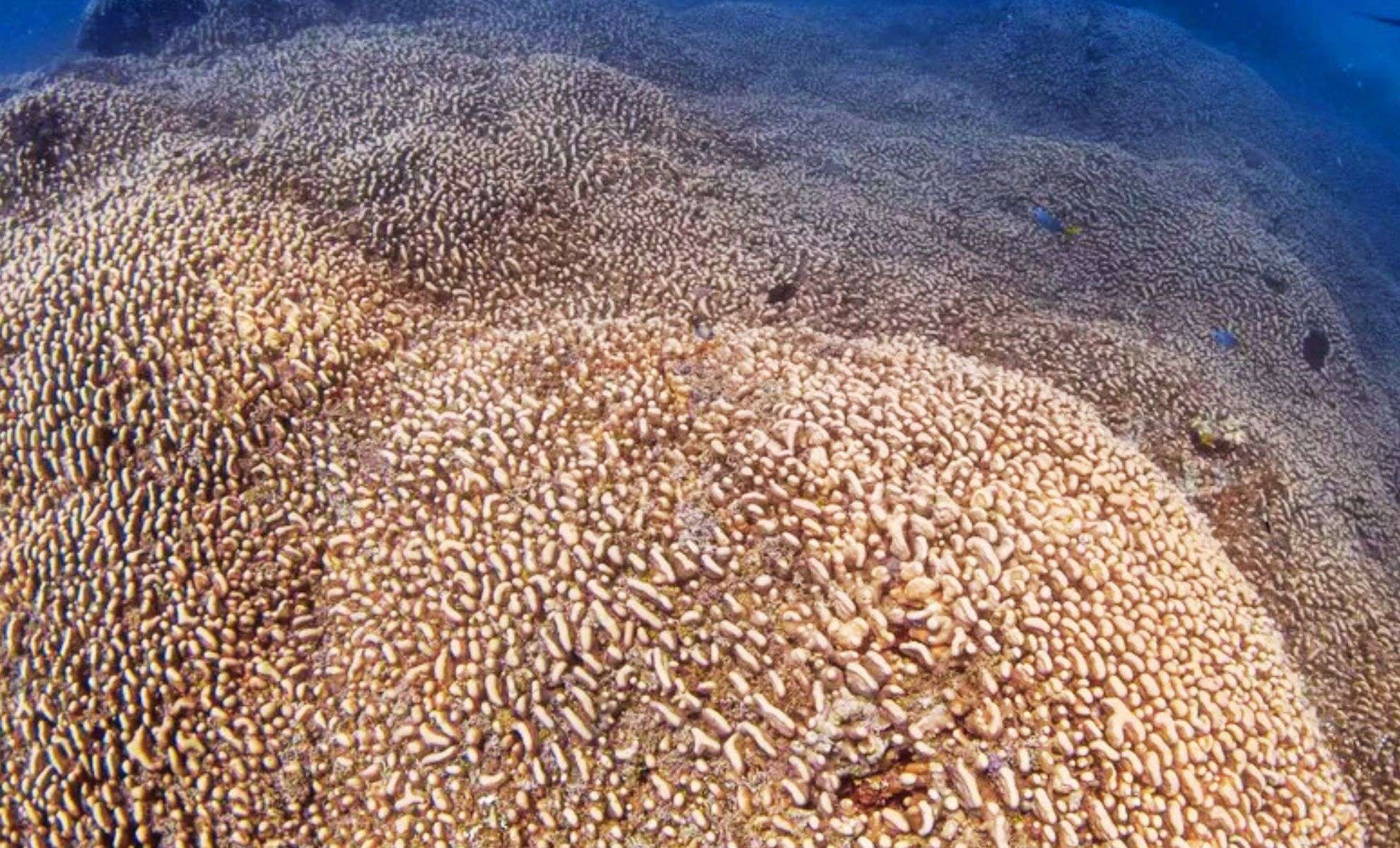
Researchers have uncovered a monumental living entity beneath the waves—a massive coral formation that ranks as the largest known organism on the planet. This extraordinary coral colony, discovered near the Solomon Islands, has astonishingly survived since the time of Napoleon.
Vast and Ancient: A 34-Meter Coral Titan Enduring Over Three Centuries
The coral, identified as Pavona clavus, extends an impressive 34 meters wide, 32 meters long, and towers 5.5 meters in height. Its remarkable longevity, estimated at around 300 years, marks it as a testament to enduring life underwater despite dramatic environmental shifts. Such resilience sets it apart in an era when many coral ecosystems are under threat.
This monumental discovery occurred during a National Geographic Pristine Seas expedition, led by filmmaker Manu San Félix. Initially searching for the wreck of a sunken ship, the team instead unveiled this enormous coral structure. San Félix commented, “Seeing something so immense and ancient—surviving for approximately 300 years amid significant environmental transformations—is truly awe-inspiring.” Unlike typical reefs made up of numerous distinct colonies, this entity is a singular organism composed of millions of interconnected polyps collaborating as one superorganism.


Why Did This Giant Coral Remain Undetected for So Long?
The coral’s massive proportions beg the question: how was it overlooked previously? The answer lies partly in the serendipitous nature of its discovery. Its location was initially believed to be a shipwreck site and not a coral colony, underscoring how much remains to be explored in the vast ocean realms we assume are fully charted. This chance find highlights the ocean’s lingering mysteries.
San Félix reflects, “Witnessing something so large and timeworn challenges our assumptions about marine exploration and knowledge.” This enormous coral's hidden existence redefines our understanding of the ocean’s living marvels.
Could This Massive Coral Hold Keys to Combating Reef Decline?
With global coral reefs increasingly imperiled by climate-driven threats, this super coral’s toughness offers a glimmer of hope. Elevated ocean heatwaves have caused widespread coral bleaching, where corals lose essential algae needed for survival. Yet, this colony thrives in cooler, deeper marine zones, likely avoiding the worst impacts of warming oceans.
More than a natural wonder, this coral could provide valuable insight into species endurance amid climate change. As San Félix explains, “Unlike diverse coral reefs, this is a single organism formed by millions of polyps working in harmony,” which enables it to withstand pressures that have devastated other reefs. Researchers hope studying its survival tactics will guide global reef conservation efforts.
Protecting a Marine Giant: Conservation Initiatives Underway
The unveiling of this giant coral has energized conservation movements locally. Indigenous communities in the Solomon Islands are urging governmental protection measures for waters around Malaulalo to preserve the coral’s ecological importance and its potential in coral reef recovery strategies.
At COP29, Solomon Islands’ climate minister Trevor Manemahaga stressed coral reefs’ vital role in the nation’s ecology and economy, advocating sustainable stewardship. However, ongoing threats like destructive logging continue to jeopardize the region’s coral habitats.
- Categories:
- Science ,
- Climate change ,
- Nature








0 comments
Sign in to Comment