
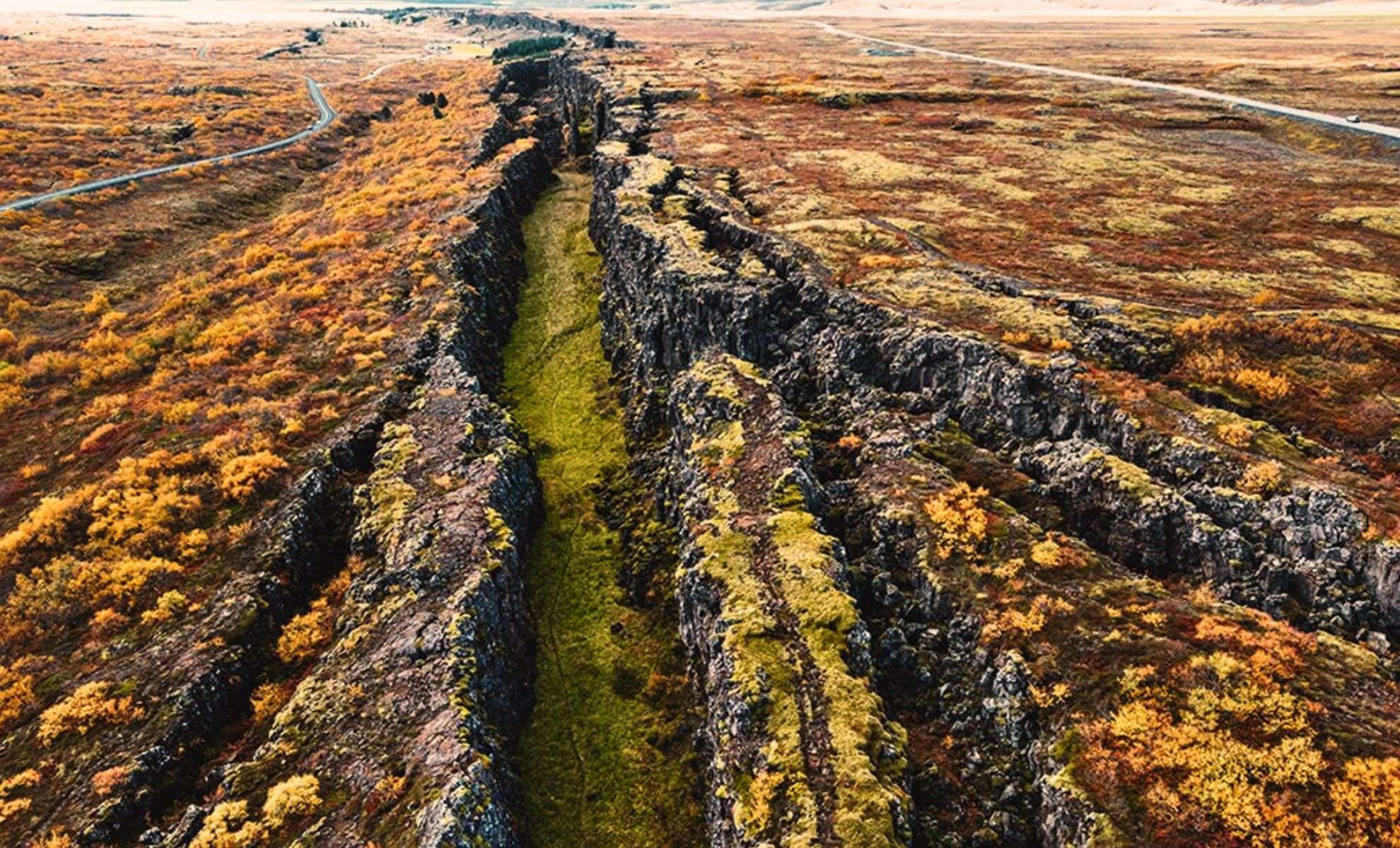
Beneath the towering Zagros Mountains, an ancient oceanic tectonic plate is fracturing and pulling the Earth’s crust along with it. This once-submerged Neotethys Ocean floor is gradually plunging into the mantle, silently altering the terrain above in ways invisible to casual observation.
An international team of geoscientists, spearheaded by the University of Göttingen, has shed light on the powerful underground dynamics that have been molding the surface of the Earth over millions of years.
Vanishing Ocean Floor and Warping Landmasses
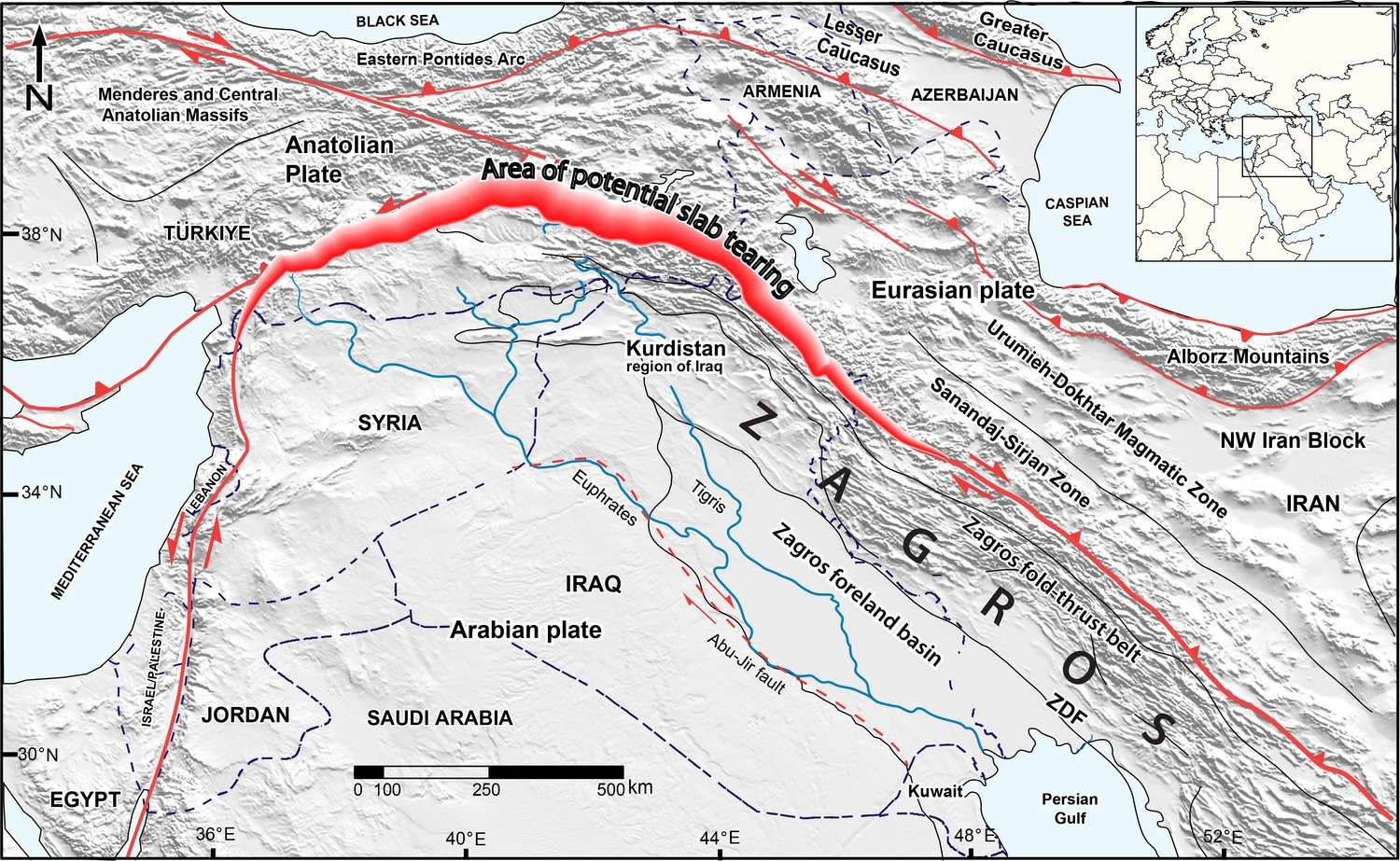
The Arabian and Eurasian tectonic plates have been engaged in a slow-motion collision for millions of years. The oceanic crust separating these continents has been pushed downward, yet instead of a smooth descent, it is undergoing horizontal fracturing—a tear extending from southeast Turkey to northwest Iran.

This tectonic activity influences not just the mantle but the surface landscape as well. The uplift of the Zagros Mountains exerts tremendous pressure that causes the land to bend forming extensive depressions that collect thick layers of sediment.
Scientists discovered that one such depression, plunging to depths of 3 to 4 kilometers, defies explanation by mountain weight alone. The additional downward pull is caused by the descending Neotethys plate.
A Concealed Subsurface Pull Lowering the Terrain
Dr. Renas Koshnaw, lead scientist at Göttingen University’s Department of Structural Geology and Geothermics, describes this finding as quite unexpected:
“Given the moderate topography in the north-western Zagros area, it was surprising to find out that so much sediment has accumulated there. This means the depression of the land is greater than could be caused by the weight of the mountains.”
The underlying cause is the subducting plate, which remains partly attached to the Arabian plate and exerts a downward drag on the region, allowing sediments to build up. This downward pressure varies along its length: in Turkey, where the plate has already separated, the depression is less pronounced, indicating the tugging force is shifting over time.

Broader Significance Beyond Earth Science
This revelation holds importance for more than geological theory. Insights into how oceanic plates sink have tangible impacts on:
- Earthquake predictions – Enhanced understanding of plate fragmentation sharpens forecasts of seismic hazards.
- Geothermal resource development – The intense mantle heat and dynamics present opportunities for renewable energy extraction.
- Mining and resource discovery – Shifts in Earth's strata affect the genesis of sediment-hosted mineral deposits.
Dr. Koshnaw stresses that this work provides fresh insights into the mechanics of Earth's lithosphere, with vital repercussions for ecosystems and human settlements.
Earth’s Ever-Changing Interior Landscape
Though these tectonic movements are imperceptible day-to-day, the progressive breakup of the Neotethys plate exemplifies Earth’s continual internal transformation. Mountain ranges and sedimentary basins alike narrate the story of unseen tectonic activity beneath us. As scientists delve deeper into these subterranean processes, they unravel the complex forces quietly shaping our world—one geological event at a time.
This article has been republished from the following materials. Note: material may have been edited for length and content. For further information, please contact the cited source.
- Categories:
- Science








0 comments
Sign in to Comment