
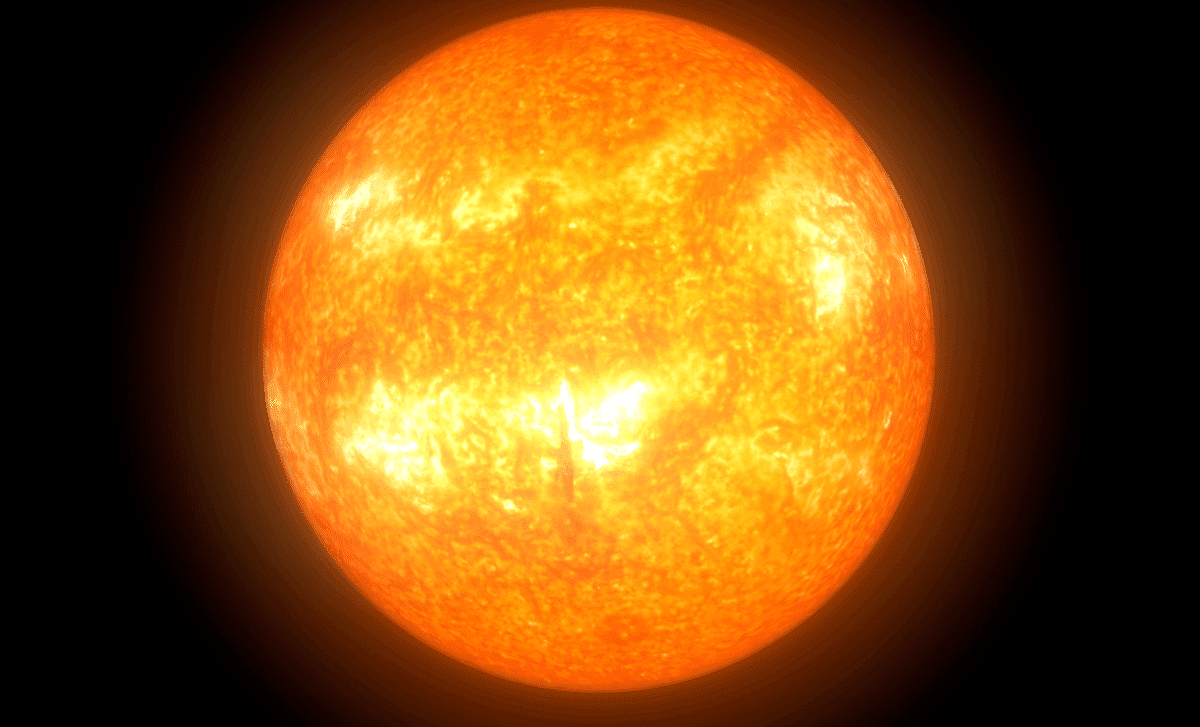
Decoding the magnetic intricacies of the Sun is vital for forecasting space weather and its consequences for Earth. New revelations from the Solar Orbiter, detailed in a study published Nov. 5 in The Astrophysical Journal Letters, have shed light on the uncharted territories of the Sun’s poles. This advancement exposes crucial information about solar supergranules and enhances our comprehension of the Sun’s overarching magnetic rhythm. These revelations promise to revolutionize our grasp of solar phenomena and their effects throughout the solar system.
Shedding Light on the Sun’s Magnetic Poles
Investigations into solar behavior have long aimed to unravel the mysteries of the Sun’s magnetic cycle, especially its 11-year pattern of activity. Yet, the Sun’s poles have remained enigmatic due to observational challenges linked to the ever-changing magnetic field and difficulty in direct pole viewing. This observational void has hindered the full understanding of solar magnetic dynamics that directly influence space weather patterns.
Sami Solanki, director at the Max Planck Institute for Solar System Research in Germany, highlighted the significance of this scientific advance:

“To understand the sun’s magnetic cycle, we still lack knowledge of what happens at the sun’s poles. Solar Orbiter can now provide this missing piece of the puzzle.”
Utilizing the Solar Orbiter’s extraordinary observational tools, scientists have now unlocked data from these once-hidden zones, delivering vital clues about solar magnetism.
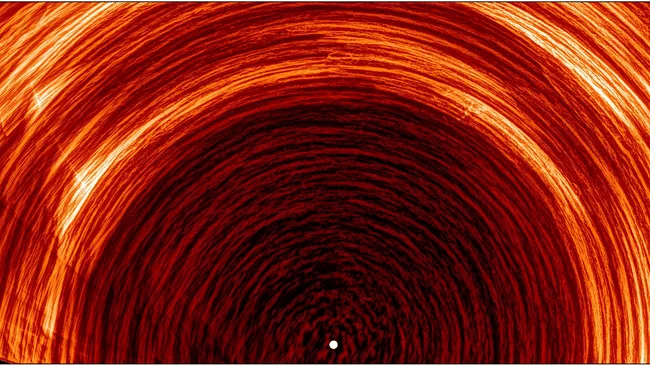
The latest findings from the Solar Orbiter center on supergranules—massive, cellular formations on the Sun’s surface integral to its magnetic circulation. These structures near the poles serve as indicators to map the Sun’s intricate magnetic flow, revealing dynamics previously cloaked in mystery.
Tracing Magnetic Flow with Polar Supergranules
Under the leadership of Lakshmi Pradeep Chitta at the Max Planck Institute, researchers have introduced a novel perspective on the Sun’s poles. Chitta explained,
“The supergranules at the poles act as a kind of tracer. They make the polar component of the sun’s global, eleven-year circulation visible for the first time.”
Supergranules are instrumental in monitoring how magnetic matter moves from the Sun’s middle to its poles, key to decoding the Sun’s magnetic patterns.
For the first occasion, the Solar Orbiter has revealed how these supergranules serve as markers of the Sun’s magnetic cycle on a global scale. This insight disproves previous assumptions that the polar regions operate independently from the entire magnetic cycle. Instead, these poles actively participate in the comprehensive solar magnetic process, offering critical data for enhancing solar cycle models and forecasting solar phenomena.
By studying the supergranules, experts are refining knowledge of the solar dynamo—the mechanism generating the Sun’s magnetic field and responsible for the 11-year activity cycle shaping sunspots and solar flares. The improved understanding allows for more accurate solar activity modeling, which can lead to better warnings about disruptive solar weather impacting satellites, power grids, and communications on Earth.
Enhancing Predictions of Space Weather Events
Learning about supergranules at the solar poles enriches not only our comprehension of solar physics but also our capability to anticipate space weather. Solar eruptions like flares and coronal mass ejections (CMEs) can severely affect Earth’s atmosphere and technological systems. A clearer picture of the Sun’s magnetic structure helps scientists bolster predictions about these solar hazards, crucial in our technology-dependent era.
Thanks to the Solar Orbiter data, experts are equipped to improve solar storm alert systems, enhancing protection measures for satellites and astronauts alike. As emphasized by Lakshmi Pradeep Chitta, this new knowledge is a pivotal advance in linking the Sun’s magnetic field behavior with space weather patterns observed via polar supergranules.
Published Nov. 5 in The Astrophysical Journal Letters, this discovery marks a major leap in solar research, showcasing how instruments like the Solar Orbiter can capture solar regions previously beyond reach. This paves the way for future explorations of solar activity and its far-reaching effects throughout the solar system.
- Categories:
- Science












0 comments
Sign in to Comment