
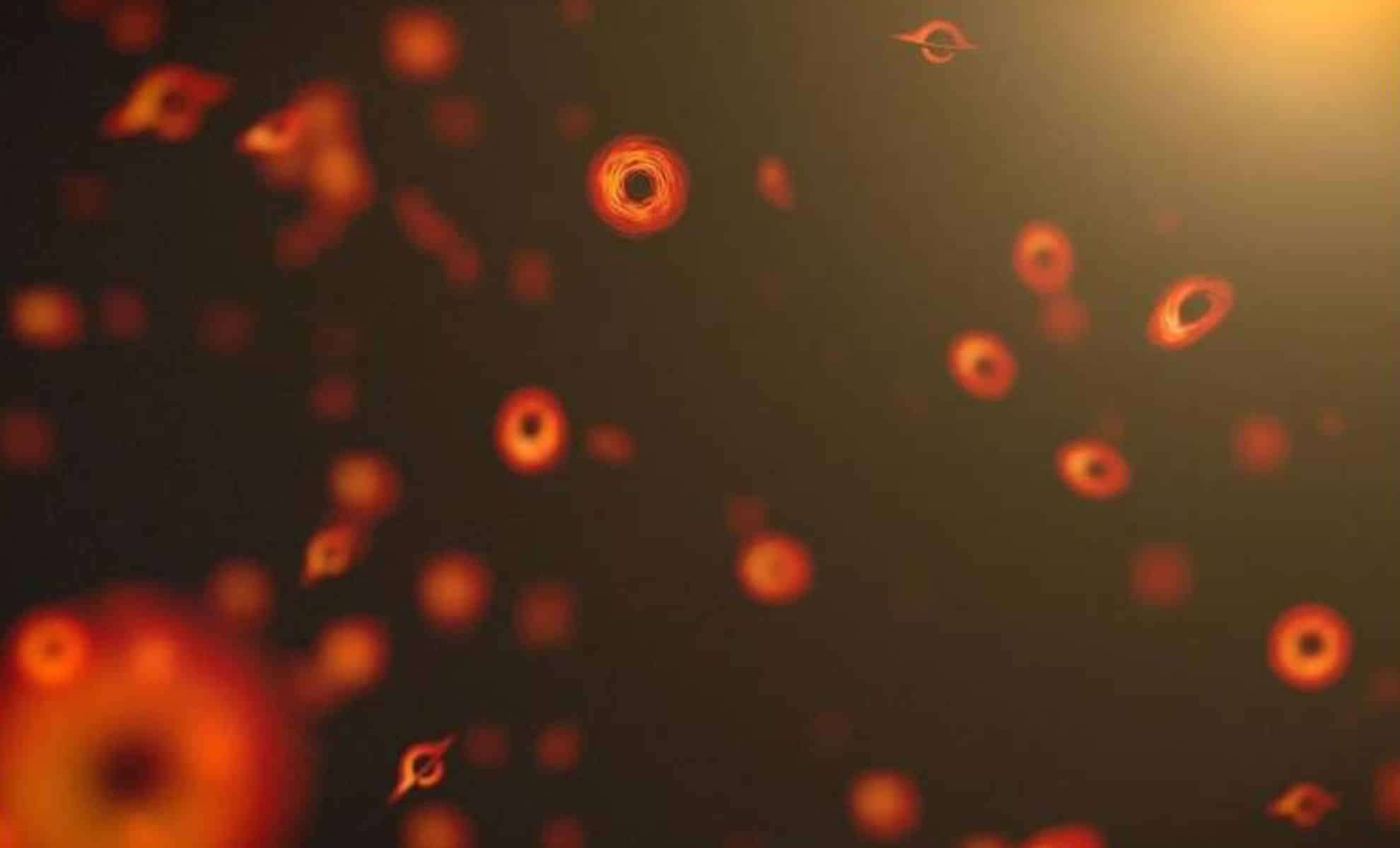
Dark matter remains one of the universe's deepest enigmas, and recent research offers a surprising new perspective. Scientists now propose that primordial black holes (PBHs)—cosmic remnants formed shortly after the Big Bang—could reside not only in distant space but also embedded within planets, asteroids, and even common Earthly substances. Although these ancient black holes have long been theorized, direct evidence has eluded researchers until this innovative study suggested novel means to identify them.
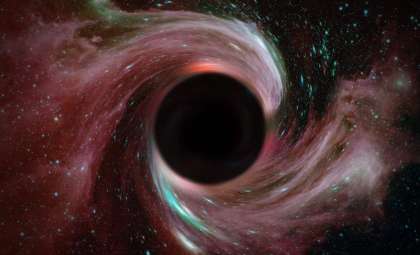
Unlike the black holes resulting from dying stars, primordial black holes are thought to have originated under intense early-universe conditions. These black holes might be incredibly tiny—potentially no larger than atoms—but extraordinarily dense, packing substantial mass into minuscule volumes and thus evading standard detection methods. Physicist Dejan Stojkovic from the University at Buffalo leads a team exploring how traces of such PBHs might be found hidden in everyday matter.
Innovative Techniques to Identify Primordial Black Holes
In an upcoming issue of Physics of the Dark Universe, the researchers outline a daring approach for uncovering PBHs by scrutinizing unique signatures they may leave. The team hypothesizes that these black holes could be ensnared within the dense interiors of planets or moons, where their gravity might consume the liquid core, resulting in hollowed-out bodies. These objects, although not large enough to qualify fully as planets, could be observed with telescopes by analyzing their lower-than-expected density.

Dejan Stojkovic highlights the need for fresh perspectives: “We have to think outside of the box because what has been done to find primordial black holes previously hasn’t worked.” This investigation expands the search scope from distant cosmic regions to the very ground beneath us, where primordial black holes could be concealed within terrestrial materials.
Hollow Celestial Bodies and Microscopic Passageways
The study also explores the intriguing possibility that PBHs might carve microscopic tunnels as they traverse solid materials. Passing through rocks, metals, or glass, a primordial black hole might leave behind a narrow, invisible shaft only detectable with microscopic techniques. The most promising sites to find such tiny traces would be ancient geological formations or enduring artifacts that have remained largely intact for eons.
Another fascinating concept concerns hollow planetoids, which might form if a PBH consumes the liquid cores of celestial bodies. Co-author De-Chang Dai explains, “If the object has a liquid central core, then a captured PBH can absorb the liquid core, whose density is higher than the density of the outer solid layer.” Yet, as Stojkovic notes, these hollow objects must be sufficiently small to withstand their own structural stresses. Calculations involving materials such as granite and iron indicate that a hollow body could not exceed one-tenth of Earth's radius without collapsing under gravitational forces.
Hunting for PBHs in Ancient Geological Samples
Even though discovering PBHs through these innovative methods is statistically challenging, this research suggests examining ancient minerals and stones may hold the best promise. The likelihood of a PBH passing through a billion-year-old rock is extremely slim—around 0.000001—but the potential discovery would be groundbreaking. Stojkovic elaborates, “The chances of finding these signatures are small, but searching for them would not require much resources and the potential payoff, the first evidence of a primordial black hole, would be immense.”
One of the study’s most exciting implications is that everyday materials could serve as natural laboratories to detect these cosmic relics. Tiny tunnels left nearly invisible to the naked eye could be revealed by advanced microscopic analysis. Stojkovic stresses, “You have to look at the cost versus the benefit. Does it cost much to do this? No, it doesn’t.” Employing ordinary objects as PBH detectors unlocks a promising new frontier in astrophysical research.
- Categories:
- News






0 comments
Sign in to Comment