
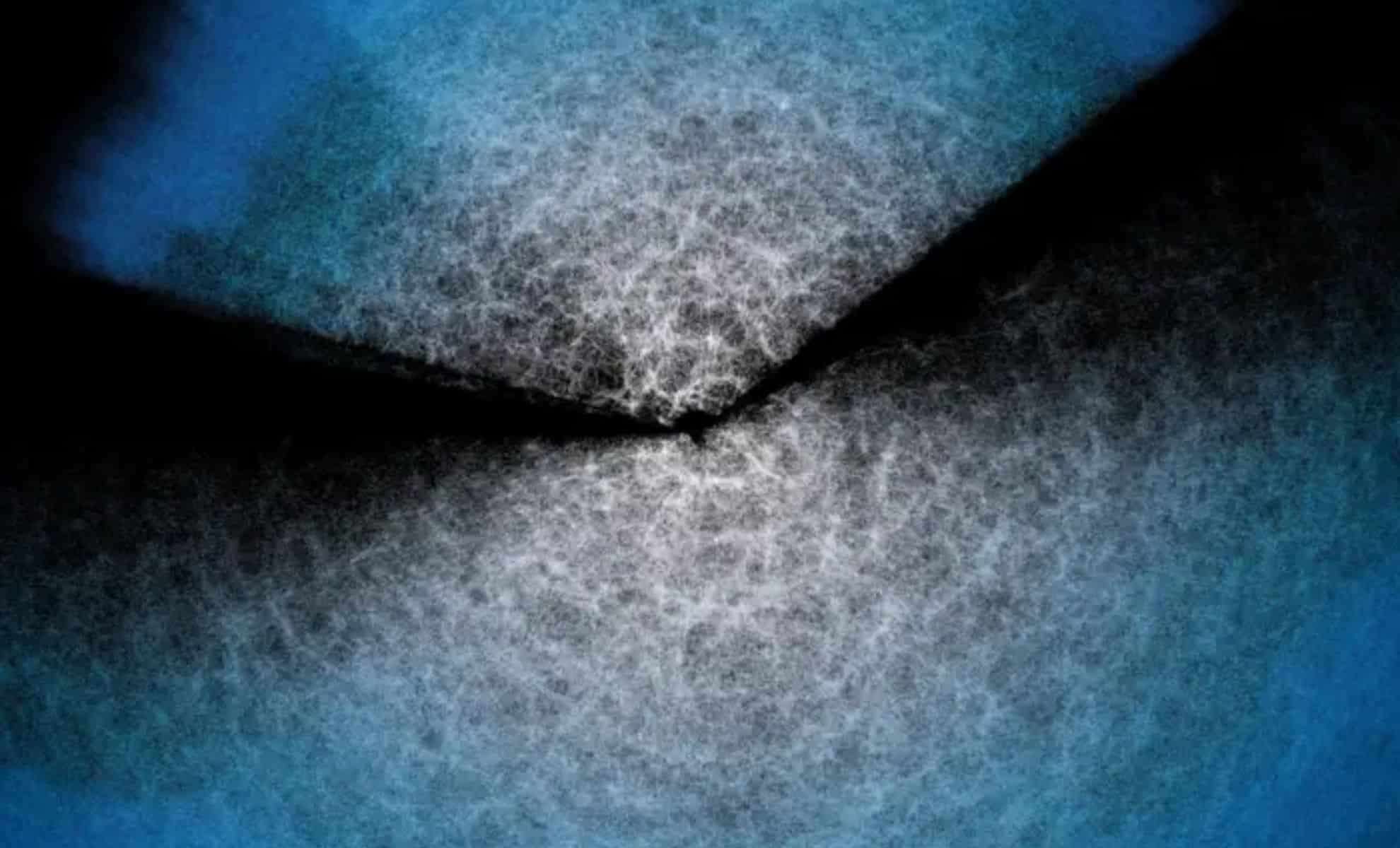
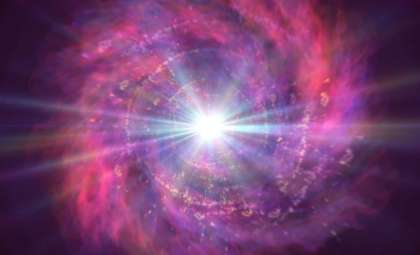
Recent findings are shaking up our grasp of the universe’s expansion. A study featured in New Scientist reveals that dark energy—the enigmatic force believed to accelerate the universe’s growth—may be fading as time passes.
Understanding Dark Energy’s Role in Cosmic Expansion
For many years, scientists have accepted that the universe’s expansion is speeding up, driven predominantly by the influence of dark energy. The prevailing lambda-cold dark matter (ΛCDM) framework treats dark energy as a constant force, uniformly pushing space apart and fueling the accelerating growth. This framework stems from Einstein’s cosmological constant and has been the foundation of cosmology for decades.
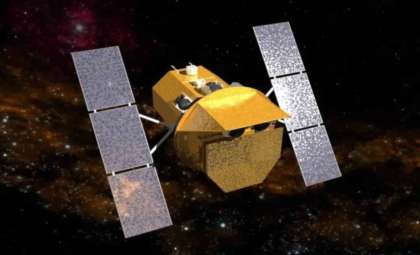
Nevertheless, data from the Dark Energy Spectroscopic Instrument (DESI) located in Arizona present a different picture. Observations suggest that the strength of dark energy might be declining over epochs. Detailed surveys mapping galaxies and cosmic filaments support the idea that the universe’s expansion rate may not be driven by a fixed force after all.

Dynamic Dark Energy: Challenging the Constant Model
This revelation introduces the idea of a quintessence field, a form of dark energy that changes with time instead of remaining static. Yashar Akrami, an assistant research professor at the Autonomous University of Madrid, and collaborators argue that by replacing the cosmological constant with this evolving field, the observed cosmic behavior could be better explained.
This concept creates an exciting bridge between cosmology and higher-level theories like string theory. Should dark energy be characterized as quintessence, it might enable scientists to integrate the prevailing cosmic model with string theory’s mathematical structures—an enticing opportunity for theoretical physicists.
Could There Be an Additional Cosmic Force?
Gravity has long been seen as the dominant force shaping matter and galaxies. Yet, if dark energy fluctuates, it hints at the presence of a mysterious fifth fundamental force affecting the universe’s architecture and destiny. Pedro Ferreira, an astrophysicist at the University of Oxford, notes, "The universe as having the gravitational force, and gravity fuels everything. But now there’s going to be an additional fifth force, which is due to the dark energy, which also fuels everything."
If these findings hold true, they would challenge the standard ΛCDM model and potentially alter our expectations about how the universe will evolve. The acceleration might diminish or behave unpredictably compared to current theoretical forecasts.
Challenging the Foundations of Cosmology Begins Now
While the results from DESI are compelling, they require further verification through independent studies and refined measurements. The astrophysics community is abuzz with discussion, as this discovery probes foundational questions about the makeup and progression of the universe.
This study emphasizes how much is still mysterious about dark energy and the forces that dictate the expansion of the cosmos. It paves the way for fresh investigations that could fundamentally enhance our understanding of the universe’s past, present, and future.
- Categories:
- Space





0 comments
Sign in to Comment