
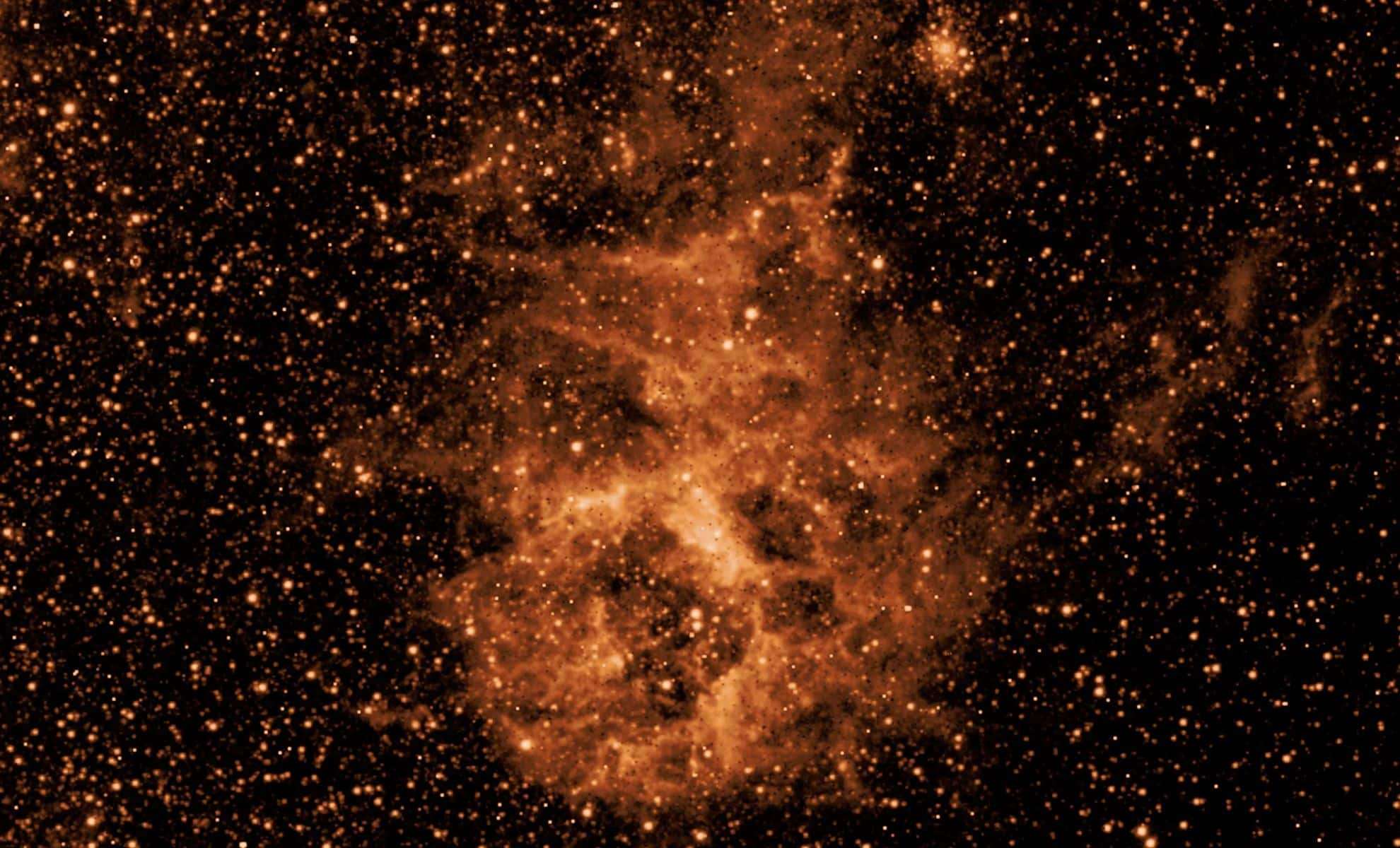
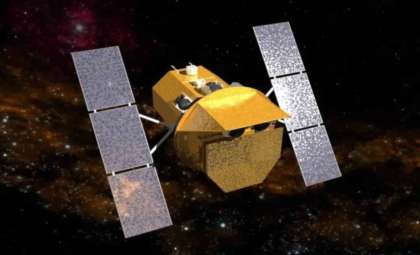
The SPHEREx space telescope, launched and operated by NASA, has started its scientific journey by gathering approximately 3,600 images each day, aiming to produce an unprecedented full-sky infrared survey.
Since its launch on March 11, 2025, the observatory has been orbiting Earth, collecting valuable data poised to shed new light on the universe’s beginnings, galaxy formation, and the essential components that make up life as we know it.
Revolutionizing Our Cosmic Perspective
Following six weeks of meticulous calibration and diagnostics, SPHEREx, standing for Spectro-Photometer for the History of the Universe, Epoch of Reionization and Ices Explorer, is fully operational.

Unlike telescopes that focus on limited sky sections, SPHEREx is engineered to capture the entire celestial sphere across over 100 infrared wavelength bands. This wide-reaching approach will help astronomers understand how the universe’s structure has transformed over billions of years.
“The successful operation of SPHEREx is a testament to the dedicated efforts across NASA, industry, and academic partners, and it’s set to produce the most comprehensive full-sky maps to date,” remarked Shawn Domagal-Goldman, acting director of NASA’s Astrophysics Division.
The Mechanics Behind SPHEREx
Utilizing reaction wheels, SPHEREx maintains precise orientation as it completes roughly 14.5 orbits around Earth daily, capturing continuous circular image sweeps. These sequential images, combined with Earth's orbit around the Sun, accumulate to cover the entire sky.
During its anticipated 25-month operational timeframe, the telescope will complete over 11,000 orbits, resulting in four full-sky infrared maps.
Each imaging session employs six detectors sensitive to different wavelengths, and through the process of spectroscopy, these observations reveal intricate chemical signatures present in cosmic structures.
“Our goal is to explore phenomena from the minutest scales at the dawn of the universe by examining the largest-scale structures observable today,” explained Jim Fanson, project manager at NASA’s Jet Propulsion Laboratory (JPL).
Investigating the Universe's Earliest Moments
SPHEREx is optimized to probe cosmic inflation, the explosive expansion hypothesized to have occurred immediately after the big bang.
This rapid growth left subtle marks in the spatial pattern of galaxies throughout the cosmos.
By constructing 3D maps of galaxy distributions, SPHEREx endeavors to unravel the fundamental physics underlying the universe's dramatic birth.
“At the start of cosmic inflation, the universe was tinier than an atom, but its initial properties were magnified and continue to influence the cosmos we observe today,” the official article describes.
Seeking the Origins of Life’s Building Blocks
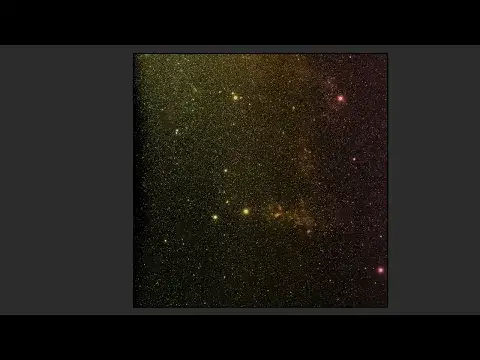
Turning focus closer to home, SPHEREx is examining the Milky Way to detect water and other compounds critical to life. With plans to execute more than 9 million observations, the mission will analyze interstellar clouds to trace the emergence and dispersal of these molecules.
Jamie Bock, SPHEREx’s principal investigator from Caltech, noted, “Our instrument’s performance matches our highest expectations, setting the stage for groundbreaking discoveries, including unforeseen revelations.”
By utilizing its advanced spectroscopic capabilities, SPHEREx can capture the dim glow emitted by distant extinct galaxies, tracking how their brightness has changed over time.
Scientists believe the Earth’s ocean water originated as frozen ice molecules on dust particles within the gas cloud that formed our Sun—an idea SPHEREx aims to test.
Charting the Universe’s Hidden Realms
SPHEREx’s unique strength lies in its unprecedented ability to survey the entire sky across multiple infrared colors. Its data will integrate with observations from future missions like the Nancy Grace Roman Space Telescope, enhancing NASA’s understanding of the universe’s grand narrative.
By mission end, SPHEREx will have provided invaluable data spanning both space and cosmic history.
As Domagal-Goldman summed up, “This observatory enriches NASA’s fleet of astrophysics surveys and will be essential to addressing the profound questions about our universe that drive our work every day.”
- Categories:
- Space







0 comments
Sign in to Comment