
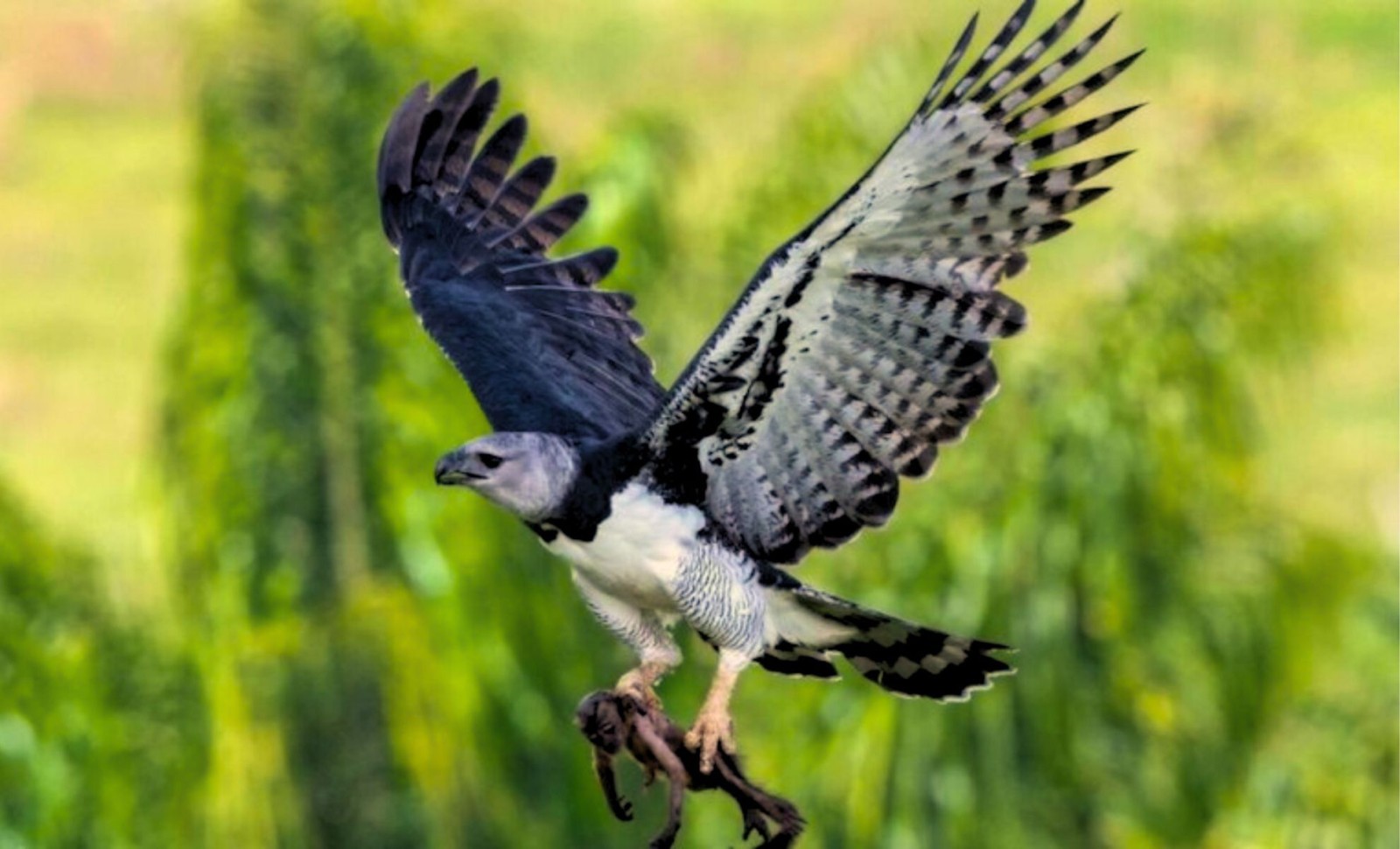
The harpy eagle (Harpia harpyja), renowned as one of the largest and most formidable raptors globally, has been spotted once again in portions of its native range throughout Central and South America, following decades without confirmed observations. Verified encounters in Brazil and southern Mexico reveal that this species, believed to have vanished from numerous areas, has reestablished itself within forest environments that have experienced significant deforestation over the last hundred years.
These revelations, initially highlighted by the Brazilian media outlet Click Petróleo e Gás and subsequently by Mongabay, have intrigued conservationists tracking tropical forest recovery efforts. Because the harpy eagle relies heavily on expansive, undisturbed primary rainforest, its presence is a vital indicator of the condition of these ecosystems.

This rediscovery reflects both the species’ resilience and the fragile state of its environment. While the eagle’s comeback hints at some stabilization in tropical habitats, its dependence on mature forests highlights the ongoing vulnerability these ecosystems face. Experts interpret these sightings as proof that even isolated forest patches can still sustain species once presumed locally extinct.

Validated Sightings in Brazil and Mexico
In the Brazilian Amazon, Click Petróleo e Gás reported the confirmed reappearance of a harpy eagle in regions devoid of sightings for decades. Witnesses noted its unmistakable feathered crown and wingspan that can surpass two meters. The report emphasized that small but intact rainforest fragments continue to serve as critical refuges for apex predators in this vast northern biome.
Meanwhile, in southern Mexico, a May 2025 investigation by Mongabay verified the harpy eagle’s existence through camera-trap photos within a lowland tropical forest. These images, confirmed by field scientists, mark the first validated evidence of the species inside Mexico in over ten years. The location sits within one of the remaining forest corridors that connect the Yucatán Peninsula to Central America, a landscape heavily fragmented due to historic deforestation.

This Mexican discovery represents the farthest northern verified record in over a decade. Researchers quoted in Mongabay proposed that this may encourage intensified conservation collaboration between Mexico, Belize, and Guatemala, where fragmented populations might still endure. The observation aligns with data from the International Union for Conservation of Nature (IUCN), which designates the harpy eagle as Near Threatened due to ongoing habitat loss.
Ecological Role of a Top Predator
The harpy eagle ranks among the heaviest eagles worldwide, feeding mainly on monkeys, sloths, and other arboreal mammals of moderate size. Its presence usually signifies intact forest structures capable of supporting intricate food chains. Ecologists identify the species as a keystone predator because its status reflects the overall ecosystem's wellbeing.
Researchers emphasize that successful reproduction depends on the availability of tall, mature trees, which are increasingly rare beyond protected areas. Continuous, connected habitats are critical since fragmented landscapes impede breeding and reduce prey availability. Studies produced by organizations like the World Wildlife Fund have long stressed the necessity of preserving canopy connectivity to ensure this eagle’s longevity.

Modern technology has enhanced the capacity to study elusive wildlife in these remote areas. Tools such as camera traps, satellite imagery, and aerial surveillance have broadened the detection capabilities for rare species in difficult-to-access regions. These innovations now underpin many biodiversity monitoring initiatives across the Amazon and Central America.
Environmental Threats and Conservation Efforts
Despite the optimism around these sightings, the harpy eagle faces numerous threats. Data from the Brazilian National Institute for Space Research (INPE) indicate that while deforestation rates in the Amazon have decreased compared to the past decade, land clearance persists in agricultural expansion zones. In Mexico, the National Commission for the Knowledge and Use of Biodiversity (CONABIO) highlights ongoing risks from farming and infrastructure development that endanger the lowland tropical forests where the eagle was recently captured on camera.

Habitat fragmentation disrupts gene flow and jeopardizes breeding sites, with even minor forest clearing harming the prey populations vital to the eagle's survival. Conservation organizations throughout Latin America are implementing diverse strategies combining reforestation, community-led reserves, and ecotourism to align economic incentives with habitat preservation.
Cross-border collaborations are increasingly forming to connect fragmented forests via biological corridors. Programs like the Mesoamerican Biological Corridor strive to maintain migratory pathways for species that traverse national boundaries, including the harpy eagle. Such cooperative conservation frameworks are crucial for securing ecological resilience in the Neotropical region over the long term.
- Categories:
- News













0 comments
Sign in to Comment