
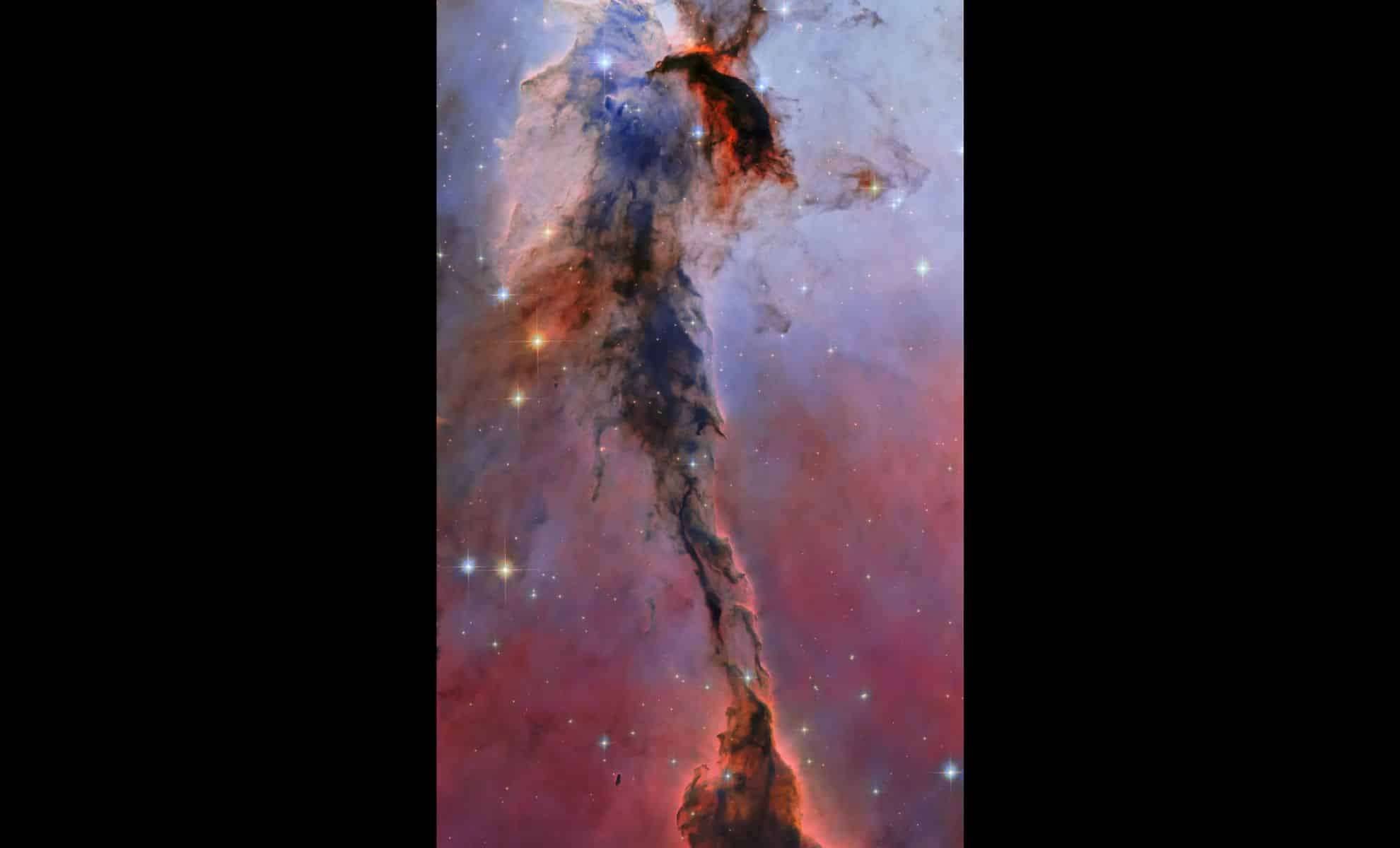
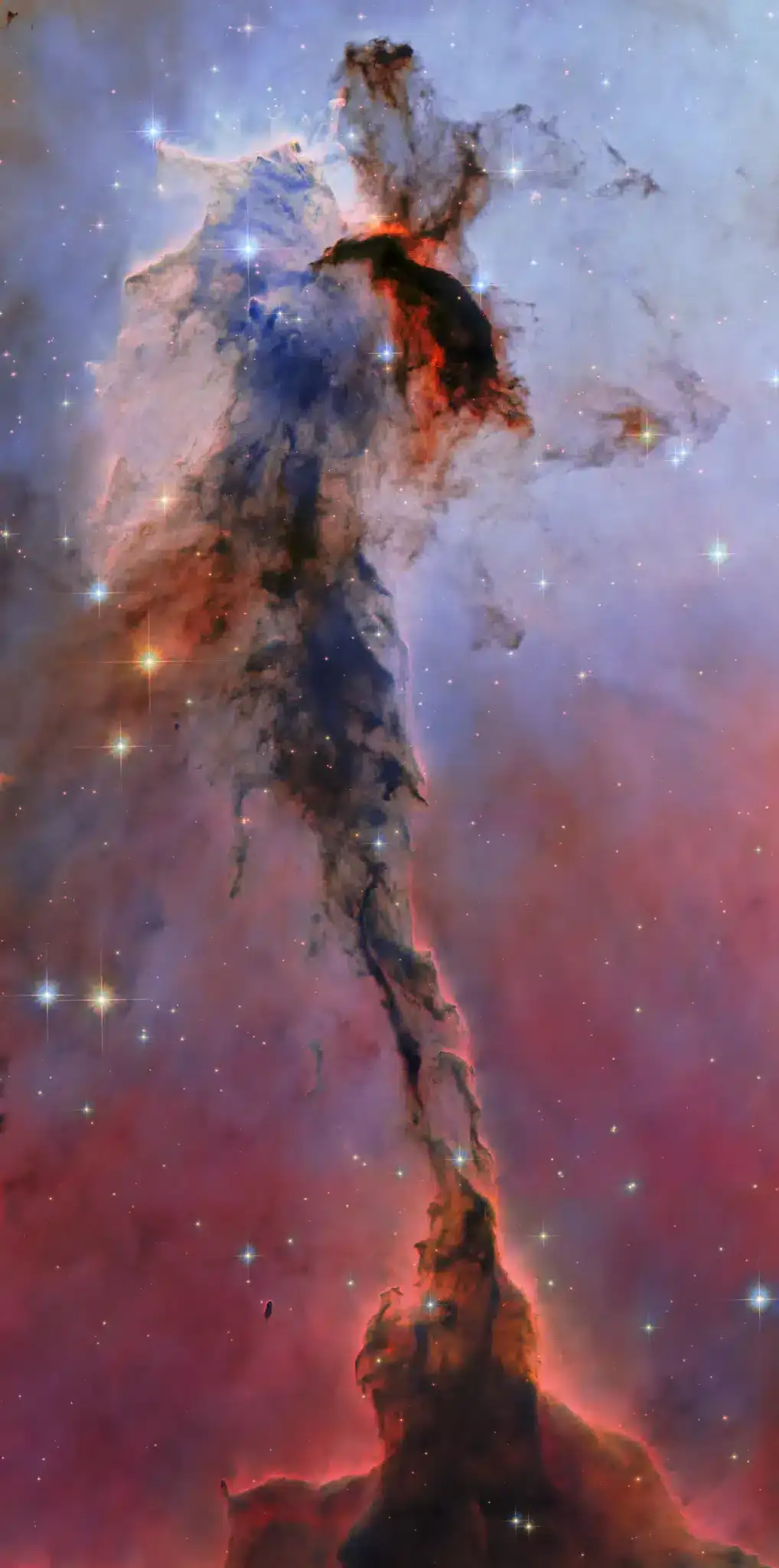
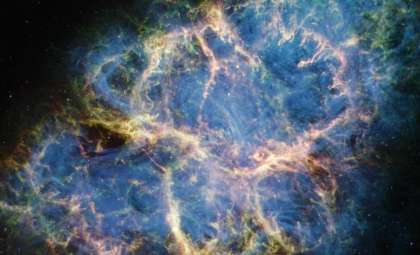
NASA has released a freshly processed image from the Hubble Space Telescope that beautifully displays a towering 9.5-light-year-high column of gas and dust emerging from the core of the Eagle Nebula (Messier 16). The image, published on April 18, 2025, unveils intricate patterns in this famous star-forming region, where intense radiation from youthful, massive stars shapes the cosmic material into majestic, alien-like formations.
This immense pillar, though striking, constitutes only a tiny fraction of the broader Eagle Nebula, situated about 7,000 light-years away in the constellation Serpens. These structures form as denser pockets of cool gas and dust resist the stripping effects of nearby stellar radiation, resulting in elongated columns that withstand while adjacent matter dissipates into space.
Carved by Stellar Radiation and Winds
Similar to other iconic pillars within the Eagle Nebula, this formation owes its existence to the fierce influence of newborn stars. These young stars unleash intense ultraviolet radiation and strong stellar winds that erode less dense gas and dust. Residual dense spires remain, providing potential birthplaces for new stars.

NASA reports that ongoing radiation from young stars continues to wear down the pillars’ surfaces, inducing gas compression and sparking successive waves of star formation—a phenomenon that has persisted in this nebula for millions of years.
Renewed Clarity on a Cosmic Masterpiece
The enhanced image emerged from reprocessing existing Hubble observations, employing advanced image refinement to improve color accuracy and resolution. These enhancements reveal finer details in the gas and dust, aiding scientists in exploring the dynamics of star formation, radiation impact, and gas behavior inside immense nebulae.
Credited to ESA/Hubble and NASA, this image not only highlights the mesmerizing beauty of the cosmos but also emphasizes the scientific significance of sustained space observation. With tools like Hubble and the recently operational James Webb Space Telescope, astronomers are continuing to uncover hidden secrets within our galaxy’s stellar nurseries.
- Categories:
- News






0 comments
Sign in to Comment