
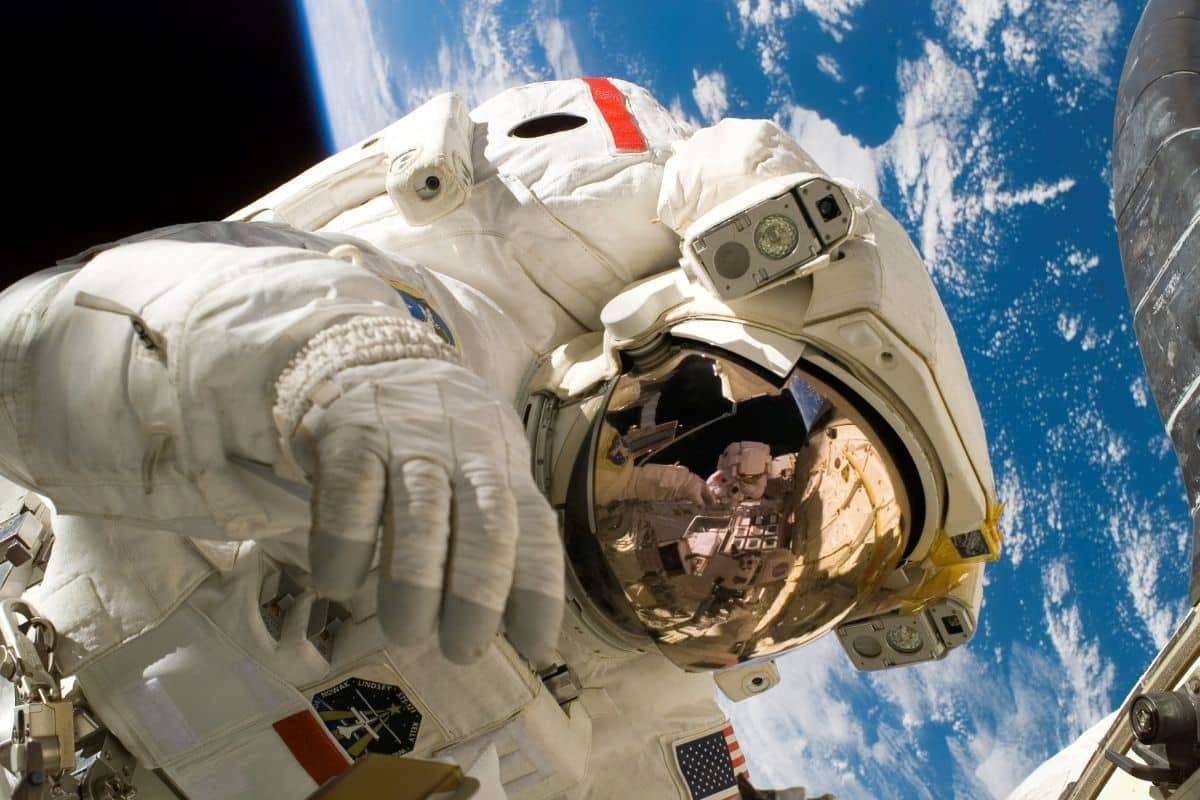
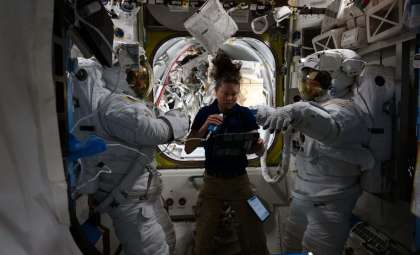
For years, astronauts have been journeying into space, advancing scientific knowledge and preparing for future missions to Mars. Yet, as space missions extend in duration, researchers have identified a hidden health risk: spaceflight-associated neuro-ocular syndrome (SANS). This condition, caused by prolonged microgravity exposure, leads to troubling alterations in astronauts’ vision, challenging the safety of deep space exploration.
Ophthalmologist Santiago Costantino from the Université de Montréal recently led research revealing that more than 70% of crew members spending long periods on the International Space Station (ISS) undergo remarkable eye changes. Such findings add significant complexity to sustaining human health during off-Earth missions.
How Does Space Affect Astronauts’ Eyes?
Once beyond Earth’s protective atmosphere, astronauts face a unique environment where gravity no longer directs bodily fluids downward. Fluids shift upward, raising pressure around the head and eyes. This fluid redistribution triggers changes in the optic nerve and adjacent structures.

The study involved 13 astronauts who spent between 157 and 186 days aboard the ISS. Using techniques like optical coherence tomography and tonometry, researchers uncovered:
- A 33% reduction in ocular rigidity, increasing the eye’s susceptibility to deformation.
- An 11% fall in intraocular pressure, which disrupts eye fluid regulation.
- A 25% decrease in ocular pulse amplitude, affecting blood circulation to the retina.
These shifts, alongside symptoms such as visual field distortions, smaller eye dimensions, and occasionally optic nerve swelling or retinal folds, present a significant health challenge for space medicine.
Unraveling the Cause of SANS
The underlying factor behind SANS relates to how the human body responds to zero gravity. On Earth, gravity governs blood distribution, maintaining balance between the head and lower extremities. In weightlessness, this regulation falters.
Costantino and colleagues propose that increased cranial blood flow and impaired venous drainage in the eyes cause swelling of the choroid layer, which supports the retina. Such structural changes likely explain why some astronauts suffer blurry vision and require updated eyeglass prescriptions after spaceflight.
Is Vision Loss Reversible?
Fortunately, these eye alterations seem largely reversible. Most returning astronauts observe their vision restored once back on Earth. In the study, 80% of subjects displayed at least one SANS symptom, but corrective lenses generally sufficed to remedy their vision problems.
Yet, as missions edge toward longer durations, including potential two-to-three-year Mars expeditions, NASA and international partners face the urgent task of developing preventive or mitigating strategies for this condition.
Advances to Safeguard Astronaut Eye Health
The effects of extensive microgravity exposure on vision beyond the standard ISS half-year stays remain uncertain. In the absence of gravity, SANS symptoms might worsen, risking lasting eye damage.
Ongoing research explores several promising interventions, including:
- Wearable devices designed to manage intracranial pressure and reduce fluid accumulation in the head.
- Medications aimed at controlling choroidal swelling and improving eye venous flow.
- Artificial gravity solutions, such as rotating habitat modules to mimic Earth’s environment.
- Onboard diagnostic technology enabling astronauts to track their ocular health in real-time and detect early complications.
With no existing cures for SANS, research teams like Costantino’s group from Maisonneuve-Rosemont Hospital collaborate with NASA to analyze updated data. Their work could be pivotal in protecting astronauts during extended deep-space voyages, helping secure the future of human space travel.
- Categories:
- Space




0 comments
Sign in to Comment