
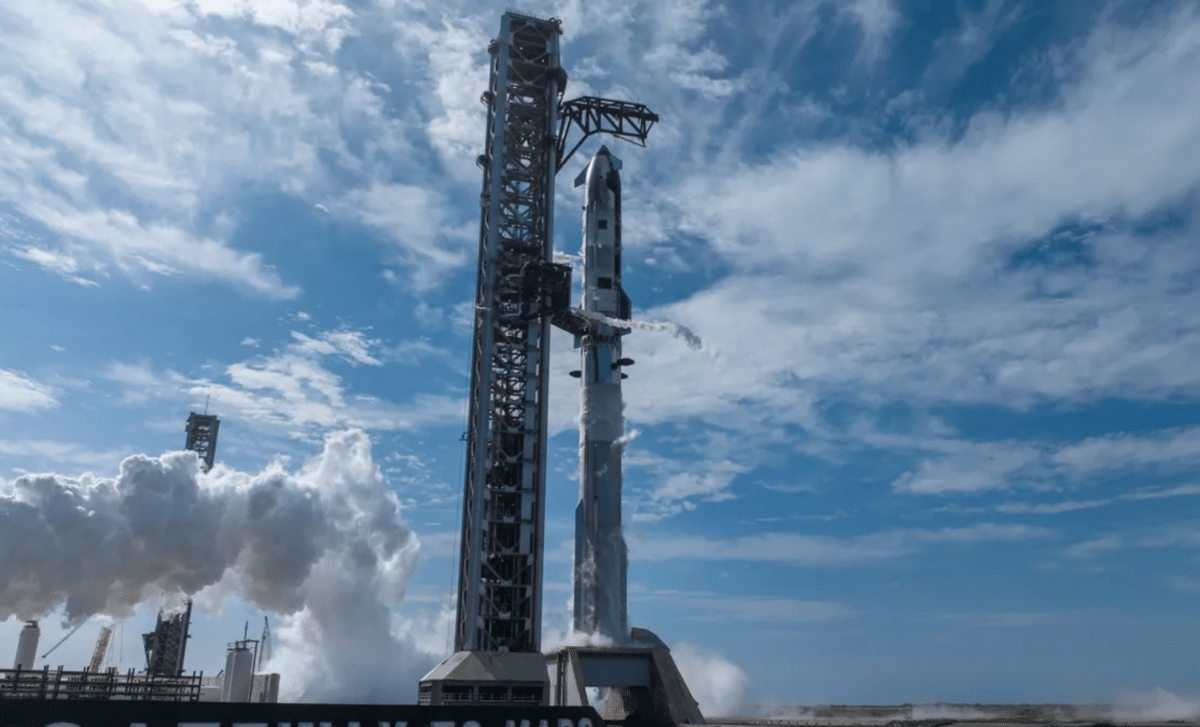
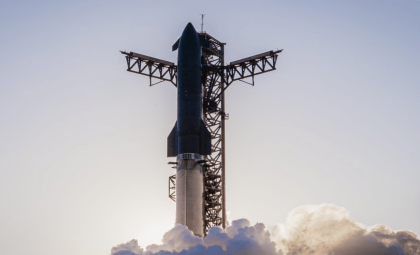
SpaceX has announced May 19 as the official date for the inaugural flight of Starship V3, a radically updated iteration of the world’s largest rocket configuration. This version features significant modifications across both the Super Heavy booster and the Ship upper stage, marking a major engineering milestone in the Starship program's evolution.
Starship V3: A Major Leap Forward in Rocket Design
Although this mission will be the 12th integrated test of the Starship system, it represents a far-reaching advancement beyond previous flights. Nearly all critical systems have been enhanced, spanning propulsion to aerodynamic control elements. SpaceX aims to transition from experimental launches toward a Starship capable of sustaining orbital missions, supporting NASA’s Artemis efforts, and enabling future freight trips to Mars.
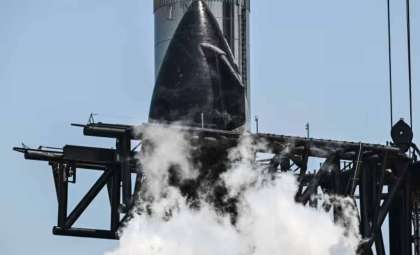
One standout alteration is visible on the Super Heavy booster, where the former configuration of four grid fins has been streamlined to three larger and reinforced fins. According to SpaceX’s pre-launch technical briefing, these fins feature a new catch point and have been repositioned to aid in vehicle lift and capture operations. They are also mounted lower on the booster to minimize heat exposure from the upper stage’s engines during hot-staging.

Inside the booster, extensive redesigns include a revamped fuel transfer tube that supplies the 33 Raptor engines with cryogenic propellants. This new assembly is comparable in scale to a complete Falcon 9 first stage. These upgrades aim to enable all engines to fire simultaneously and enhance the speed and efficiency of maneuvering during descent.
Another improvement incorporates the hot-stage ring into the booster’s structure instead of discarding it mid-flight, which reduces debris and aligns with SpaceX's vision for rapid, full rocket reusability. Additionally, this flight will introduce Pad 2 at Starbase in South Texas, a newly built launch facility designed to speed up fueling and recovery processes.
Upper Stage Redesigned for Long-Duration Spaceflight
The upper stage showcased on this flight is crucial to the V3 upgrades. SpaceX has enhanced key propulsion systems to ready the spacecraft for demanding orbital and deep-space conditions. These changes boost engine dependability, optimize propellant use, and refine flight maneuverability while mitigating risks associated with fuel buildup in critical areas.
Pre-launch details state the redesign introduces “a novel Raptor startup method, expanded propellant tank capacity, and an improved reaction control system for in-flight steering.” Additionally, the updates minimize volume inside the aft section, reducing potential propellant leakage hazards.
These modifications support long-term ambitions for in-orbit refueling—a vital capability for missions beyond Earth’s vicinity. The new spacecraft is equipped with specialized propellant feed lines designed to facilitate fuel transfer during orbital operations, enabling refills en route to destinations such as the Moon or Mars.
The updated Raptor V3 engines offer increased thrust and enhanced reliability for repeated use. The mission will also test the relighting of one of Ship’s six Raptors while in flight, an essential procedure for future orbital insertions and landings.
Besides propulsion evaluations, this launch will deploy 22 mock Starlink V2 satellites. Deployment will begin about 17 minutes post liftoff, lasting approximately 10 minutes. Two of these dummy satellites will remain nearby to capture imagery of the heat shield during reentry, providing valuable data on thermal protection under real mission conditions.
Starship’s twelfth flight test will debut the next generation Starship and Super Heavy vehicles, powered by the next evolution of the Raptor engine and launching from a newly designed pad at Starbase. The launch is targeted as early as Tuesday, May 19 → https://t.co/2gZQUxS6mm pic.twitter.com/JxmpL2WE4w
— SpaceX (@SpaceX) May 12, 2026
Flight 12 to Validate New Tech; Booster Catch Deferred
The overall mission plan echoes prior Starship flights but reflects the V3’s extensive internal changes. Launch is scheduled from Starbase during a 90-minute window starting at 6:30 p.m. EDT on May 19. Once stages separate, the Ship upper stage will follow a suborbital path eastward and splash down in the Indian Ocean roughly 65 minutes after liftoff.
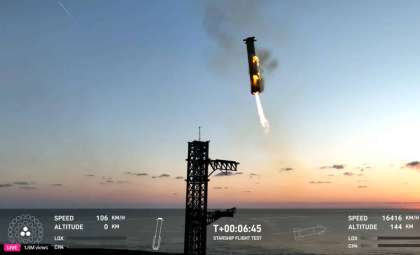
The Super Heavy booster will land via controlled descent in the Gulf of Mexico. However, unlike previous attempts, SpaceX won’t try to catch the booster on the launch tower using the giant mechanical arms, known as “chopsticks.” This precaution results from the significant redesign of the V3 hardware.
The company stated, “As this is the first flight test of a significantly redesigned vehicle, the booster will not attempt a return to the launch site for catch.”
This cautious approach underlines the mission’s focus as a systems-test flight. While public excitement is high following a lengthy pause since the last Starship launch in October 2025, the primary goal remains gathering performance data for the numerous new components featured on V3.
- Categories:
- Space




0 comments
Sign in to Comment