
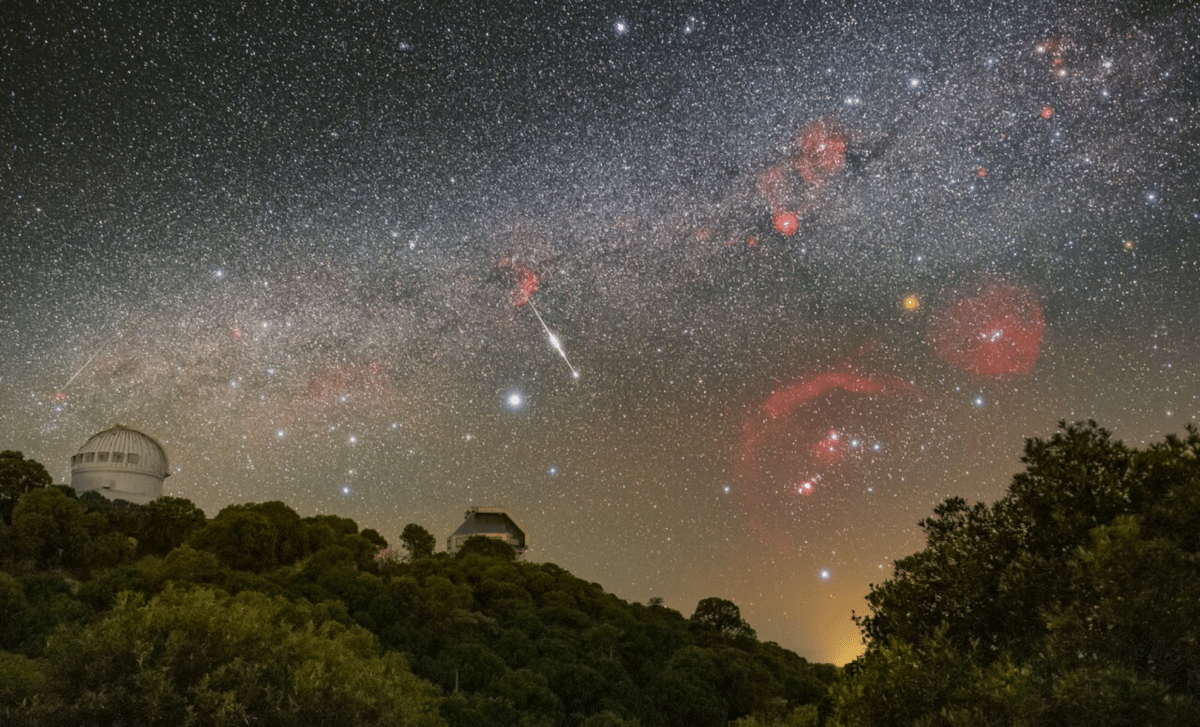
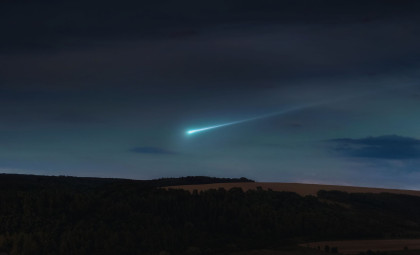
An awe-inspiring meteor blazed across the southern Arizona night, beautifully captured by astrophotographer Petr Horálek. Featured by NOIRLab, the image preserves this fiery visitor as it streaked over the Kitt Peak National Observatory, blending the majesty of the universe with the achievements of human exploration. This captivating snapshot highlights the intricate dance between cosmic phenomena and scientific art.
A Unique Capture of a Meteor Over Kitt Peak
Photographing a meteor in mid-flight is a challenging feat due to its brief and unpredictable nature. Lasting only moments, these bright streaks require impeccable timing and expertise. Horálek succeeded in freezing the meteor’s path while positioning it above the domes of the Kitt Peak National Observatory, elegantly uniting the splendor of space with human innovation.

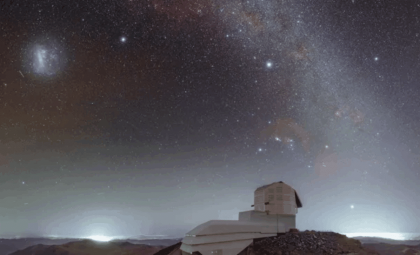
The WIYN 0.9-meter and 3.5-meter telescopes stand silently beneath the meteor’s glowing trail, continuously probing the cosmos as this celestial event unfolds above. The image also reveals constellations like Orion and Canis Major, along with vivid red emission nebulae—glowing clouds of ionized gas illuminating the desert night sky.
A Look at the Observatory Behind the Shot
Situated in the Sonoran Desert on Tohono O’odham land, Kitt Peak National Observatory belongs to NOIRLab, the National Optical-Infrared Astronomy Research Laboratory. This observatory has been a pivotal U.S. astronomy facility, housing telescopes that explore everything from nearby planets to distant galaxies.
This image brings into focus how natural celestial events and human scientific efforts intertwine. Thanks to NOIRLab’s cutting-edge equipment, astronomers can monitor and analyze the universe with extraordinary accuracy, enabling images like Horálek’s to capture these fleeting cosmic moments.
Nature’s Nighttime Show in the Desert
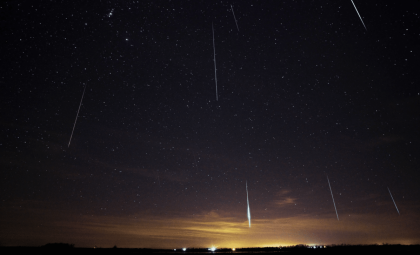
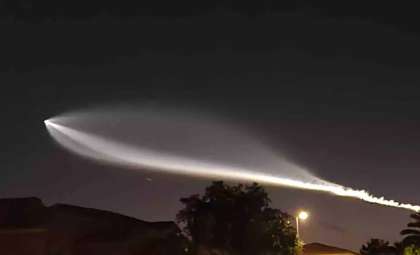
The meteor’s fiery trail serves as a vivid reminder of the ever-changing tapestry of the night sky. These meteors, remnants of comets or asteroids, ignite as they enter Earth’s atmosphere, creating dramatic streaks of light. While many can witness these brief flashes, preserving them in a photograph demands patience and refined skill.
Horálek’s photograph not only captures this ephemeral spectacle but also integrates it within the surrounding terrain and observatory instruments, producing a compelling story of cosmic movement observed through human curiosity and scientific pursuit.
- Categories:
- News



0 comments
Sign in to Comment