
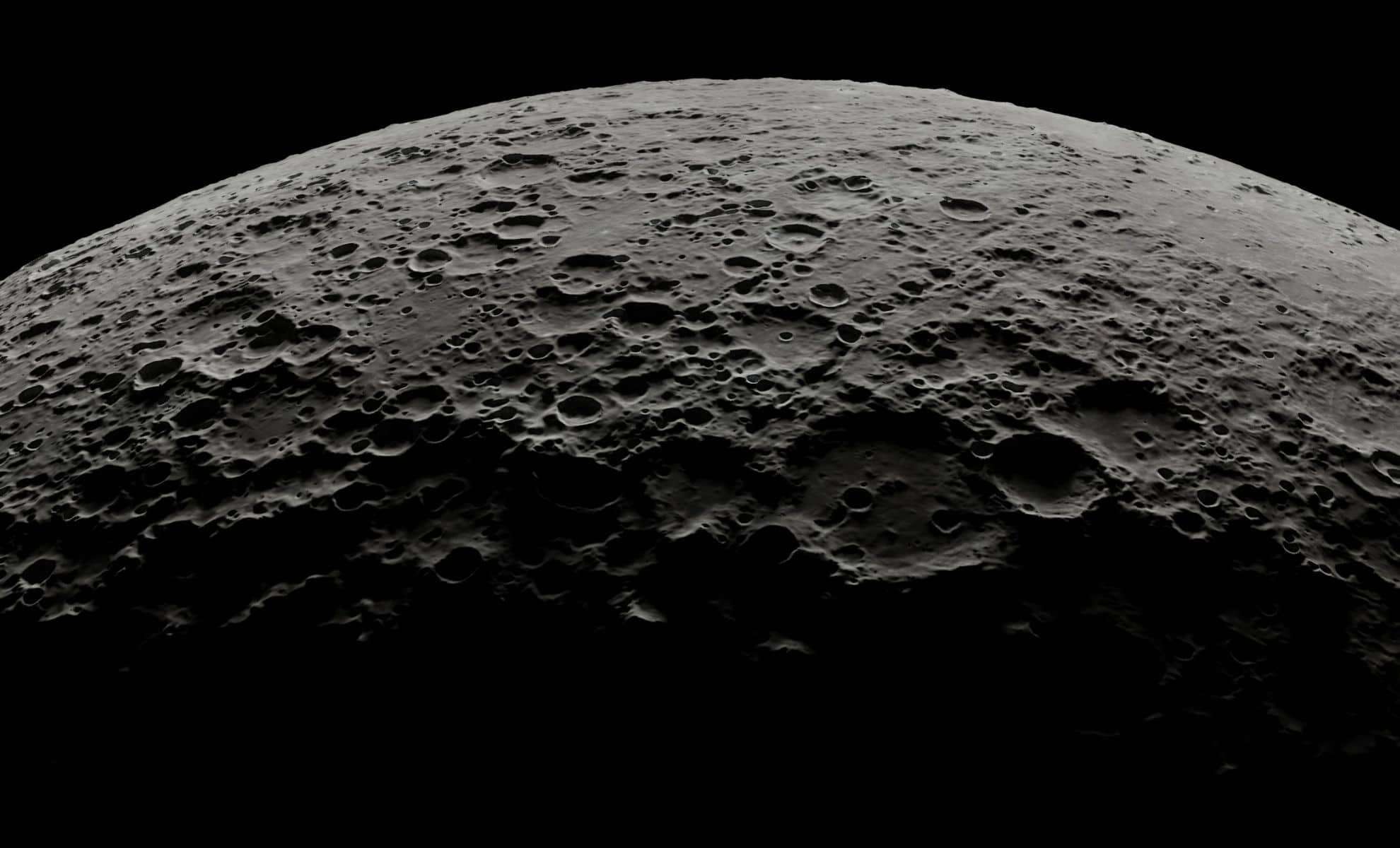
New analyses of lunar rocks from Apollo 16 and the moon’s far side are offering unprecedented insights into the ancient asteroid impacts that shaped the lunar surface.
This research not only enriches our knowledge of the moon’s geological past but also reveals important information about the early solar system environment shared with Earth. By applying cutting-edge analytical methods to samples gathered decades ago, researchers are piecing together the moon’s deep history and its connection to Earth’s formative years.
Apollo 16 Samples Capture a Record of Lunar Collisions
Scientists at the University of Glasgow and the University of Manchester have revisited lunar rocks from the 1972 Apollo 16 mission. Among these, regolith breccias—formed when asteroid strikes melded lunar dust into rock—serve as natural archives of the moon’s impact past. These formations offer a snapshot of the surface conditions when they formed, enabling reconstruction of impact events over time.

By employing mass spectrometry to analyze trapped noble gases like argon and xenon, researchers determined how long these rocks were exposed to the solar wind prior to burial by later asteroid crashes. Lead investigator Dr. Mark Nottingham noted, “Mass spectrometry reveals the duration these samples spent at or near the moon’s surface, sharpening our timeline of local impact activity.”
The data uncovered a layered history of collisions spanning billions of years, with some samples dating beyond 2.5 billion years and others reflecting events as recent as 1 billion years ago. These discoveries allow scientists to track how asteroid impacts continuously molded the lunar terrain. Dr. Nottingham emphasized, “The moon’s story mirrors Earth’s—it provides a vital record of asteroid bombardments that shaped our planet and its closest neighbor during the early solar system.”
The South Pole–Aitken Basin: Unlocking the Moon’s Oldest Impact
On the moon’s far side lies the enormous South Pole–Aitken (SPA) basin, the largest and one of the oldest impact basins known. With a diameter nearing 2,500 kilometers (1,600 miles), it has long challenged precise age determination, with previous estimates between 4.2 and 4.3 billion years. A recent study in Nature Astronomy offers a refined age of 4.33 billion years, placing the basin among the earliest confirmed lunar impact events.
This colossal collision likely occurred during a period of intense bombardment affecting the inner solar system. The size of the impactor asteroid—estimated around 200 kilometers (124 miles) across—was significantly greater than the object thought to have caused the dinosaurs’ extinction on Earth. Led by Professor Katherine Joy at the University of Manchester, the team dated a lunar meteorite, known as NWA 2995, which is suspected to originate from the SPA basin. Its radiometric age aligns with the basin’s history, enabling precise dating of this major event.
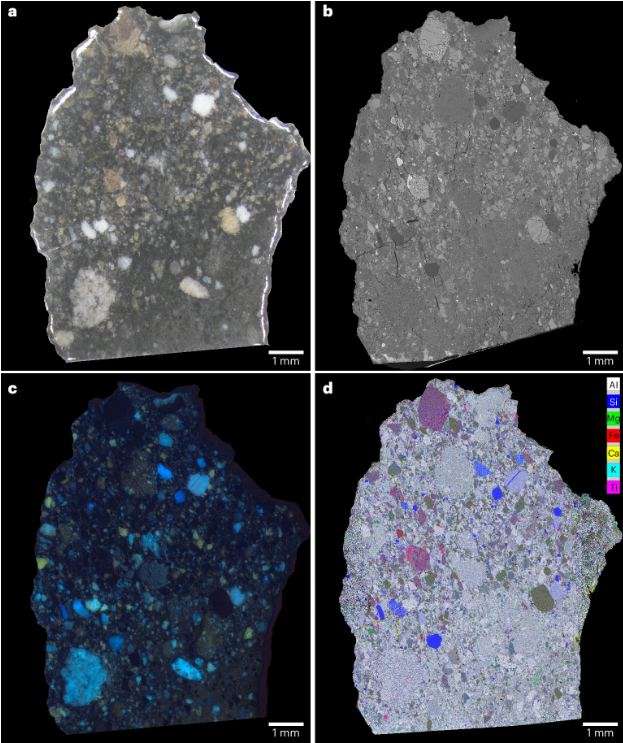
Co-author Dr. Romain Tartese highlighted the broader significance: “Our results extend far beyond the moon. Earth and its satellite likely endured comparable impacts early on, but Earth’s dynamic geology has erased much of that record.” The moon’s largely undisturbed surface preserves these events, providing invaluable insight into early solar system processes.
Impact on Future Lunar Exploration and Insights into Earth’s Past
These revelations have important consequences for forthcoming missions, including NASA’s Artemis program. A clearer picture of the moon’s impact legacy aids not only in understanding lunar formation but also in identifying resources like noble gases that could support sustainable lunar settlements.
Dr. Nottingham pointed out, “Sustaining human presence on the moon hinges on efficiently exploiting local resources, reducing what needs to be transported from Earth.” Such findings will guide mission planning, helping astronauts utilize elements like water and noble gases to establish long-term lunar operations.
Beyond exploration, the research sheds light on Earth’s primordial solar system conditions. The moon’s surface preserves a detailed asteroid impact record, reflecting events that shaped both bodies. As Dr. Joshua Snape from the University of Manchester explains, “Dating the SPA basin at 4.33 billion years suggests a more gradual impact history rather than a brief late heavy bombardment.”
This confirmed ancient impact challenges the idea of a sharp bombardment spike between 4.2 and 3.8 billion years ago, instead indicating a prolonged sequence of impacts. Future missions like China’s Chang’e-6 and NASA’s Endurance-A rover aim to collect additional SPA samples and refine this timeline through radiometric methods.
Tracing Our Shared Celestial History
Data drawn from Apollo 16 and SPA meteorites highlight the intertwined impact histories of Earth and the moon, two bodies shaped by billions of years of asteroid bombardment. While Earth’s geological activity has obscured much of its earliest record, the moon’s preserved surface offers a window into the violent early solar system events that played a crucial role in shaping the environment where life emerged.
These studies demonstrate that decades-old lunar samples remain a vital source of scientific discovery, and ongoing lunar exploration promises to deepen our understanding of both our nearest cosmic companion and our home planet.
- Categories:
- Astronomy ,
- News





0 comments
Sign in to Comment