
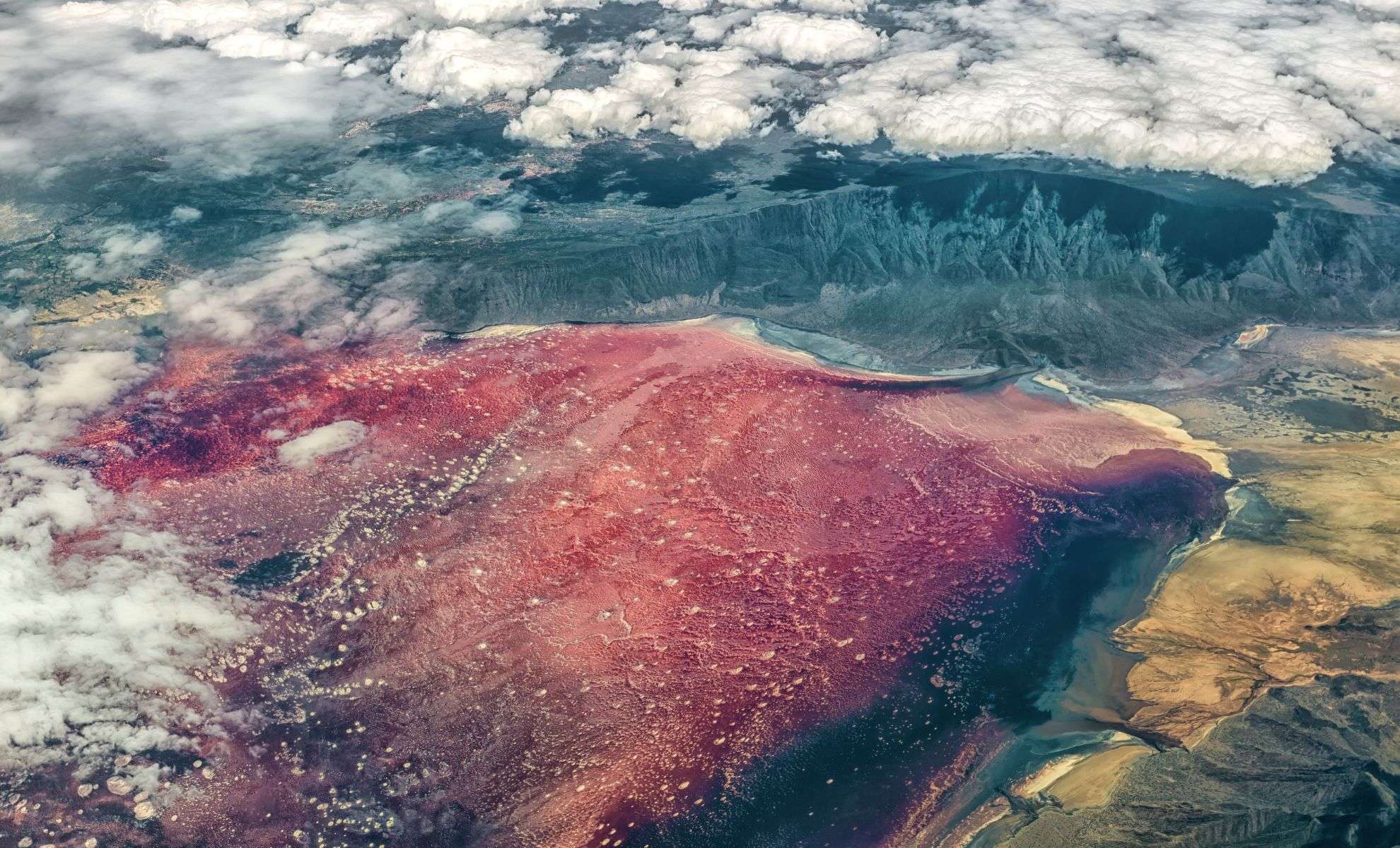
Lake Natron in northern Tanzania is a remarkable natural wonder distinguished by its reddish surface and highly alkaline water. This lake, though hostile to most wildlife, supports unique organisms such as extremophile microbes and a robust population of lesser flamingos. Its caustic waters, nearly as corrosive as ammonia, can cause severe burns, and animals that perish nearby often become preserved in a calcified state.
A Volcanically Charged Chemical Marvel
Situated on the East African Rift, where tectonic plates gradually separate, Lake Natron’s distinct water chemistry is shaped by ongoing volcanic activity. Minerals including sodium carbonate and calcium carbonate enter the lake from volcanic hills and thermal springs.
This continuous mineral input elevates the lake’s pH level to approximately 10.5, making its waters extremely alkaline and nearly as harmful as ammonia. The corrosive properties of the water pose a challenge for most creatures and can cause painful burns to exposed skin and eyes. Nonetheless, some species have adapted, notably the lesser flamingos (Phoeniconaias minor), which flock here to feed on the lake’s abundant blue-green algae, contributing to their iconic pink color.

Vital Refuge for Lesser Flamingos
Lake Natron serves as the primary breeding ground for roughly 75% of the world’s lesser flamingo population. These birds possess specialized adaptations like tough, scaly legs that protect them from the lake’s alkaline conditions. During dry periods, the lake’s exposed islands become nesting sites, offering protection from predators and ensuring a safe breeding environment. This sanctuary is crucial for sustaining the flamingos, which return annually to reproduce and raise their offspring.
The lake’s shores also harbor salt-tolerant microbes such as haloarchaea, which flourish in the high-salinity environment. These microbes infuse the water with vivid red and orange hues, especially during droughts when their populations surge, producing a spectacular visual effect. Additionally, the microbes act as a food source for flamingos, establishing Lake Natron as a unique ecological niche amid otherwise barren terrain.
The Enigmatic Calcified Creatures of Lake Natron
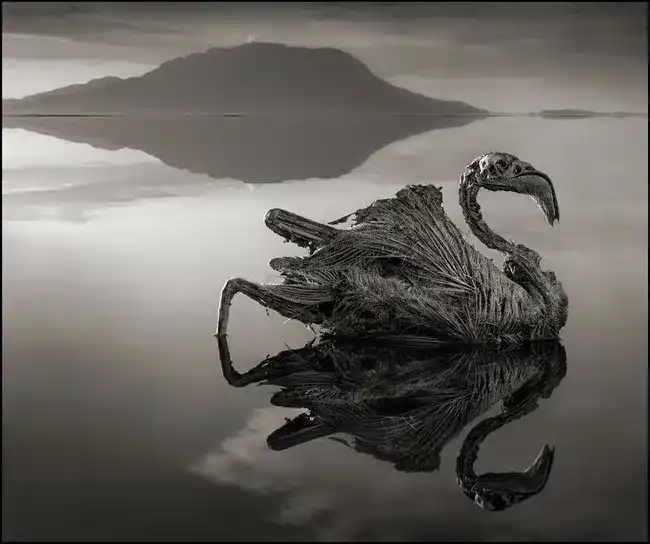
One of Lake Natron’s most fascinating aspects is its power to mineralize animals that die near its edges. The lake’s alkalinity and sodium carbonate content cause carcasses to become rigid and preserved, resembling stone in their lifelike postures. Photographer Nick Brandt captured this haunting phenomenon in his 2013 book, Across the Ravaged Land, showcasing images of these "stone" creatures.
Brandt’s compelling photographs depict preserved birds and bats along the shore, perfectly frozen by the lake’s lethal chemical makeup. These specimens appear remarkably lifelike but are immobilized forever through the lake’s mineralizing process.
In Brandt’s words, he “unexpectedly found the creatures— all manner of birds and bats—washed up along the shoreline of Lake Natron,” with the exact circumstances behind their deaths remaining uncertain. While it is likely the animals succumbed to the lake’s hostile environment, the precise cause of death continues to puzzle scientists and observers alike.
- Categories:
- News






0 comments
Sign in to Comment